Troubleshooting & Analysis
The day my N79S started smelling like a hot vacuum
I knew something was wrong before I saw it. My DEEBOT N79S — the workhorse that's been bouncing off my baseboards since I bought it — came back to its dock one afternoon throwing this faint burnt-dust smell, the kind you get when a motor is straining against something it shouldn't have to. I'd been lazy. The filter was the original one, gray gone to brown, packed solid with dog hair and the fine grit that lives under a couch. I'd run it like that for months past when I should've swapped it.
When I popped the dustbin and pulled that filter out, it basically crumbled at the edges. The pleats were a felted mat. No air was moving through it — which meant the motor was working twice as hard for half the suction, and the whole machine was running hotter than it had any business running. That's the thing nobody tells you about a robot vac filter: it's not just about clean air coming out. A choked filter makes the motor fight, and the motor is the expensive part. The filter is the cheap part that protects it.
So I had to buy one, and the OEM price annoyed me
Here's where I got irritated. Ecovacs wants real money for what is, functionally, a folded piece of filter media in a plastic frame. By the time you add a HEPA-style filter to the little sponge pre-filter, the official replacement set runs you somewhere around $18–20 for these older 500/N79S units — and you're meant to swap it every couple of months if you've got pets. Do that math across a year and you're paying close to $80 just to keep a robot that cost a hundred-and-something doing its one job.
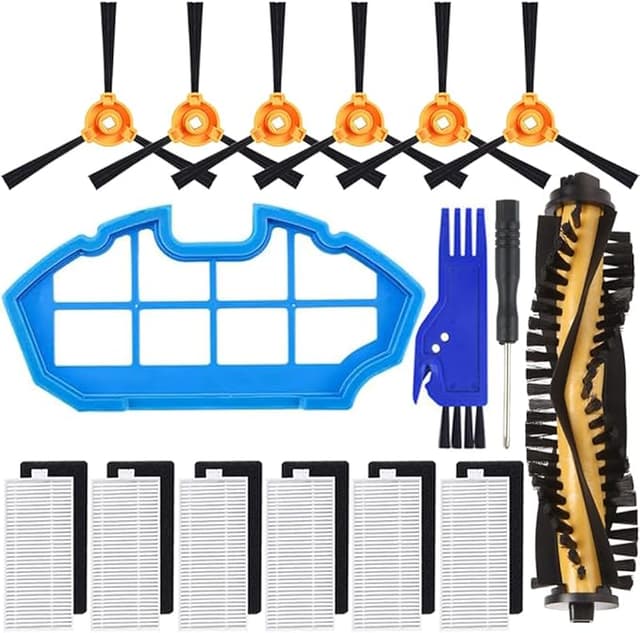
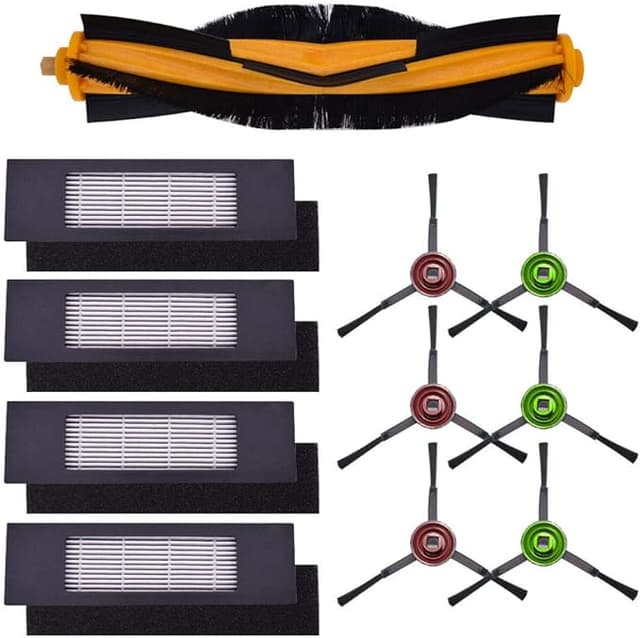
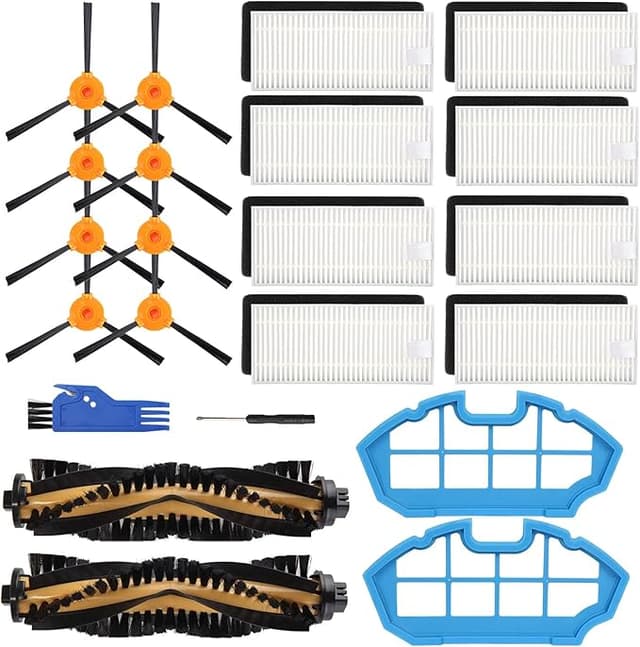
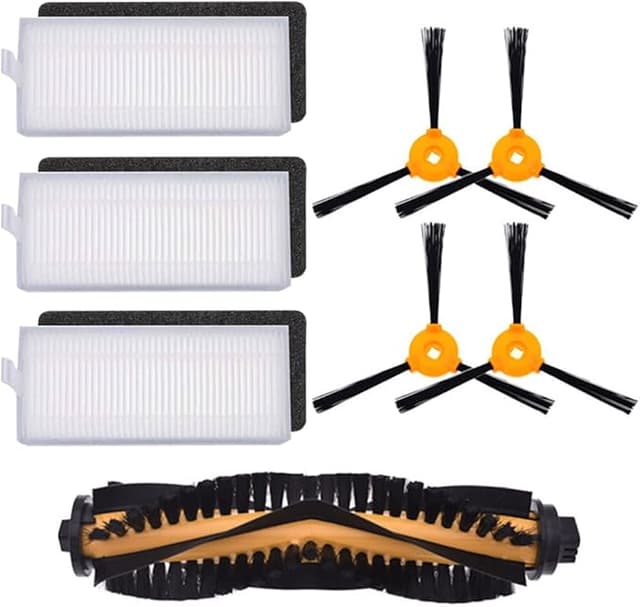
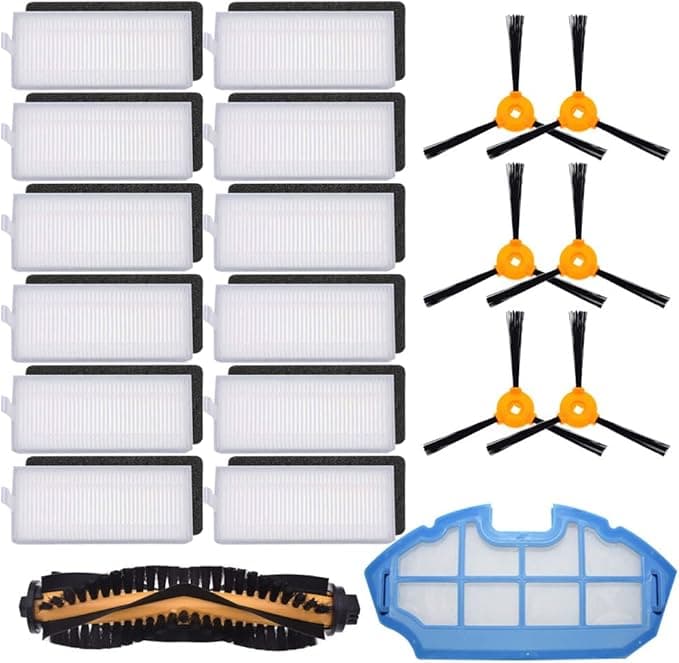
The compatible set I landed on was about $12 for a multi-pack. Same DEEBOT 500 / N79S fitment, replacing the same part. So instead of one OEM filter for twenty bucks, I had three or four compatible ones for twelve. That's the kind of gap that makes you feel a little dumb for ever buying the brand version. Why am I paying the Ecovacs premium on a consumable that's designed to get destroyed?
Does it actually fit? Yeah — with one honest caveat
Install on the N79S is genuinely a two-minute job and you don't need the manual after the first time. Power it off, pull the dustbin out the back, and the filter assembly lifts right out. I knocked the loose debris off the old one out of habit, wiped the bin compartment with a dry cloth so I wasn't seating a new filter into a nest of old hair, and dropped the new one in the same orientation the original came out. Clip the bin back in. Done. The machine doesn't even need anything reset — it just runs.
The caveat: the compatible frame is a hair looser in the bin than the factory one. Not loose enough to rattle out or leak around the edges — it seats and it holds — but if you're the type who notices the difference between a part that clicks home with authority and one that just kind of settles in, you'll feel it. I pressed mine in, gave the bin a shake to make sure nothing shifted, and it's been fine through dozens of runs. But I won't pretend the tolerances are identical. They're close. They're not OEM-perfect.
How it performs after a few weeks of real use
Suction came right back the second I put a clean filter in — which honestly says more about how trashed my old one was than anything, but the point stands: this thing moves air the way the original did. I run the N79S almost daily across hardwood and a couple of low rugs, with a shedding dog adding to the workload, and the bin fills up the same as it always did. The motor went back to its normal quieter hum the same day. No more hot-vacuum smell.
Where's it a touch behind? If I'm being a stickler, the media doesn't feel quite as dense as the factory HEPA-style filter when you hold them side by side. For the finest dust I think the OEM might hold onto a sliver more. In actual use, on actual floors, I can't tell the difference in what ends up back in the room — but I'm not going to tell you the materials are spec-for-spec identical, because I don't believe they are. They're good enough that it doesn't matter for a robot vac. They might matter to you if you've got severe allergies and you're counting on this as air filtration, which it really isn't designed to be.
The downsides, said plainly
The packaging is cheap — a thin plastic sleeve, no fancy box, and one of mine in the pack had a slightly squashed pre-filter sponge that I had to fluff back into shape before it sat right. It worked fine after, but it's the kind of thing OEM packaging protects against and budget packaging doesn't. There was also a very faint plastic-frame smell out of the bag for the first day or so. It aired out fast and I never smelled it during a run, but it was there when I first opened it.
And look — because they're cheaper, the temptation is to leave them in too long since you've got spares. Don't. The whole reason I'm writing this is that I let a filter go too far and stressed the motor. Cheap replacements only save you money if you actually replace them.
Who should buy OEM — and why I grab these anyway
If your N79S is under warranty and you're worried that a third-party part could give Ecovacs an excuse to deny a claim, buy the official one and don't think about it. If you have serious respiratory issues and you're treating this filter as real air purification, spend up. Those are honest reasons.
For everyone else — pets, normal floors, a robot that's already a few years old and out of warranty — I grab the compatible set every time now. I've got three of them sitting in the drawer, I swap one in every couple months without flinching at the cost, and my N79S has been running cool and quiet since. Same fit, same job, a fraction of the OEM price. I bought it skeptical after a bad filter scare, and it's the one I'll keep buying.