Troubleshooting & Analysis
Two filters on the kitchen counter, and me being cheap about it
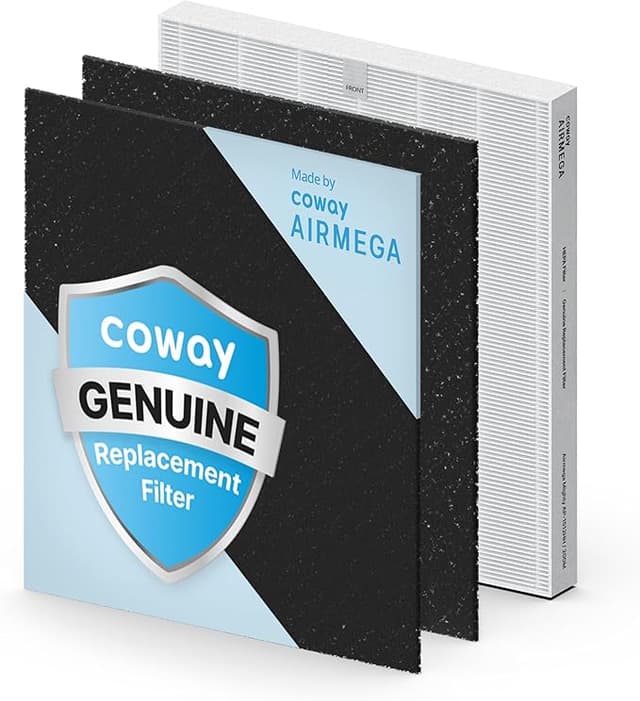
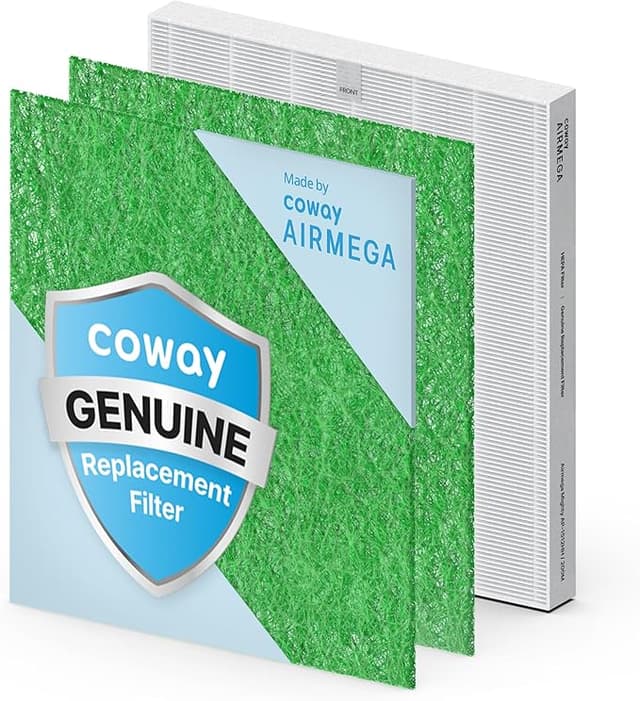
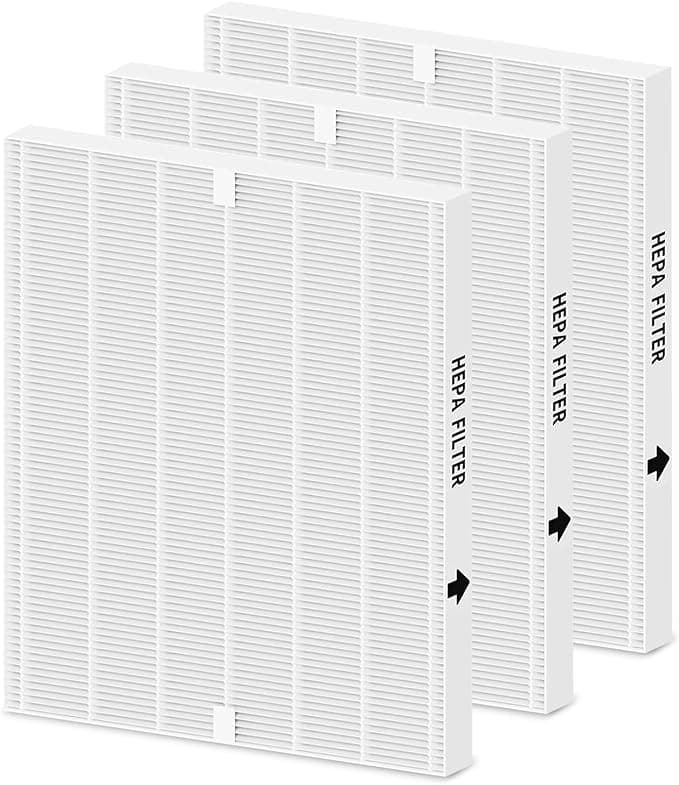
I had the OEM box in one hand and a Coway AP-1518R that had been blinking its filter light at me for a week. Forty-something dollars for the genuine 3304899 set, or roughly half that for a compatible one a guy in a forum swore by. I stood there longer than I want to admit. Because here's the thing — this little unit runs in my kid's room, and I didn't love the idea of trusting his air to a no-name HEPA. So I bought both. The real one for the first round, the compatible one for the next, and I told myself I'd actually pay attention this time instead of just slapping it in and forgetting.
I've now run the compatible filter for about five months. So I can tell you what I actually noticed, not what a spec sheet promises.
The money part, because that's why you're here
The AP-1518R wants a fresh HEPA roughly once a year if you run it most days — sooner if you've got pets or you're in wildfire country. OEM 3304899 sets hover in the $40-ish range, sometimes higher when they're "out of stock everywhere" and the price quietly creeps. The compatible one I've been using runs about half that. So you're looking at maybe $20 saved every single year, for the life of a machine that'll probably outlast three or four filter cycles.
Do the math over five years and you've basically bought yourself a second air purifier with the difference. That was the whole reason I started messing with aftermarket filters in the first place — I got tired of the OEM tax on what is, mechanically, a folded sheet of pleated media in a plastic frame.
Does it actually fit?
This is the part people are scared of, and fair enough. A filter that doesn't seat right is worse than no filter — air just sneaks around the edges and you're cleaning nothing.
Install on the AP-1518R is genuinely simple. Unplug it first (do this — it's a fan, respect it), pop the front cover, pull the old filter, drop the new one in, then hold the reset until the light clears. Two minutes, no tools.
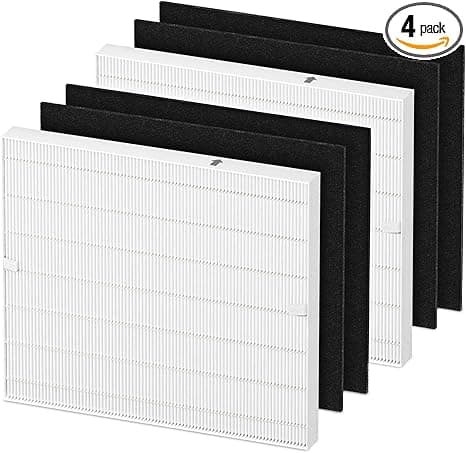
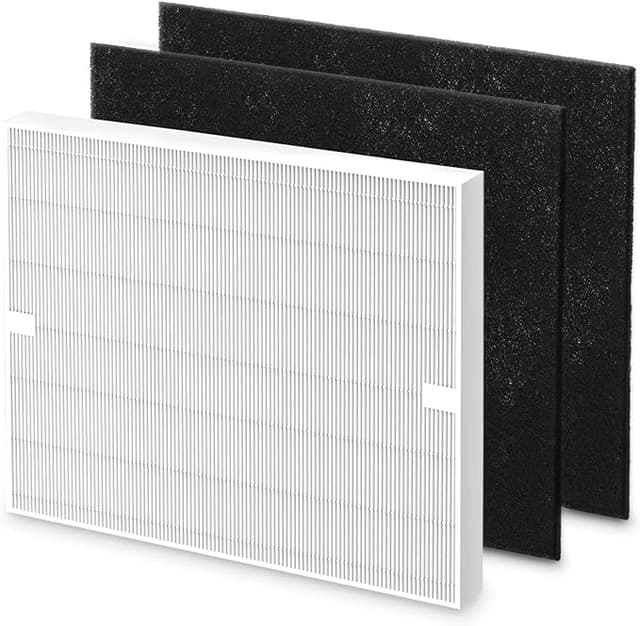
The compatible filter seated correctly. I want to be honest about the texture of that, though: the frame on mine was a hair looser than the OEM. Not loose enough to let air bypass — I checked, pressed around the gasket, ran my hand along the seam looking for leak whistle — but you can feel it's not machined to the same tolerance. The genuine one clicks in with this confident snug. This one went in with a little more give. After five months it hasn't shifted or rattled, so I stopped worrying. But if you're someone who notices that kind of thing, you'll notice it.
How it actually performs
This is where I expected to catch it cheating, and mostly didn't. It's a True HEPA H13 media, and on the stuff I can measure — I keep a cheap particulate meter in that room out of pure paranoia — it knocked down the post-vacuum dust spike and the cooking haze from the kitchen about as fast as the genuine filter did. Overnight it pulls the room down to single-digit PM2.5 and holds it. I genuinely could not tell you, blind, which filter was in the machine on air quality numbers alone.
Where I'd give OEM a slight edge: odor. The activated-carbon layer on the compatible one felt a touch thinner. When my wife seared fish, the genuine filter seemed to clear the smell maybe ten, fifteen minutes faster. Small. But I noticed it twice, so I'm not going to pretend I didn't.
The downside I have to mention
First two, maybe three days — there was a faint plastic-and-new-cardboard smell off the thing. Not chemical-harsh, just that fresh-manufactured smell, and it rode the airflow for a bit. I ran the unit on high with the window cracked the first night and by day three it was gone completely and never came back. The OEM had a little of this too, honestly, just less. And the packaging is cheap — thin plastic sleeve, a sticker label slightly crooked. None of that touches the air going into the room, but it's the kind of thing that makes you second-guess at the moment you open the box. I'm telling you so you don't.
Why you can't just stretch the old one
Quick reality check, because I see people run these way past dead. A saturated HEPA doesn't just stop helping — it flips on you. All that trapped pollen, dust, and worse sits in warm, sometimes damp media, and mold can take hold and start shedding back into the room every time the fan kicks on. Your purifier quietly becomes the dirtiest thing in the house. The AP-1518R's filter light is conservative, but when it's blinking, it's right. Change it. Whether you go OEM or compatible matters a lot less than not running a dead one for six extra months to save twenty bucks.
So which would I actually buy?
If this unit is filtering for someone with serious asthma, a real allergy diagnosis, or a newborn, and the absolute peak of odor control matters to you — buy the OEM 3304899. The carbon edge is real, small as it is, and that's the situation where I wouldn't gamble on tolerances.
For everyone else — which is most of us, running this thing for general dust, allergens, cooking smell, and peace of — for general everyday air — I grab the compatible one. It fit, it seals, it pulls the same particulate numbers, it costs half, and after five honest months of watching it I'd buy it again. In fact the next time that light blinks, I already know which box I'm reaching for. And it's not the expensive one.