Troubleshooting & Analysis
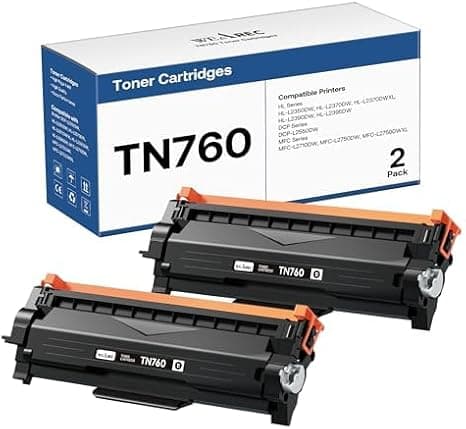
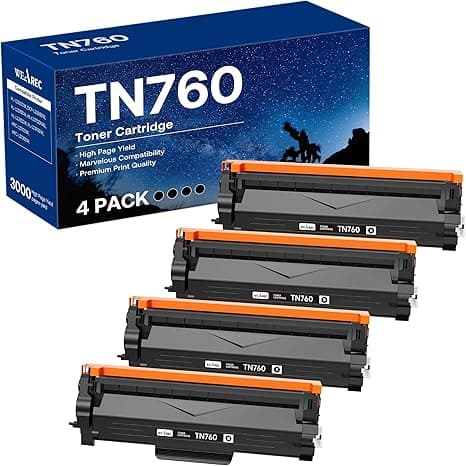
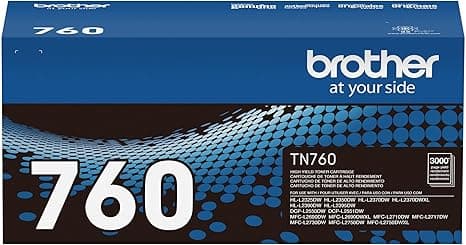
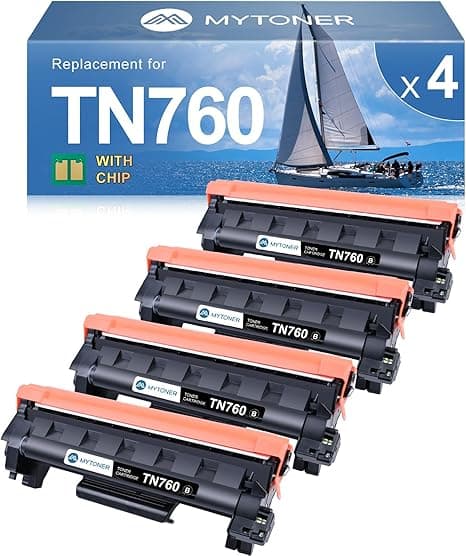
I'll be straight with you: the first time I dropped a $22 compatible cartridge into my Brother HL-L2550DW, I fully expected to regret it. I'd read the horror stories — streaky pages, "toner not detected" errors, powder leaking all over the drum. So I kept the half-empty genuine TN760 in a drawer like a parachute, ready to swap back the second something looked off. That was about eight months and a few thousand pages ago. The OEM cartridge is still in the drawer.
So this is me, the guy who didn't believe it either, telling you what actually happened.
The number that started it
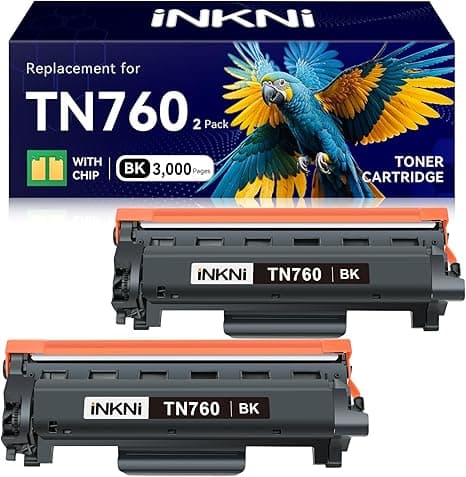
Here's what pushed me over the edge. A genuine Brother high-yield TN760 was running me right around $85 at the time. The compatible TN760 I grabbed? $22. Same advertised page yield — roughly 3,000 pages at 5% coverage. Do that math across a year of a home office that prints shipping labels, school forms, the occasional 40-page PDF nobody actually reads, and I burn through three or four cartridges. That's the difference between spending around $300 a year and spending under $90. For toner. On a printer that cost me $130 in the first place.
At some point the loyalty just stops making sense. A cartridge isn't a tire. It's a plastic box of black powder.
Does it actually fit and work?
This is the part everyone's nervous about, so let me walk you through what I did. You pop open the front cover, wait the half-second for the carriage to settle, and press the little release tab to pull the old cartridge-and-drum unit. The TN760 toner clicks out of the drum, the new one clicks in — and here's the one fiddly bit nobody warns you about: pull the orange protective tape and the seal strip all the way out before you seat it. I forgot the strip once on a different printer and got a ghost-blank first page. On the Brother it slid in with a clean, definite click. Ran a test print. Crisp black text, first try, no shaking the cartridge, no babying it.
The text quality is genuinely the easy win here. For documents, contracts, return labels, resumes — I cannot tell the cheap cartridge from the genuine one. Edges are sharp. Solid blacks are solid. If your printer mostly eats text, you are not going to see a downside in the output.
Now the honest part — where it's a touch behind
I'm not going to pretend it's a perfect clone, because it isn't, and you'd smell it if I did.
First, the chip dance. Brother firmware likes to throw a "Replace Toner" or "Cannot Detect" message when it sees a non-genuine chip. On my unit it worked the first time, but on a coworker's identical 2550DW it threw the warning until he did the cover open-and-close cycle twice. Mildly annoying. Not a dealbreaker, but if you panic easily, that ten-second scare is real. Some Brother models also nag you to flip on "Continue Mode" in settings so the printer doesn't halt on a low-toner reading — worth knowing before you're standing there at 11pm with a label that won't print.
Second, the toner-low gauge lies a little. The genuine cartridge gives you a fairly honest runway to the end. This compatible one went from "fine" to "feed me" faster than I expected near the finish, and the very last couple hundred pages got slightly lighter on heavy-coverage stuff — think a dark photo-ish graphic or a page that's 80% solid black. For plain text you'd never notice. For a flyer with a big black header, I caught a faint unevenness on the final pages before I swapped. Genuine toner held its density right to the bitter end a bit better than this did.
Third — and this is small, but I said I'd be honest — the packaging is cheap. Thin box, a baggie, a foam end cap that arrived half-crushed. The cartridge itself was fine, sealed and undamaged, but it doesn't give you that "premium" feeling out of the box. If unboxing matters to you, this will feel like the store-brand cereal. It is the store-brand cereal. It also pours the same milk.
One more usage detail, because people always ask: I store my spares standing upright in a closet, away from a sunny window, and I give each one a gentle five-second side-to-side rock before installing. Costs nothing, evens out the powder, and I've had zero streaking across every one I've run this way. The two times I've seen anyone complain about lines down the page, it traced back to a cartridge that baked in a hot garage or got jammed in upside down — not the toner being bad.
Why a dead cartridge actually matters
Quick reality check on the stakes, because "just buy OEM to be safe" gets thrown around like cheap toner can wreck your machine. It can't — not the way a saturated air filter chokes a motor. Worst case with a bad compatible cartridge is a streaky page or a chip the printer won't read. Annoying, not fatal, and you reseat it or return it. The actual thing people are dodging is running dry at the wrong moment: that low-toner warning freezing a print job the night before something's due. The fix for that isn't paying $85 a pop. It's keeping a $22 spare in the drawer so you're never one cartridge away from a problem.
So who should still buy genuine?
I'll give it to you the way I'd tell a friend over text. If you run a print shop, or you're printing client-facing marketing with heavy black coverage where every page has to look identical down to the last sheet — buy the genuine TN760 and don't think twice. The end-of-life consistency is worth the markup when the output is literally your product. Same goes if you're on a printer still under a warranty you're paranoid about and a "non-genuine" flag would keep you up at night.
For everybody else — the home office, the family printer, the small business cranking out invoices and labels — I personally grab the compatible one. I have, repeatedly. It seats with the same click, lays down the same sharp black text, and saves me around $60 every single time I'd otherwise be handing it to Brother for the privilege of their logo on the box. It's a hair behind at the very end of its life, and the chip occasionally needs a nudge. That's the whole list of complaints. For the money I've saved keeping a couple of these in the drawer instead of one genuine cartridge, I'd do it again tomorrow. Honestly — I already did. There are two sitting in my closet right now.