Troubleshooting & Analysis
Eighty bucks. For toner. Are you serious?
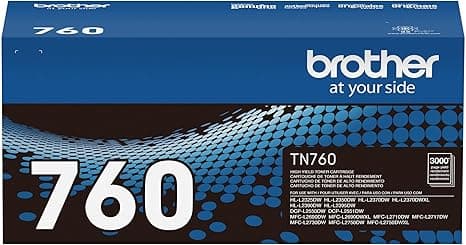
That was the number that stopped me cold the first time my Brother 2550DW flashed the low-toner warning. I went to reorder the genuine TN760 high-yield cartridge and the price was sitting at around $80 for a single black cartridge. One. For a sub-$200 printer. I remember actually saying it out loud at my desk — "I paid less for the whole machine than two of these would cost me." And the thing is, I print maybe a couple hundred pages a month. Shipping labels, a lease agreement, my kid's homework when the school portal won't cooperate. Nothing fancy. Black text on white paper. There is no universe where that should cost what a tank of gas costs.
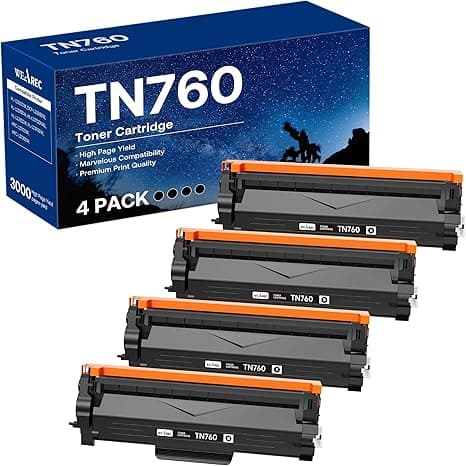
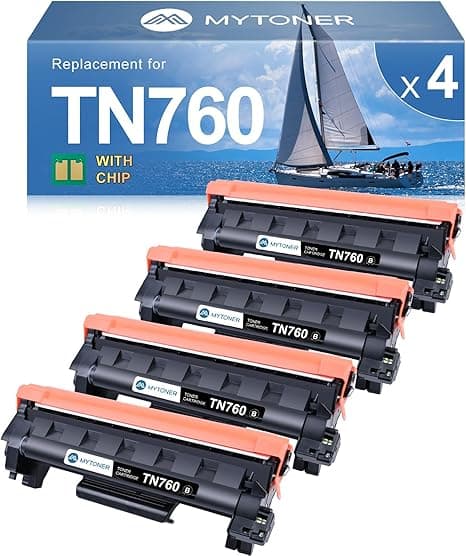
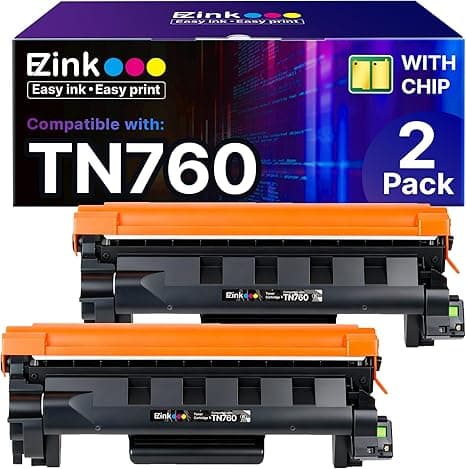
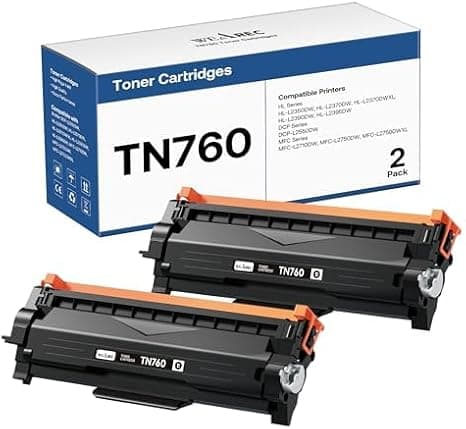
So I did what a lot of people staring at this exact screen are about to do. I bought the compatible TN760 instead — the ISO-rated third-party cartridge that drops in the same slot — for about $22. And I've now run several of them through my 2550DW and a friend's 2710DW over the better part of a year. Here's the honest version of how that went.
The math is genuinely stupid in your favor
Let's just lay the numbers next to each other, because that's the whole reason you're here. The OEM TN760 runs roughly $75 to $80 and comes out to somewhere around $0.05 to $0.12 a page depending on how much black you're laying down. The compatible cartridge I bought lands at about $0.02 to $0.05 per page. On standard business documents — invoices, contracts, the stuff most of us actually print — I could not tell you which page came out of which cartridge in a blind test. I tried. I printed the same lease addendum from both and laid them side by side under a desk lamp. Identical.
If you print even moderately, the gap stops being a one-time savings and turns into real money. Say you go through four cartridges a year. That's $320 in OEM toner versus under $90 with the compatible. Three hundred bucks back in your pocket annually, for output you can't visually distinguish. That's not a coupon. That's a different category of spending.
Does it actually fit? Yes — with one finicky step
This was my real worry going in. A cartridge that doesn't seat right is worse than no cartridge. Good news: it drops into the 2325DW/2550DW/2710DW exactly like the original. You power on, open the access door, wait for the carriage to settle, press down on the old one to pop it free, and the new compatible cartridge slides into the color-coded slot at a slight angle before it clicks up into place. That click is the tell — when you hear it, you're done. I had it swapped in under two minutes the first time.
The one thing that tripped me up: pulling the protective tape off the nozzle area. On my first compatible cartridge I got impatient and almost touched the copper contacts, which you absolutely should not do — skin oil on those contacts is how you get a "cartridge not detected" headache. Peel the tape, keep your fingers on the plastic body, and you're fine. It's a thirty-second job once you know to slow down for it.
The part nobody warns you about
Okay, here's the real downside, and it's the big one. Brother pushes firmware updates that can — and sometimes do — suddenly stop recognizing third-party cartridges. I'm not being dramatic; it happened to my friend's 2710DW. An update rolled out overnight, and the next morning his printer flat-out refused the compatible cartridge it had happily accepted for months. Mid-tax-season. He was not amused.
The fix is twofold and you should do both before you ever hit a deadline. First, buy compatible cartridges that explicitly ship with updated chip technology — the listings that mention a current chip are the ones surviving recent firmware. The bargain-basement ones with no chip mention are the ones that brick. Second, and this is what saved me: go into your printer's settings and turn off automatic firmware updates on your 2325DW/2550DW/2710DW. Brother frames these updates as improvements, but for a third-party-cartridge household they're a liability you don't need. I print fine on the firmware I've got. I'll update when I choose to, not when an algorithm decides my $22 toner is the enemy.
The other smaller gripes, while I'm being straight with you: the packaging is cheap. Thin cardboard, a plastic bag, none of the molded shell the genuine box comes in. Doesn't affect the toner, but it doesn't inspire confidence on the doorstep either. And page-yield claims on compatibles run a little optimistic — the cartridge I rated for a certain number of pages tapped out maybe ten percent early. Still cheaper per page by a mile, but don't take the box number as gospel.
Why this even matters beyond the price
A toner cartridge isn't a safety part the way a saturated air filter is, but a dead or rejected cartridge has its own quiet cost: the document you couldn't print when it mattered. The signed offer that had to go out by 5 p.m. The boarding pass. The thing is, the failure almost always comes from the firmware game, not the toner itself — which is exactly why the chip-and-update advice above is the whole ballgame. Get that right and a compatible cartridge does its job for months without a thought.
So who should still buy the real one?
I'll be fair about it. If you run a high-volume office where a printer going down for even an afternoon costs you actual revenue, or you're under a service contract that voids over third-party consumables, buy the genuine TN760 and don't think twice — the premium is cheap insurance in that world. Same if you simply can't be bothered to toggle a firmware setting; the OEM path is the no-homework path.
But for me? Home office, normal volume, black text on white paper, and a willingness to flip one settings switch? I grab the compatible every single time. I've done it for a year across two printers, saved a few hundred dollars, and the pages come out looking exactly the same. For roughly fifty-plus dollars less per cartridge, doing the identical job, it's not even a close call. I'd buy it again — and the next time that low-toner light comes on, I will.