Troubleshooting & Analysis
I bought it expecting to return it
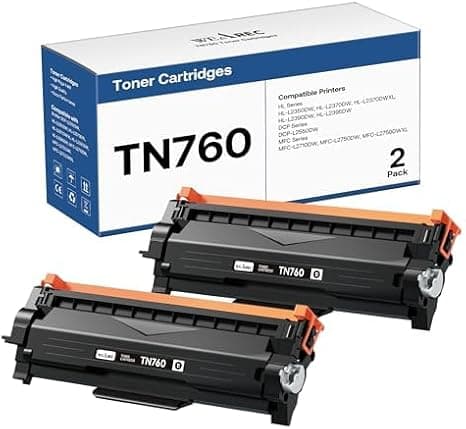
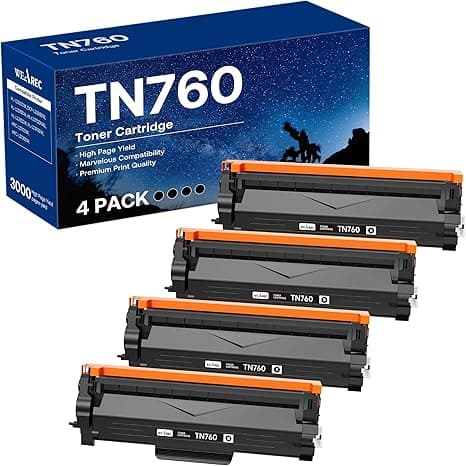
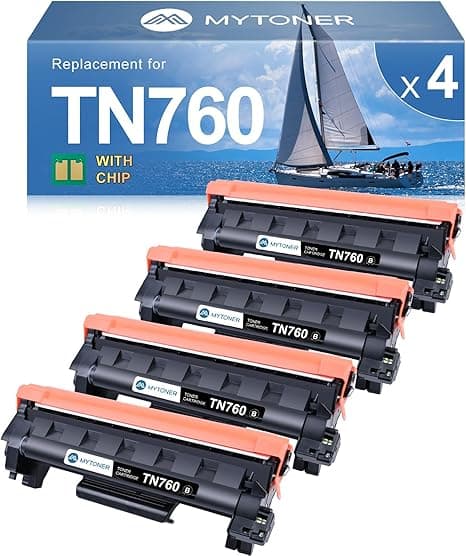
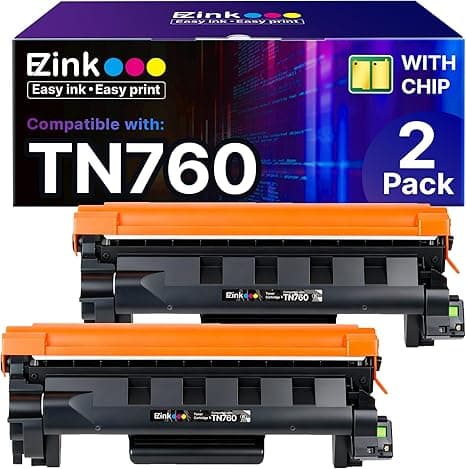
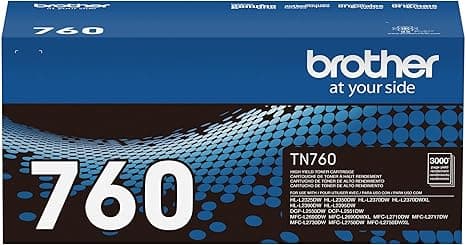
Here's the honest version: I ordered the compatible TN760 for my Brother 2550DW fully planning to send it back. Twenty bucks for a cartridge that Brother sells for fifty-something? In my head that math only works one way — somebody cut a corner, and that corner is going to show up as streaky text or a chip the printer refuses to recognize. I'd been burned before on a no-name toner for a different machine that ghosted every page like a bad photocopy. So no, I didn't believe a $20 cartridge could just... be fine.
It's been fine. Four reams of paper later, fine. Let me walk you through what I actually saw, because the gap between what I expected and what happened is the whole story here.
The price gap is not subtle
The genuine Brother TN760 high-yield runs in the $55–70 neighborhood depending on the day and where you buy. The compatible I picked up was right around $20 — call it 60-70% less for the same nominal page count. On my 2550DW that's the difference between roughly $0.05–0.12 a page on OEM and somewhere in the $0.02–0.05 range on the compatible. Doesn't sound like much per page. But I print shipping labels and the occasional 40-page contract, and over a year that spread is real money — easily a hundred bucks a year for me, more if you're running a small office off one of these.
That was the part that made me suspicious, honestly. A number that good usually has a catch. So I went looking for the catch.
Install: it just seated
This is where a lot of compatibles fall apart — the fit. I powered the printer on, opened the access door, waited for the carriage to settle. Pressed down on the old cartridge to pop it loose. Pulled the new one out of the packaging, peeled the protective tape off the contact area, and — this matters — kept my fingers off the copper contacts. Slid it in at the slight angle the slot wants, pushed up until it clicked.
It clicked. A real, seated click, same as OEM. No wiggling, no forcing, no holding it at a weird angle to make the door close. The frame plastic feels a hair cheaper in the hand than Brother's — a little lighter, a slightly different texture — but in the printer you'd never know. Closed the door, the machine ran its initialization, and it printed a test page without a single complaint about a non-genuine cartridge. That was the moment I figured I wasn't returning it.
How it actually prints
On standard business documents — invoices, labels, black-text contracts, the stuff this printer exists to do — I genuinely cannot tell the two apart. Crisp edges, solid blacks, no ghosting, no streaks. I printed the same PDF on the tail end of an OEM cartridge and the front end of this one and laid them side by side under a desk lamp. Same page. If there's a difference my eyes aren't finding it at any size a normal person reads.
Where I'll give OEM a slight edge: very dense graphics coverage. If you're slamming down full-page black fills or heavy grayscale photos, I thought the compatible looked a touch lighter in the most saturated areas — like it metered the toner a hair more conservatively. For a document printer? Irrelevant. For someone printing photo-heavy material on a mono laser? You probably shouldn't be doing that on this machine anyway, but that's the one spot I noticed daylight between them.
The downside nobody warns you about
Here's the real catch, and it has nothing to do with print quality. It's the firmware.
Brother pushes firmware updates, and some of those updates have a history of tightening the chip handshake so that third-party cartridges suddenly read as "incompatible" — on a cartridge that was printing perfectly the day before. This is the actual risk you're buying into, not toner quality. It bit me once on a different brand, mid-deadline, printer flat refusing to move. So two things. One: buy compatibles that advertise updated chip technology — the ones with current chips survive these updates far more often than the cheapest bottom-of-the-barrel options. Two: seriously consider turning off automatic firmware updates on your 2550DW. You're not missing meaningful features, and you keep control over the one variable that can brick your supply chain at the worst possible moment.
The other smaller gripes: the packaging is cheap — a thin plastic bag and a flimsy box instead of Brother's molded shell, so a couple of mine arrived with scuffed boxes (cartridges were fine). And the toner-low warning timing is a little less precise than OEM; mine cried wolf a bit early and then kept printing clean pages for a good while after. Not a dealbreaker, just a thing. Keep a spare on the shelf and you'll never feel it.
Why a tired cartridge is more than an annoyance
One thing I'll say for not running a cartridge into the dirt: a near-empty toner doesn't just fade, it can start dropping loose particles inside the machine, and on a laser that means streaking and the occasional speck baked onto the drum. Swapping at the first real sign of fade — not the first early warning, the actual fade — keeps the inside of the printer cleaner and your pages sharp. At $20 a pop instead of $60, you can actually afford to do that, which is kind of the quiet bonus of going compatible. You stop nursing a dying cartridge to squeeze out your money's worth.
Who should buy OEM instead — and who I am
If you've got a printer under warranty and you're nervous about a support rep blaming a third-party cartridge, or you print mission-critical material where a single firmware hiccup would genuinely cost you a contract, pay Brother's price and sleep easy. That's a legitimate reason and I won't talk you out of it.
Me? I keep automatic updates off, I keep a current-chip compatible on the shelf, and I've now bought this same $20 cartridge three times for my 2550DW. It seats right, it prints documents I can't distinguish from genuine, and it does it for a third of the cost. I came in expecting to ship it back and instead it changed how I buy toner. That's the most honest endorsement I've got.