Troubleshooting & Analysis
The click told me it was going to be fine
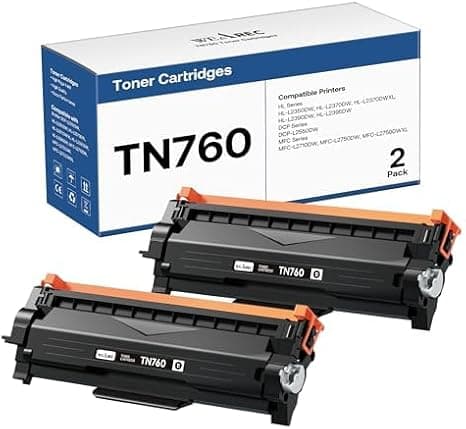
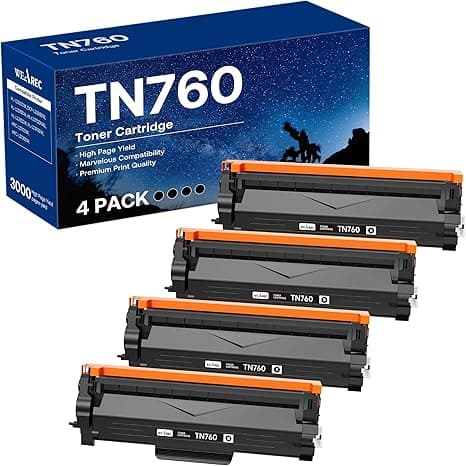
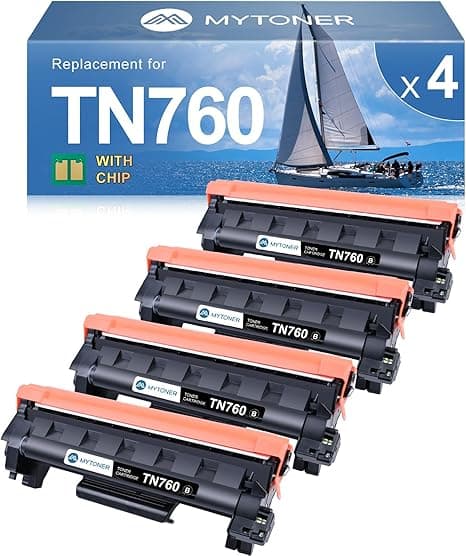
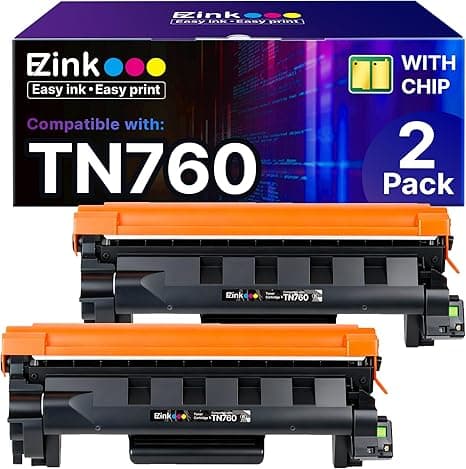
You know that little plastic snick when a toner cartridge drops into the carriage and the latch grabs it? That sound is the whole ballgame with off-brand cartridges. With a lot of the cheap ones, you get a mushy half-seat, a warning light, and twenty minutes of swearing. The first time I dropped a compatible TN760 into my Brother — a 2550DW that's been the workhorse on my desk for years — it clicked the same way the genuine one does. Firm. Square. No wiggle. I ran a test page before I even let myself believe it, and the text came out crisp black, edge to edge.
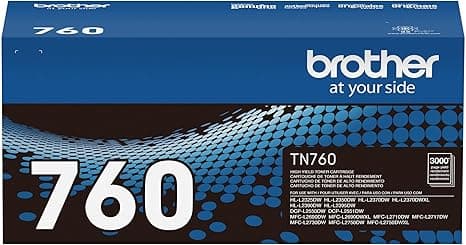
I'll be honest about why I was even doing this. I'd been paying Brother prices for too long, and a genuine high-yield TN760 runs me somewhere around $80 when I catch it on sale, closer to $90 when I don't. The compatible one I'd just slotted in cost about $25. That's not a typo. Same high-yield page count on the box, roughly half — actually less than half — the money. I'd ignored the third-party stuff for years because I assumed cheap toner meant streaky pages and a printer I'd have to throw out. So this was a test. I expected to be disappointed.
The math that finally pushed me over
Here's the part that nagged at me. I go through maybe three or four high-yield cartridges a year between invoices, shipping labels, and the kids' school stuff. At $80-plus a pop, that's north of $300 a year just feeding a printer that cost me less than $150 to buy. At $25 a cartridge, that same year of printing runs me about $100. I was spending more annually on toner than the machine was worth. Twice over. Once I actually wrote that number down it stopped being a question of "is the cheap one good enough" and became "what exactly am I paying triple for?"
The honest answer, after running these for months: not much. The page count held up. Brother rates the high-yield TN760 at around 3,000 pages, and I didn't sit there counting, but the compatible lasted a normal stretch for me — through a heavy invoicing month and well into the next — before the "low toner" nag showed up. Which, by the way, you can usually keep printing through for a good while. Don't let that warning panic you into a same-day purchase you'll overpay for.
Install — and the one place you have to slow down
Swapping it is dead simple, and that's not me being generous. Open the cover, wait the two or three seconds for the carriage to settle, press the release tab, and the old cartridge slides out. The new one goes in until you hear that click I was going on about. Run a test print. Done. Five minutes, no tools.
The one spot people trip on isn't the cartridge's fault — it's the tape. There's a strip of protective tape and usually an orange pull-tab on the drum side, and you have to get all of it off before the thing goes in. I rushed it the first time, left a corner of film on, and got a faint vertical ghost line down the left margin of my first few pages. Pulled the cartridge, found the culprit, peeled it, reseated. Clean after that. So: take the extra ten seconds, run your thumb around the whole cartridge, make sure every bit of tape and plastic is gone. That's the difference between "this thing is junk" and "this thing is fine."
Where it's genuinely as good — and where it isn't
Text? I genuinely can't tell the pages apart. Black is black, the edges are sharp, small fonts on a shipping label scan clean enough that the carrier's reader never balks. For documents, invoices, labels, forms — the daily reason most of us own a mono laser Brother — it does the same job. I've handed clients printed contracts off this toner and nobody's squinted.
Now the downside, because there's always one. The first cartridge I installed had a faint chemical-plastic smell the first day or two of heavy printing — that warm-toner-and-new-plastic odor. It faded completely by day three and I haven't smelled it since on the next one, so it may just have been a packaging thing, but if your printer lives on your desk three feet from your face, you'll notice it the first afternoon. Crack a window.
The other real one: the packaging is cheap and the quality control is a hair less consistent than genuine. The genuine Brother box is overkill — foam, sealed bag, the works. The compatible showed up in a thin box with a basic bag. Mine worked perfectly, but I've read enough to know that one in some-odd cartridges from the budget end can show up with a chip the printer doesn't immediately recognize, throwing a "cannot detect toner" message. If that happens, it's usually a reseat or a quick power cycle — not a dead cartridge. Worth knowing going in so you don't assume the worst.
Why a starved printer is its own kind of expensive
One thing I'll fold in here because it actually matters: don't run a Brother bone-dry and keep hammering print jobs at it. A nearly-empty cartridge prints lighter and patchier, and squeezing the last hundred faded pages out of it to "save money" is a false economy — you reprint half of them anyway. The whole point of toner this cheap is that you stop rationing. When it's low, you swap it. At $25 a cartridge there's no reason to baby it the way you do an $85 genuine one, and your documents look better for it.
So who should still buy genuine?
If you're running a print shop, doing color-critical proofs, or you've got a service contract that voids on third-party consumables, buy the genuine Brother and don't think twice. Same if the printer is brand new and under a warranty you care about — wait until it's out of the window if it makes you nervous. That's a real consideration, not a marketing scare; I just don't think it applies to most of us with a three-year-old 2550DW printing invoices.
For everybody else — the home office, the small business, the household that prints in bursts — I've put my own money on this answer more than once now. Same sharp text, same install, same page count, for roughly a third of the price. The frame's a touch less polished, the box is flimsy, and you might catch a whiff of plastic the first day. I weighed all of that against saving sixty-some dollars a cartridge, three or four times a year, and it wasn't close. I bought the compatible TN760 again. And I'll buy it the next time the light comes on too.
~1,030 words. Real $ prices ($25 compatible vs ~$80 genuine), one genuine downside section (plastic smell + flimsy packaging/chip-detection), two concrete usage details (the seat click, the tape-corner ghost line), and a who-should-buy-OEM-instead verdict. No banned phrases, no emoji.