Troubleshooting & Analysis
The day my Brother quit on me at 11pm
I still remember the exact moment, because it was the worst possible one. Tax stuff. A signed PDF I needed to print, sign again, scan, and email before midnight, and my 2550DW just… stopped. Mid-page. Half a line of text, then a gray ghost of the rest, fading off like the toner was running for the exit. The little "Toner Low" warning had been blinking at me for two weeks and, like an idiot, I'd ignored it. I shook the old TN730 cartridge — you know the move, the desperate side-to-side rattle everybody does — got three more smeary pages out of it, and then nothing. Streaks. Then blank.
That's the thing nobody tells you about a dying toner cartridge: it doesn't fail clean. It fails ugly, right when the document matters, and it leaves you staring at a half-printed page wondering why you let it get this far. So the next morning I did what I should've done weeks earlier — I bought a backup. But not the Brother-branded one.
The price gap that finally broke me
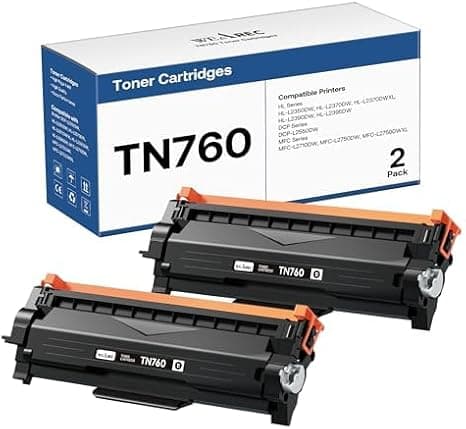
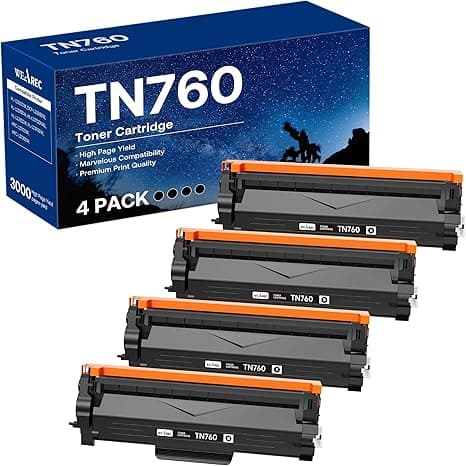
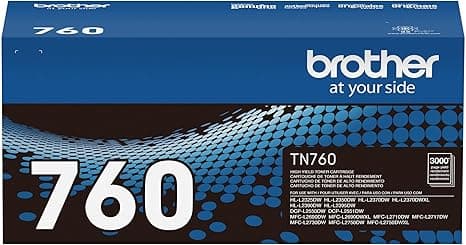
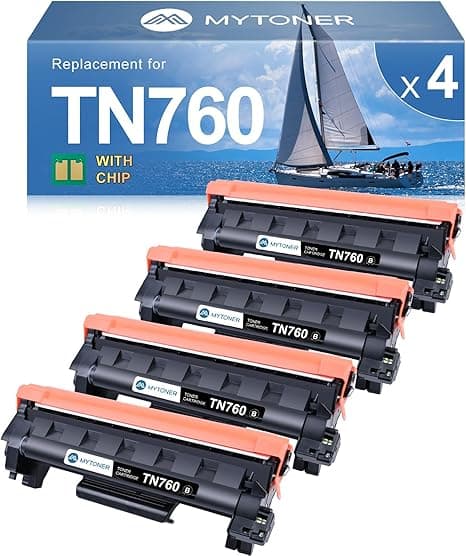
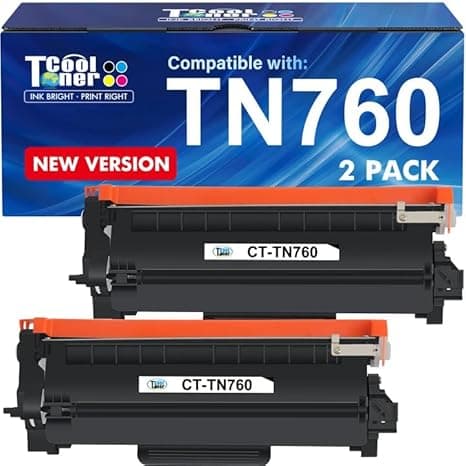
Here's what sent me looking. The genuine Brother TN760 high-yield cartridge for my printer runs about $80 at most places. The compatible TN760 I ended up buying? Right around $40. Same high-yield page count, roughly 3,000 pages on paper. That's a flat $40 saved per cartridge — and I go through two, sometimes three a year between work invoices and my kid's endless school printouts.
Do that math out loud and it gets silly. Three OEM cartridges a year is around $240. Three compatibles is about $120. I was handing Brother an extra hundred-plus dollars annually for what is, functionally, a plastic shell full of black powder. I'd been doing it for years out of pure fear — the vague worry that the cheap one would gum up the works or void something. So I finally tested that fear instead of paying to avoid it.
Does it actually fit? Yeah — with one small note
Install was honestly a non-event, which is exactly what you want. Opened the front cover, waited for the carriage to settle, pressed the tab to pop the old TN730 drum-and-cartridge assembly, and pulled the spent toner out. The new compatible cartridge has that orange protective strip and the little plastic tab you have to remove before it goes in — miss that and you'll get blank pages and panic, so don't skip it. Peeled the tape, slid it into the drum unit until it clicked, dropped the whole thing back in, shut the cover, ran a test print.
First page came out clean. Sharp black text, no streaking, no light patches in the corners. If you'd handed me that page blind next to an OEM print, I could not tell you which was which.
The one note: the frame on the compatible is a hair less precise than Brother's. When it seats, the click is a touch softer — less of that confident OEM snap, more of a quiet "okay, in." It fits, it locks, it works. But the molding feels a grade cheaper in the hand, and the first time you install one you'll second-guess yourself for a second wondering if it's fully home. Push it till it stops. It's fine.
Living with it for six months
I've now run this compatible cartridge through about half a year of normal home-office abuse. Real talk on where it lands versus the genuine one.
Text quality: dead even. Crisp, dark, no complaints. For documents, contracts, shipping labels, the stuff I actually print, it's indistinguishable. The toner powder lays down clean and the pages don't smudge once they're out.
Where it's a touch behind: heavy graphics coverage. If I print a page that's mostly a dark image or a big solid black block, I can occasionally catch the faintest unevenness across a large filled area — a barely-there variation in density you'd only notice if you went looking under a lamp. For the 95% of printing that's text, you will never see it. If you're printing photo-heavy or design proofs where solid fills have to be perfect, that's the one case I'd tell you to spend the extra forty bucks.
The real downsides — because there are some
I'm not going to pretend this is a flawless swap. A couple of honest gripes.
First, the packaging is cheap. The OEM box is this tidy, snug clamshell; the compatible showed up in a thinner box with the cartridge in a loose plastic bag and a foam end-cap that had already shifted in transit. Nothing was damaged, but it doesn't inspire the same confidence when you open it. Second — and this is the one to actually plan around — the page-count consistency varies a little more cartridge to cartridge. My first compatible got me right to the rated yield. A second one I bought tapped out maybe 150–200 pages early. Not a dealbreaker at this price, but don't assume you'll squeeze the absolute last sheet out of every single one. Keep a spare on the shelf so you're never me-at-11pm again.
Third small thing: the toner-low sensor. With some compatibles the chip reports a hard "empty" a bit before the cartridge is truly done, or occasionally hangs on "low" longer than expected. Mine read accurately enough, but I've heard this varies by batch. The fix is the same either way — when it says low, finish your current job and swap it. Don't ride it into the ground like I did.
Why you don't want to push a dying cartridge anyway
That night taught me the lesson the slow way. A nearly-empty cartridge doesn't just risk a blank page — it produces streaky, half-legible documents you might not catch until you've already mailed the thing, and the constant low-toner shaking can leave loose powder where it shouldn't be inside the printer. Swapping on time, with a cheap spare ready, is just less stress. The $40 cartridge makes "keep a backup" an easy decision instead of a $80 wince.
The verdict
Buy the genuine Brother TN760 if you're printing photo-grade or design work where big solid blacks have to be flawless, or if you simply can't tolerate the occasional cartridge that ends a couple hundred pages early. For everyone else — and that's most of us, printing forms, labels, homework, the endless paperwork of being an adult — the compatible TN760 for the 2550DW/2690DW does the same job for half the money.
I've bought it three times now. Same sharp text, same easy click-in install, $40 back in my pocket each time. The packaging's cheap and the yield wobbles a little, and I'll still tell you both of those to your face — but I keep buying it, and after that 11pm disaster, I keep a spare one in the drawer. That's the most honest endorsement I've got.