Troubleshooting & Analysis
Eighty-nine dollars. For powder.
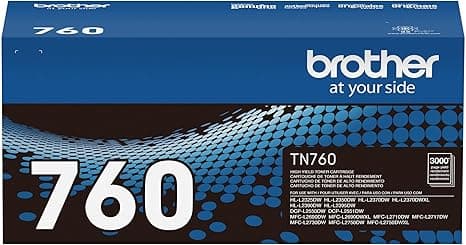
That was the number that stopped me cold the day my Brother HL-L2350DW — same TN730/TN760 family as the 2325DW and 2550DW — flashed its low-toner warning in the middle of printing a lease agreement I needed signed that afternoon. I walked into the office-supply store, found the genuine Brother TN760 high-yield cartridge on the shelf, and the tag said $89. For one black cartridge. A little plastic shell full of fine black powder. I stood there doing the math: I burn through roughly three of these a year between work documents, my kid's school stuff, and the occasional 40-page PDF I'm too lazy to read on screen. That's almost $270 a year just to keep a $130 printer running.
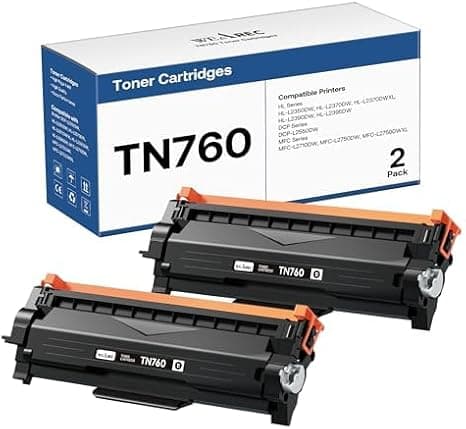
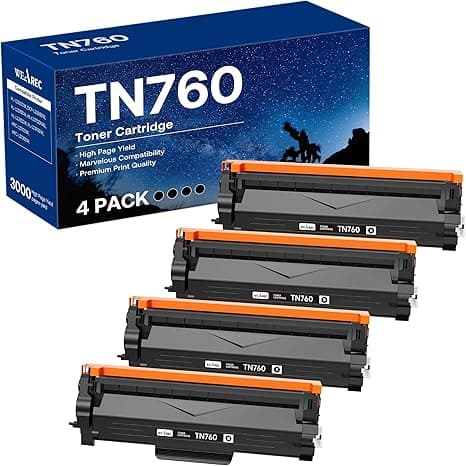
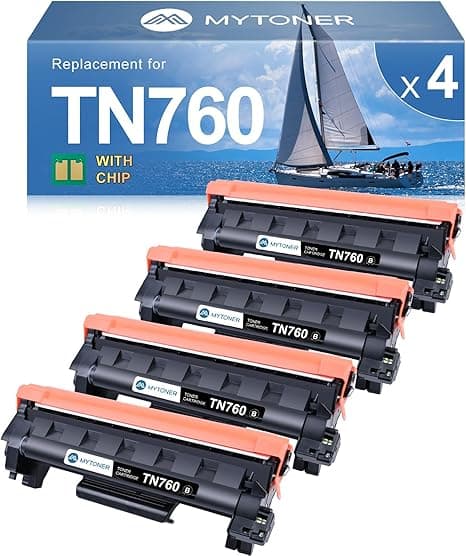
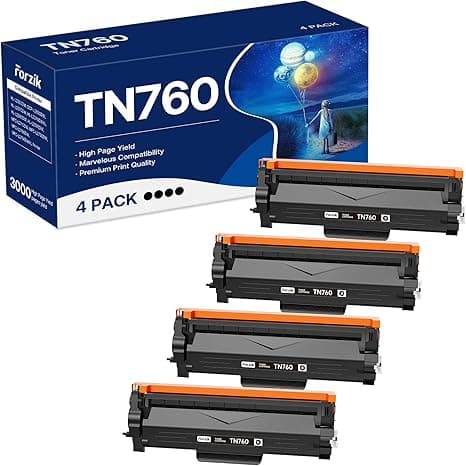
So I did what I'd been afraid to do for years. I bought the compatible TN760 instead — $29 — and I braced for it to ruin my printer.
The math nobody tells you at the register
Here's the gap laid out plainly, because the register never shows it to you side by side. The OEM TN760 ran me $89. The compatible cartridge for the 2325DW/2550DW/TN730 setup ran $29. Both are rated at the same high yield — roughly 3,000 pages on the box, and honestly my real-world number landed close enough that I stopped counting. That's a $60 difference. Per cartridge. Three cartridges a year and you're looking at $180 back in your pocket annually, doing the exact same job: laying down sharp black text on a page.
I'll be blunt — that's the whole pitch. Same powder, same page count, half the price. Or less than half. The only thing you're really paying the extra sixty bucks for with OEM is the Brother logo printed on the side of a part you throw in the recycling bin in four months.
Does it actually fit, though?
This was my real worry. Toner isn't like a water filter where worst case it leaks — a cartridge that doesn't seat right can throw error codes or, the horror stories go, gum up the drum. So I went slow the first time.
Opened the front cover, waited for the carriage to settle, pressed the release tab, and the old OEM cartridge popped out the way it always does. The new compatible one came wrapped with the protective tape over the contact strip — pull that off, don't skip it, or you'll get streaks. Then it slid in and gave me that same solid click the genuine one does. No wiggle. No forcing. I ran a test print and it came out clean on the first sheet. The whole swap took maybe ninety seconds, same as it's ever been.
Fit-wise? Honestly indistinguishable from OEM in the seating. If the frame is a hair off-spec I couldn't feel it going in, and the printer never threw a fit about it.
How it actually prints
Text is the thing this printer exists for, and the compatible cartridge nails text. Crisp black, no graying, no faded edges. I printed that lease, a stack of tax forms, and a 12-page contract and you could not pick the compatible pages out of a lineup against the OEM ones. For 95% of what a 2325DW or 2550DW gets used for — documents, forms, shipping labels, homework — it's a dead heat.
Where I'll give OEM a slight edge: heavy black fills. If you print a page that's mostly solid black — a full-bleed graphic, a dark photo — the compatible toner lays down very faintly less uniform. You have to be looking for it, holding the page to the light. On normal text and mixed pages I genuinely cannot tell. But if you're printing dense graphics for a portfolio, the OEM is a touch more even. That's the one honest concession.
The downsides — and there are a couple
Let me actually slow down here, because a review that's all sunshine is a review you shouldn't trust.
First: the page-count estimate on your printer goes a little screwy. Brother printers track toner level by counting pages on the genuine chip, and compatible chips don't always report perfectly. Mine showed "full" for an oddly long time and then dropped faster near the end than I expected. It didn't lie to me badly — I still got my pages — but if you're someone who likes a precise fuel gauge, you'll find the estimate looser than OEM. I just keep a spare $29 cartridge in the drawer and stopped worrying about the number.
Second: the packaging is cheap. The OEM box is glossy and overbuilt; the compatible showed up in a plain box with a thin foam sleeve. The cartridge itself was fine and sealed properly, but it doesn't feel premium in your hand. If unboxing matters to you — and for a printer part, why would it — that's a thing. The plastic on the shell is also a slightly lighter, hollower feel than Brother's. Functionally irrelevant. Aesthetically, you notice.
Third, smaller one: out of the box there was a very faint chemical smell on the first two or three pages, the kind of warm-toner-and-fresh-plastic thing. Gone by the fourth sheet. Never came back.
Why running it down to empty is a real problem
Worth saying plainly: don't let a printer sit with a bone-dry cartridge mid-job, OEM or not. Toner starvation makes the printer pull harder and lay down patchy, streaky pages, and you end up reprinting — which burns more toner than just swapping early. The whole reason I keep a cheap spare on hand now is that at $29 a unit, replacing a hair early costs me nothing. At $89, I used to ride every cartridge to the bitter, streaky end and waste paper doing it. Cheaper toner actually made me a tidier printer-owner.
So who should buy what
If you run a small print shop, sell printed graphics, or your output is judged on solid-black photo quality, buy the genuine Brother TN760. The slight edge on heavy fills is real and worth $60 to you.
For everyone else — the home office, the household, the person printing documents and labels and the occasional report — I grab the $29 compatible TN760 every single time now, and I have, repeatedly, across three swaps so far. Same crisp text, same page yield, a slightly fuzzy fuel gauge and a cheap box. For sixty bucks back in my pocket per cartridge, I'll live with a box I throw away anyway. I was scared it'd wreck my printer. It's been months. The printer's fine, my wallet's better, and I'm not paying $89 for powder again.