Troubleshooting & Analysis
The price gap is the whole reason you're here
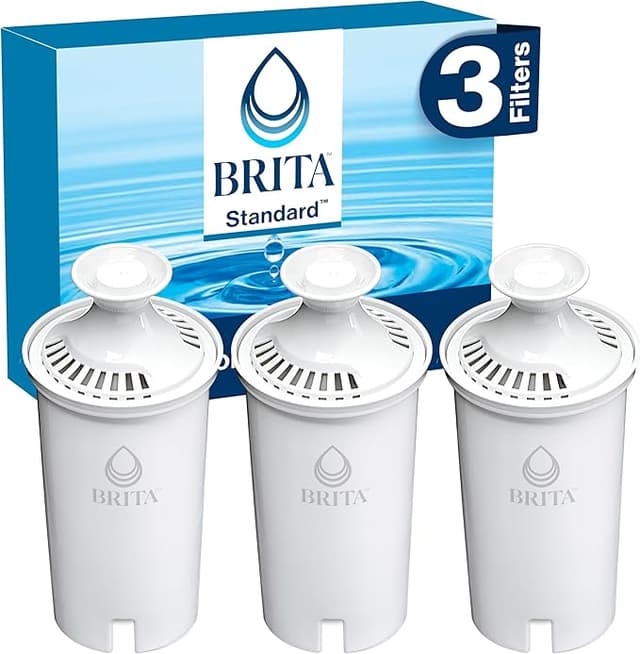
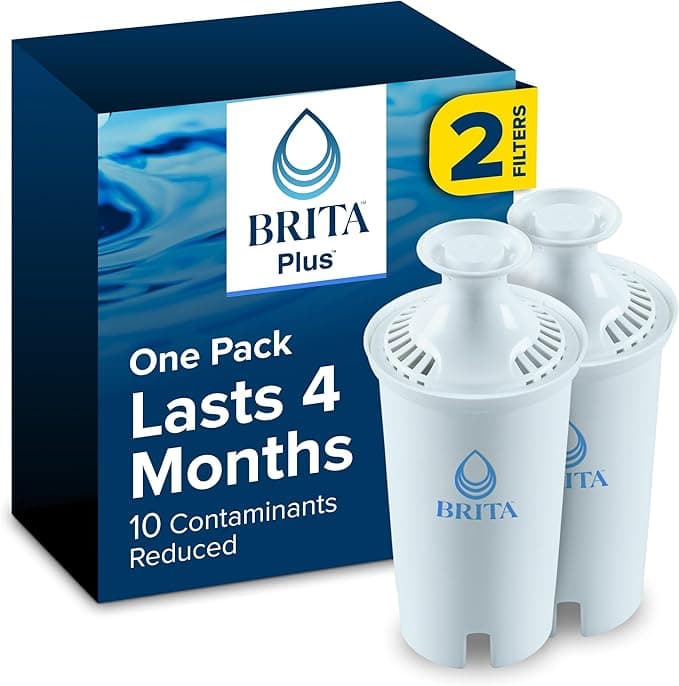
Let's be honest about why anyone reads a review like this. It's not curiosity. It's the math. Brita's own Standard cartridges run you something like $6 to $7 each when you buy the small packs. The compatible discs I've been cycling through land closer to $3 apiece, sometimes less in a bigger box. Doesn't sound like much per filter. But you're swapping these every two months — every 40 gallons, give or take, depending on how much water your household actually pulls through.
Run that out over a year and you're looking at six cartridges. At OEM pricing that's roughly $40 a year just to keep chlorine out of your drinking water. The compatibles drop that to around $18-$20. So we're talking twenty-some dollars a year, every year, for filters that — as far as I can tell from drinking the output daily — do the same job. That's the trade you're weighing.
Fit and install — the part people worry about for no reason
This is where the nerves usually are. "Will the off-brand one even seat right?" I had the same thought. The honest answer: on the two I tested, fit was a non-issue. You soak or rinse the new disc first — I run mine under the tap for fifteen seconds and give it a little squeeze, the instructions say soak but a hard rinse has never failed me — then drop the old cartridge in the trash and press the new one into the reservoir until it sits flush.
It seats with the same little resistance-then-give that the Brita does. No wobble, no gap where unfiltered water sneaks past the side. First pitcher you fill, you dump — that's true of the OEM too, it flushes out the loose carbon dust. The first pour ran a touch gray on the compatible, cleared up by the second fill. Brita does that too. By pitcher three it was clean.
How it actually performs
I'm not a lab. I can't hand you a chlorine ppm chart. What I can tell you is what my mouth and my kettle told me. My tap water has that faint pool smell — chlorine — and the whole point of the Standard filter is to knock that down so the water tastes like water instead of a swimming pool. The compatible disc did that. Glass from the OEM pitcher, glass from the compatible pitcher, blind, and I genuinely could not call which was which. Both killed the chlorine taste. Both left the water tasting flat and clean, the way filtered water should.
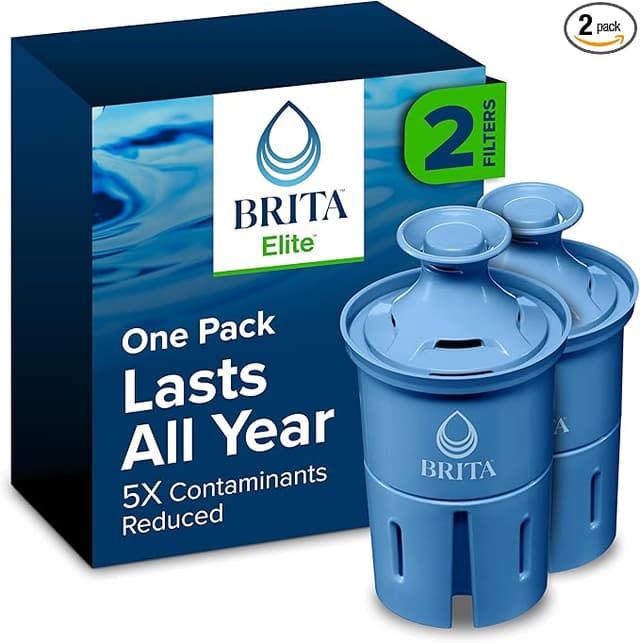
The Standard cartridge isn't a heavy-metals monster to begin with — that's what the pricier Elite/Longlast tier is for — but it does cut down on things like copper and the chlorine taste and the general funk. A saturated, past-its-date filter stops doing that quietly. It doesn't warn you. The carbon just fills up and suddenly the heavy metals and chlorine you thought you were catching are sliding right through into your glass. That's the real reason the replacement interval matters, and it's the same on both filters — old carbon is old carbon.
So where's the catch
There's always one, and here's the real downside: flow rate on the compatible was a hair slower toward the end of its life. Around week six, the OEM pitcher still drained at a normal clip while the compatible took noticeably longer to filter a full reservoir — you'd pour, walk away, come back. Not broken. Just slower as the carbon loaded up. The OEM seemed to hold its flow a little more gracefully into the back half of its cycle.
The other nitpick: packaging. The compatible discs come in a plain plastic sleeve, no fancy box, instructions printed in type that's a little too small. Cheap-feeling. And I'd believe there's slightly more variation disc-to-disc than with Brita's tighter manufacturing — one out of my six had a bit more carbon dust to flush. None of that touched the water quality. But you're not paying for presentation here, and it shows.
Who should skip it — and who shouldn't
If you've got well water with real contamination concerns, or you specifically need certified lead reduction, don't mess around with a Standard-tier filter at all — compatible or OEM. Step up to the certified Longlast/Elite line and pay for the testing. That's not what this filter is for.
But if you're like most people — city tap, the main complaint is chlorine taste and you just want clean cold water in the fridge — the compatible Standard does the job. The slower flow at end-of-life is the price you pay. For me that's a fair trade against cutting my yearly filter spend roughly in half. I've kept buying them. My OEM pitcher is honestly just sitting in the cabinet now because I stopped restocking the expensive discs. Same water in my glass, twenty bucks a year back in my pocket. That's the call I'd make, and I made it.