Troubleshooting & Analysis
The first sign was the taste. Not dramatic — just this faint, flat, slightly-swimming-pool thing creeping back into my water over the course of a week. I'd been drinking out of my Brita pitcher every day for what I figured was "a couple months," and the little sticker indicator was long gone, peeled off in some dishwasher accident. So I pulled the filter out, and — yeah. The bottom of it had gone a grayish color I don't want to describe too closely, and the flow had slowed to where the top reservoir would still be half full an hour later. I'd been drinking water that was basically straining through a saturated, tired piece of carbon. That's the moment that got me actually paying attention to what these things cost to keep fresh.
What kept stopping me: the price
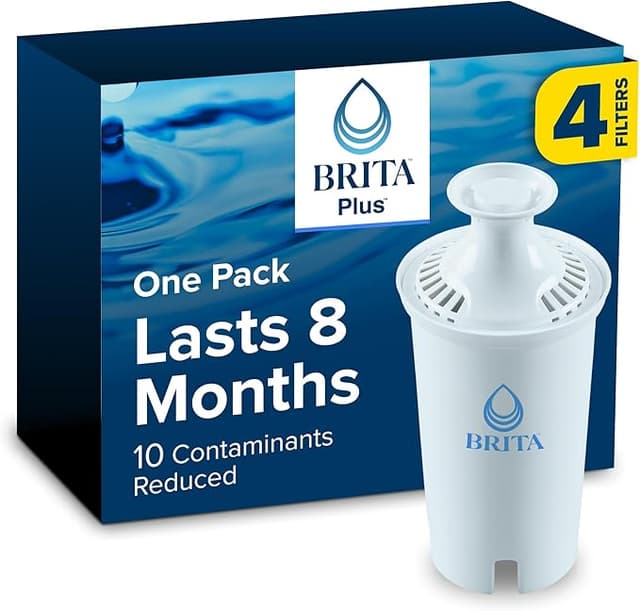
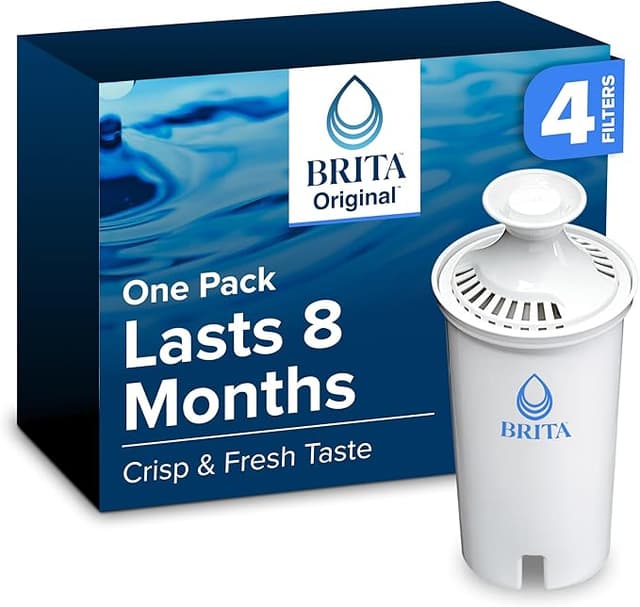
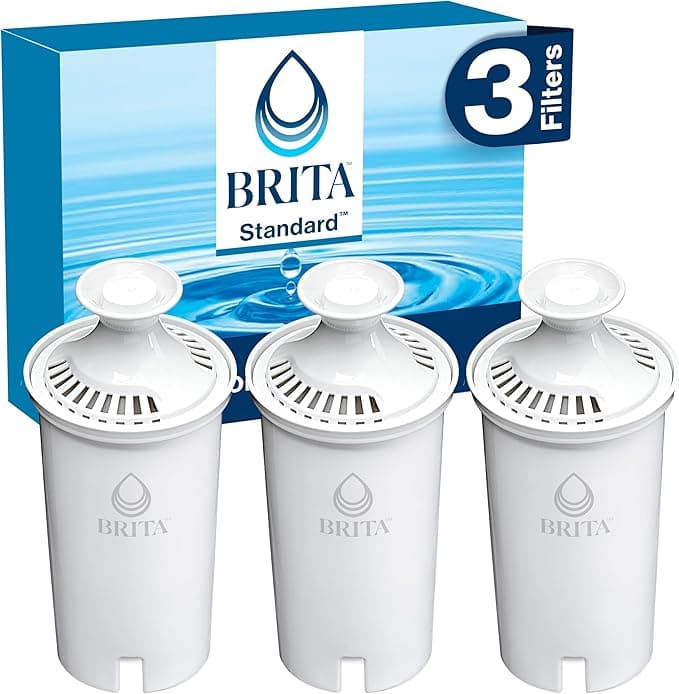
Here's the math that had quietly annoyed me for years. The Brita Standard pitcher itself is cheap — like, give-it-away cheap. The filters are where they get you. Buy the name-brand Standard replacements and you're looking at roughly $6 to $8 a pop if you buy a small pack, a little less per unit if you commit to a big box. Brita rates the Standard for about 40 gallons, which they translate to "every two months." For most households that's six filters a year. Call it $40-something annually, sometimes more, on a consumable that is, functionally, a plastic shell packed with activated carbon and ion-exchange resin.
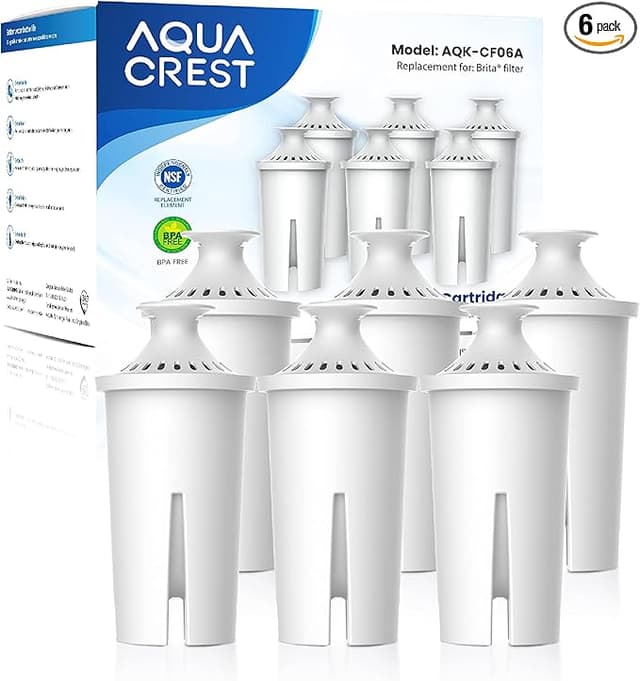
The compatible replacements I switched to run about 40 to 60 percent less. I've paid as little as a couple bucks per filter buying a larger pack. Over a year that's the difference between forty-something dollars and under twenty. Not life-changing money — but it's money I was handing over for no reason other than the word stamped on the cartridge.
Does it actually fit?
This was my real worry going in. The Standard pitcher has that twist-and-seat design where the filter has to drop into the well and the little groove has to line up, or water just sneaks around the side and you've filtered nothing. I'd read horror stories about off-brand cartridges sitting a millimeter proud and leaking past.
The ones I use seat fine. Honestly the install is the same boring routine as the original: flush it under the tap for fifteen seconds, soak it for a few minutes (I just leave it in a glass of water while I do something else), then push it down into the reservoir until it stops. You feel it bottom out. The first pitcher you pour through, dump it — there's a little carbon dust, harmless, just looks like gray flecks. After that it runs clear.
I'll be straight about the one fit nitpick: the frame on the compatibles I've bought is a hair less precise than Brita's. On one filter I had to give it a firmer press to get a clean seal, where the genuine ones drop in with a satisfying little click every time. Once it's seated, though, no bypass, no leak around the edge. I checked by watching the waterline.
How it performs once it's in
For what the Standard is actually rated to do — chlorine taste and odor, some mercury, copper, cadmium, zinc — the compatible carbon does the job I can perceive. The pool-water taste that drove me to dig out my old filter in the first place? Gone, same as with the genuine one. Water out of a fresh compatible cartridge tastes clean and a little softer. I've had a few of these running across two pitchers for over a year now and I haven't caught a difference in taste between brand and off-brand on day one of a fresh filter.
Where I'll hedge: I can't independently lab-test heavy-metal reduction in my kitchen, and neither can you. What I can say is the flow rate, the taste correction, and the lifespan have matched the genuine filters across the units I've run. The flow does slow down near the end of its life — but the real Brita does the exact same thing. That slowdown is your honest replacement reminder once the sticker's gone.
The downsides, for real
Two things. The packaging is cheap — thin plastic wrap, no fuss, sometimes a slightly chemical smell when you first open it that flushes out in the rinse. And the printed lifespan claims on some of these boxes are optimistic. I don't trust "lasts 3 months." I swap mine on the same roughly two-month, 40-gallon schedule I'd use for a genuine one, and I don't push it.
Which brings me back to that gray, clogged filter I started with. A maxed-out cartridge isn't just lazy water — it's carbon that's stopped adsorbing and is now just a wet sponge sitting in your drinking supply, and a slow-drip pitcher you'll be tempted to drink the unfiltered top off of. The compatible filters don't change that math. You still have to replace them on schedule. The whole point is that doing so costs you half as much, so there's no excuse to stretch one past its life to save a few bucks.
Who should skip these
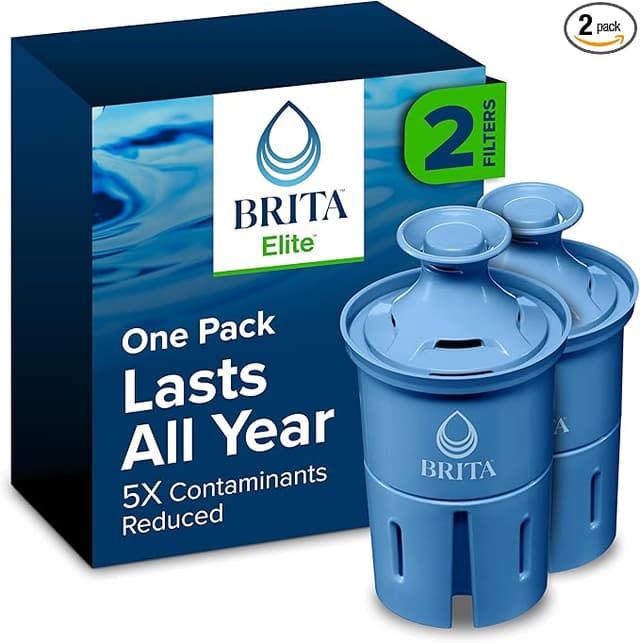
If you're on well water with specific contaminant concerns, or you need certified lead reduction, don't mess around with the Standard line at all — genuine or compatible. Step up to Brita's Elite/Longlast tier (different cartridge entirely) and buy whatever's properly certified for your situation. The Standard, in any brand, is a taste-and-odor filter, not a problem-water solution.
But for the rest of us — city tap, fine water that just tastes like chlorine, a pitcher on the counter you refill every day — the compatible Standard replacement does the same job for noticeably less. I switched, I've stayed switched, and the only thing I actually changed was how much I pay to keep my water tasting right. I'd buy them again. I already have, twice.