Troubleshooting & Analysis
The squeak when it seats — that's how I knew it fit
You know that little squeak a Brita filter makes when you push it down into the reservoir and it grabs the rubber gasket? The compatible one I've been running for the last five months makes the exact same squeak. I half expected it not to. I'd talked myself into believing the cheap version would rattle around loose, or that I'd push it in and feel that sloppy gap where water sneaks past unfiltered. Nope. Same firm push, same squeak, same satisfying stop when it bottoms out in the well.
So let me back up, because I came into this a skeptic too.
The price thing that started it
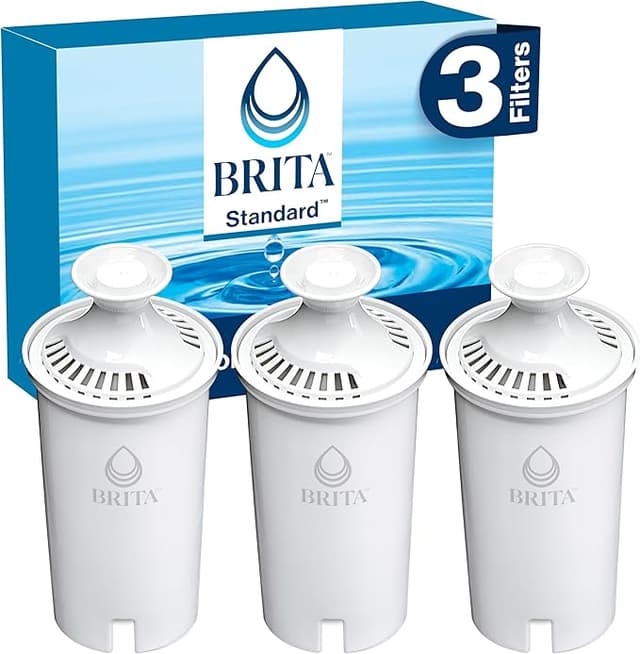
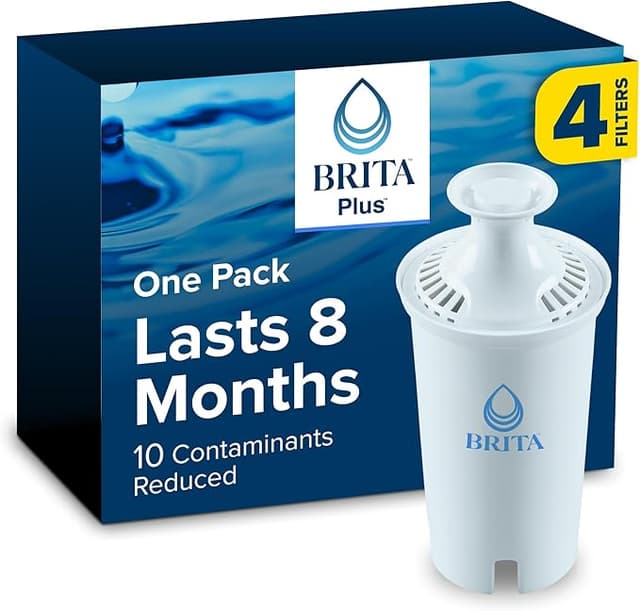
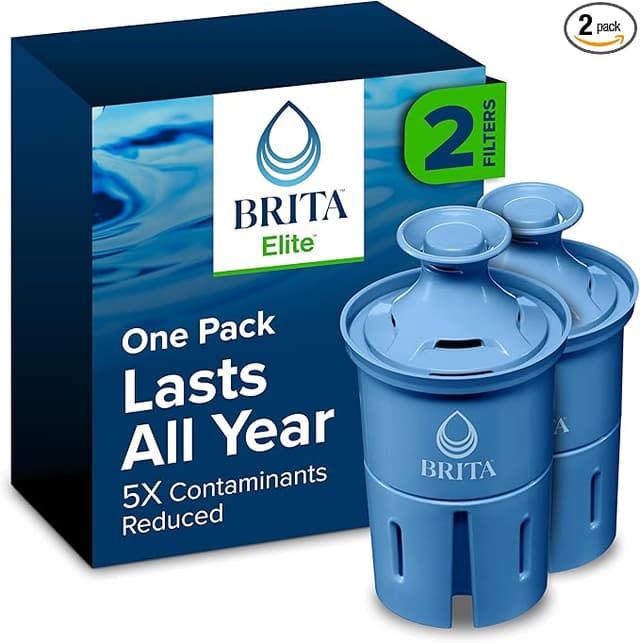
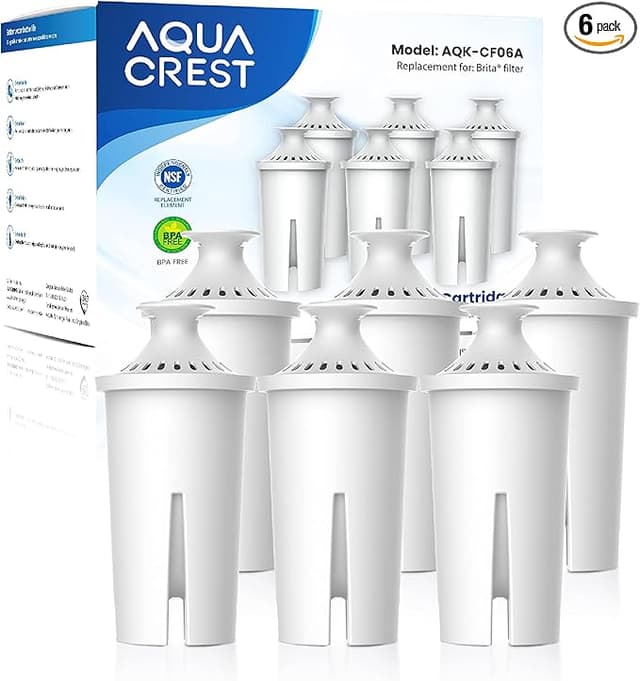
Brita's own Standard filters run me about $6 each when I buy the small genuine 3-pack, and that's if I catch them on sale — closer to $7 a pop otherwise. The compatible Standard-fit cartridges I switched to come out to roughly $3 each in a six-pack. On paper that's three bucks. Doesn't sound like a revolution. But these things are supposed to get swapped every two months, or every 40 gallons, whichever hits first. My household of three blows through a Brita pitcher fast — we're closer to the 40-gallon mark than the calendar. That's six filters a year, easy.
Six genuine filters: about $40 a year. Six compatibles: about $18. Call it a $22 swing for water that, as far as my tongue and my kettle can tell, is identical. That's a tank of gas. Over the three years I'll keep this pitcher, it's real money.
The break-in nobody warns you about
Here's the part the listing photos won't show you. Both the genuine and the compatible filters need that first-rinse ritual, but the compatible one was a little chattier about it. The instructions say soak and rinse the new cartridge before you install it — do this, don't skip it. I ran mine under the tap for a solid 20 seconds and gave it a shake. The first pitcher still came out with a faint cloud of fine black carbon dust and that flat, slightly-off taste you get from any fresh activated-carbon filter. I dumped that first batch. Second pitcher was clean. By the third it tasted like nothing, which is exactly what you want water to taste like.
With the genuine Brita I usually only have to toss one pitcher. With this compatible one I tossed two. Small thing, but it's honest — there's marginally more carbon fines to flush at the start. Five minutes of your morning, then it behaves.
Where it's genuinely as good
The whole reason you change these is what builds up when you don't. A tired filter stops grabbing the chlorine, and you start tasting that pool-water edge again. Worse, a saturated cartridge isn't just doing nothing — it can start letting more through than fresh tap would on its own, including the metals like copper and the mercury and cadmium these are rated to reduce. That's not a scare line, that's just how spent carbon works. So the real test isn't day one. It's week six.
At week six mine still killed the chlorine taste. I'm sensitive to it — I can pick out unfiltered tap in a blind sip because of that faint bleach note at the back — and the compatible filter was still flattening it right up until I swapped it. Coffee tasted clean. The kettle's the other tell at my house: our tap is hard enough that the kettle scales up, and the filtered water slowed that crust down the same way the genuine ones did. No new scale explosion, no weird film.
The downsides, for real
Two things bug me, and I'd be lying if I left them out.
- The plastic shell on the compatible cartridge feels a touch thinner than Brita's. Not flimsy, but if you grip it hard pulling it out wet, you can feel a little give. I've never had one crack, but it doesn't have that dense, solid Brita heft.
- The packaging is cheap — a thin plastic sleeve, no individual wrap on a couple of the six. One arrived with a tiny scuff on the mesh top. Rinsed fine, worked fine, but it looked less precious out of the box. If you like things to feel premium before you use them, this isn't that.
And one honest non-issue I expected and didn't get: I braced for a flow-rate drop, like the water would trickle through slower than genuine. It pours at the same lazy pace a Brita always has. No better, no worse.
Who should just buy genuine
If you've got the kind of finicky pitcher where the filter well is a hair oversized and even the real Brita needs a wiggle to seal — go genuine, because that thinner shell gives you less margin to fight a bad fit. And if the $22 a year truly doesn't register for you and you'd rather not flush an extra pitcher at swap time, the brand-name version is a perfectly good, slightly more polished thing. No shame in it.
But me? I've now run these compatibles back to back for the better part of a year, through every two-month swap, and the water out of my pitcher tastes exactly like it did when I was paying double. The squeak's the same, the chlorine's gone, the kettle's behaving. For roughly half the annual cost, doing the identical job, I reordered the six-pack without thinking twice — and that's the most honest endorsement I've got. I bought them again with my own money. Twice now.