Troubleshooting & Analysis
The day my water tasted like a swimming pool
I noticed it on a Tuesday, pouring a glass straight from the Brita pitcher I keep on the counter. That flat, faintly chemical taste — pool water, basically. Chlorine. I'd been so good about it for years and then somewhere around month four with the same cartridge I just... stopped paying attention. The little sticker indicator was long gone. The water coming out was slower than it used to be, and when I finally pulled the cartridge out and looked at it, the carbon inside had gone gray-brown and the top was slick with something I'd rather not think about. A saturated filter doesn't just stop helping. It becomes a little reservoir that water trickles through, picking up whatever's been sitting in there.
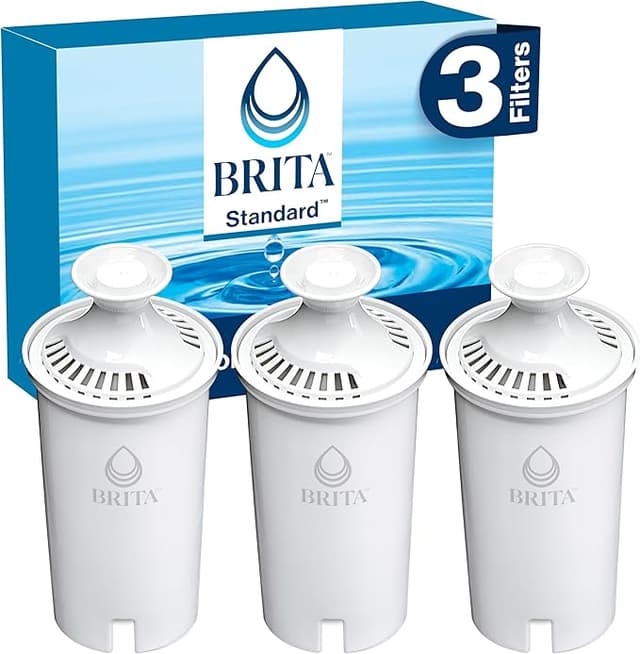
That's the thing nobody tells you about the Brita Standard. The filter isn't decorative. Once it's spent — and the Standard is rated for roughly 40 gallons, about two months for most households — it's not filtering chlorine, it's not catching the trace copper or mercury that comes off older pipes, it's just a wet sponge you're drinking through. I let mine go too long and I could taste it.
OEM prices, and the math that made me switch
So I went to reorder. And here's where I balked. Genuine Brita Standard cartridges run about $6 to $8 each when you buy them one or two at a time, and they want replacing every two months. That's six a year. Call it $40 to $48 annually for a $20 pitcher. Fine on its own, but I have the pitcher AND a dispenser in the fridge, so I'm burning through twice that.
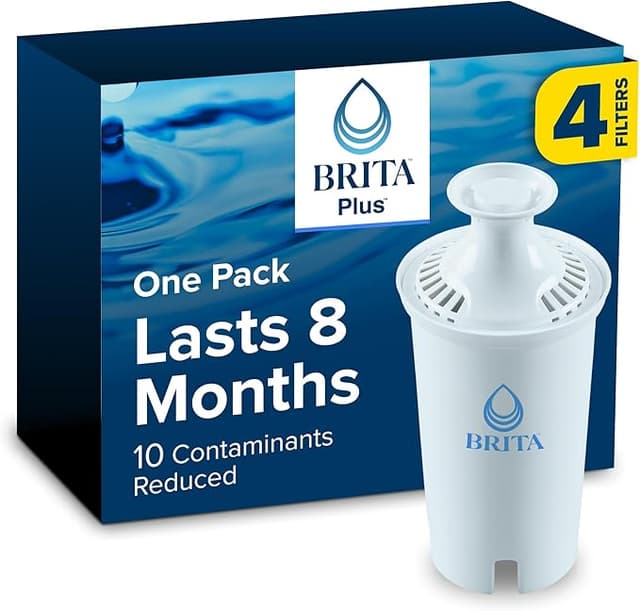
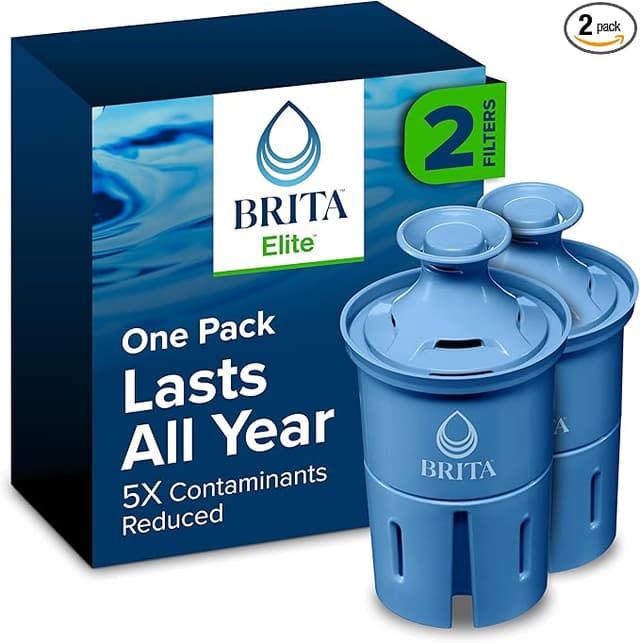
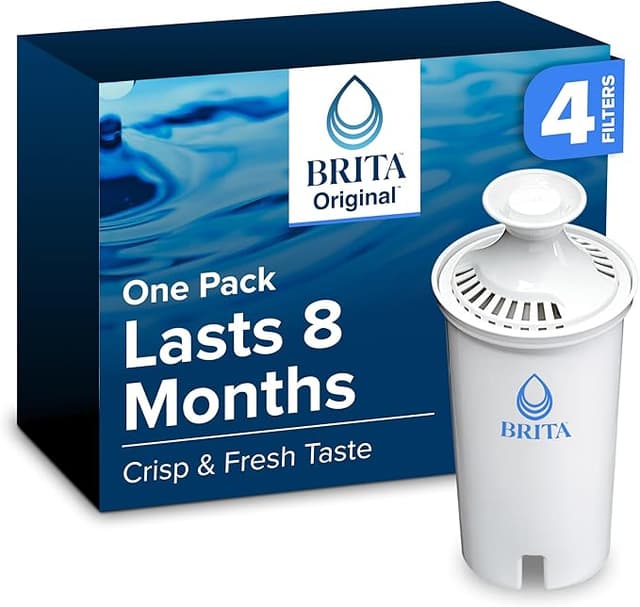
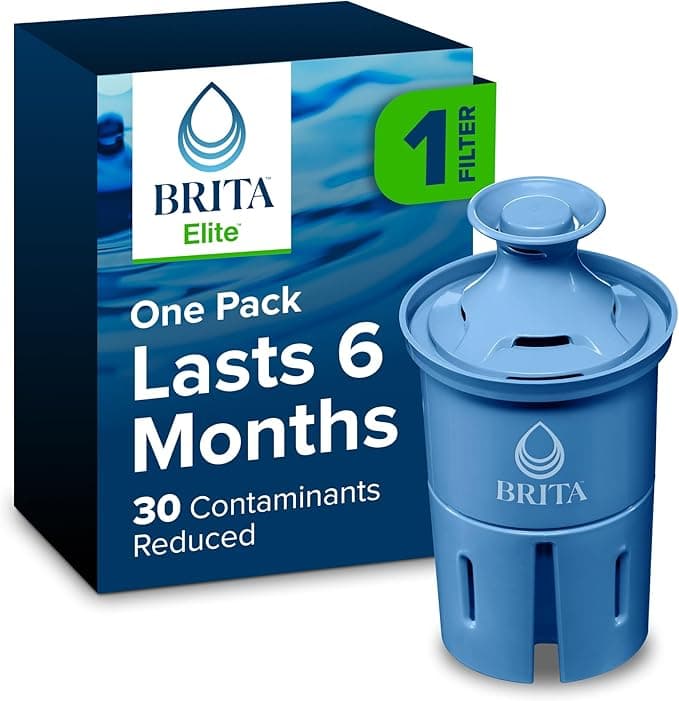
The compatible replacements I switched to land closer to $2.50 to $3.50 a cartridge when you buy a multipack. Same Standard form factor — the white oval cartridge, not the blue Elite/Longlast one, so make sure you're matching the right shape. Over a year, across both my units, that swap put roughly sixty bucks back in my pocket. For water that, as far as my tongue and my cheap TDS meter can tell, comes out the same.
Does it actually fit?
This was my worry going in. Aftermarket pitcher filters have a reputation for sitting a hair loose in the well and letting unfiltered water sneak past the gasket. I'll be honest — the first compatible one I dropped in did feel a touch less snug than the Brita-branded cartridge. Not loose enough to leak around, but I could feel the difference seating it. You prep it the same way: soak or rinse the new cartridge under cold water for about fifteen seconds to wash out the loose carbon dust, push it down firmly into the reservoir until it seats with that little resistance, then run the first pitcher-full through and dump it. That first batch activates the carbon and clears any remaining fines. After that initial discard, mine ran clear.
One real install tip: press straight down, not at an angle. Two of mine needed a firmer shove than the Brita original to fully seat, and if you don't get it all the way down that's where the loose-fit complaints come from. Seated right, no bypass, no dribble.
The honest performance read
Chlorine taste and odor — gone, same as OEM. That's the main job for most people and the compatible handles it cleanly. The carbon catches the chlorine, the mesh handles the visible sediment and the copper/mercury reduction the Standard is rated for. I ran the new one for a full cycle and the pool-water taste never came back.
Where it's a touch behind: flow rate held up a little better on the genuine Brita toward the end of its life. By week seven my compatible cartridge was pouring noticeably slower than week one — still filtering fine, just slower through the carbon. The OEM held its flow a bit longer before it tailed off. We're talking the difference between a ten-second pour and a fifteen-second pour, not a dealbreaker, but I noticed.
The downside I won't paper over
The packaging is cheap. Thin plastic wrap, a box that arrived a little crushed, none of Brita's tidy presentation. And the very first cartridge out of a new multipack had more carbon dust than I expected — that initial rinse-and-discard isn't optional with these, it's mandatory, because skip it and your first glass looks faintly cloudy. There was also a whisper of plastic smell off the housing the first day, the kind of thing that airs out in a day or two but is there if you're looking for it. None of that affects the water once it's running. But if you want the polished out-of-box experience, the OEM gives you that and these don't.
Who should just buy the Brita
If you're the type who will genuinely forget to do the rinse step, or you want the slightly longer flow life and don't mind paying for it, buy the genuine cartridge — it's a hair more foolproof. And if you've got the Elite/Longlast system, this isn't your filter; match the cartridge to your pitcher.
But for the plain white Standard cartridge, doing the exact job I need — pulling the chlorine, catching the metals, making my tap taste like nothing instead of like a pool — I've reordered the compatible packs three times now. The real lesson from my gray-brown cartridge wasn't "buy OEM." It was "change the thing on schedule." And at a third of the price, I'm a lot more willing to swap it the day it's due instead of stretching it to month four. Cheaper filter, changed on time, beats an expensive one I let rot. That's the one I keep buying.