Troubleshooting & Analysis
The smell hit me before I figured out what it was. Sort of swampy, a little like a vase of flowers somebody forgot about for a week. I poured a glass from my Brita pitcher, took a sip, and just stood there at the sink trying to place it. Then it clicked — I hadn't swapped the cartridge in, honestly, probably five months. Way past the 40-gallon mark Brita tells you to hit, which for my household is roughly every two months. The filter had basically turned into a damp little sponge holding everything it had ever caught.
That's the thing nobody warns you about. A Brita Standard cartridge doesn't fail loud. It doesn't crack or leak. It just quietly stops doing its job, and the carbon inside gets so loaded that it can start handing back some of what it grabbed — chlorine taste creeps in first, and you stop trusting the water. Heavier stuff like trace metals slides through a saturated cartridge instead of getting caught. I'd been pouring tap water through a glorified strainer and calling it filtered.
What I actually pay, and where the OEM math stings
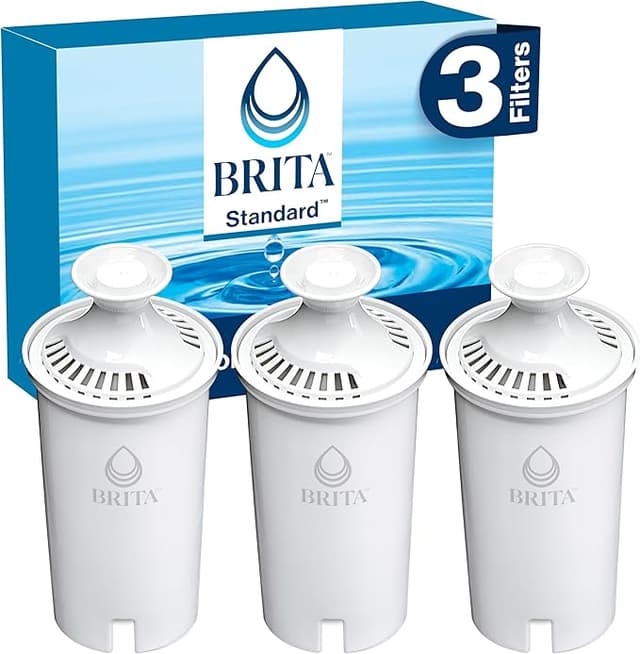
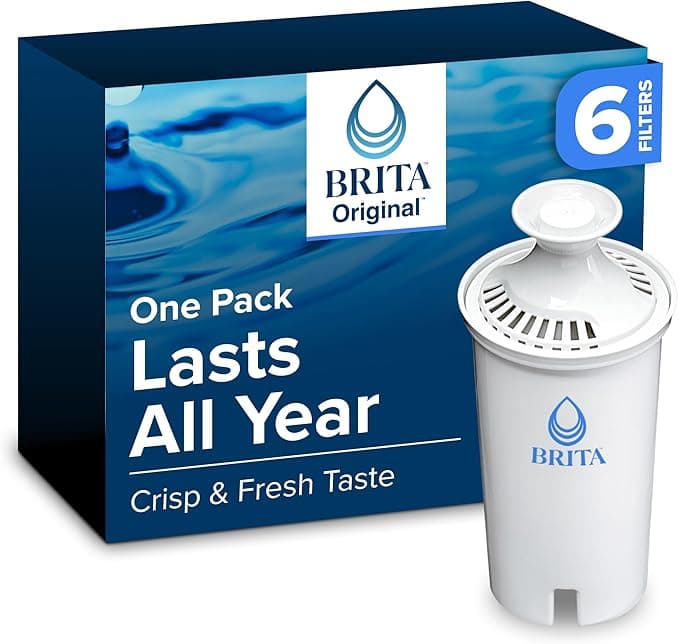
So I went to reorder, and that's where I got annoyed all over again. Genuine Brita Standard cartridges run me about $6 each when I buy the three-pack — call it $17, $18 with tax. Sounds cheap until you do the year. Six replacements a year, on schedule, is north of $35 just to keep water tasting like water. For a part that's a plastic shell full of carbon and ion-exchange beads.
The compatible Standard-fit cartridges I switched to land around $3.30 apiece in a three-pack — roughly ten bucks for the set. Same fitment, same job. Over a year that's the gap between $35 and maybe $20. Not life-changing money, but enough that I stopped wincing every time the pitcher needed a fresh one. And when you don't wince, you actually replace it on time, which is the whole point.
Does it seat right? Yeah — with one fiddly bit
Fit is where compatible cartridges live or die, and this one drops into the Brita Standard pitcher like it was made for it. Same oval footprint, same little ridge that lines up with the reservoir. You soak it about fifteen minutes first, then rinse it under the tap for a bit — same prep Brita asks for — and press it down until it seats. There's a soft click-ish give when it's home. Toss the old cartridge, run a couple pitchers through to flush the loose carbon, and you're set.
Here's my one real gripe, and I'm not going to pretend it away: on my first compatible cartridge, the top collar sat a hair prouder than the OEM one. Maybe a millimeter. Enough that the lid felt like it wanted to rock a touch until I gave the cartridge a firm second push. Seated fine after that — no leak-through around the edge, no unfiltered water sneaking past. But it wasn't the dead-flat, thoughtless snap the Brita-branded one gives you. If you're the kind of person who needs everything factory-perfect on the first try, that half-second of "wait, is this in?" will bug you. It stopped happening on the next two cartridges, so I think it was just that one's mold.
How it performs once the water's running
Day to day? I can't tell it from the original in the glass. Chlorine taste gone, that flat municipal edge gone, water's clean and cold and boring in the good way. The flow rate through a fresh compatible cartridge matches what I remember from Brita's own — that slow, patient drip while the top reservoir empties. No faster, no slower.
Where it's a touch behind: the very first pitcher or two carried a faint carbon-dust haze, a little grayer than I'd like, even after the rinse. The OEM cartridges flush cleaner on the first pass. Two pitchers down the drain and it ran perfectly clear, so it's a minor tax, not a dealbreaker — just don't pour that first glass for a guest. And the packaging is exactly what you'd guess for the price: a thin plastic sleeve, no fancy box, instructions printed small. Cheap-feeling on the outside. The cartridge itself felt identical in the hand.
Why I don't let it ride past two months anymore
That swampy-glass episode reset how I think about all of this. The cartridge isn't decoration — it's the only thing between your tap and the pitcher, and a loaded one is genuinely worse than no plan at all, because you trust it and you shouldn't. Carbon has a finite appetite. Once it's full, chlorine walks right through, and the warm, wet, organic-loaded inside of an old cartridge is not somewhere you want your drinking water spending time. Fresh carbon grabs the chlorine and the metals; spent carbon waves them through. The fix is dumb and cheap: change it at the 40-gallon mark, every couple months, no heroics.
The lower price is what makes that easy. When a replacement is three bucks instead of six, I keep a spare in the cabinet and swap it the day the water tastes off, instead of squinting at it for another three weeks because I'm annoyed about spending the money.
So who should buy which
If you've got a brand-new pitcher under warranty and you're the type who reads that the manufacturer "recommends genuine cartridges" and takes it personally — buy the Brita ones, sleep easy, it's six bucks. Same if you can't tolerate that one-millimeter collar quirk or the gray first pour.
But for me? Identical taste, identical fit after a firmer push, half the annual cost, and a price low enough that I actually change it on schedule instead of slow-poisoning my own water out of stinginess. I've reordered the compatible three-pack twice now. I'll do it again next month. The cheap one isn't a compromise here — it's just the smart buy with a worse box.