Troubleshooting & Analysis
The smell hit me before I figured out the cause. Sort of a damp-basement, wet-cardboard thing that I kept blaming on the dog, then on the laundry, then on a window I thought I'd left cracked in the rain. Turns out it was my Blue Pure 211 — or rather, the filter inside it that I'd let run something like fourteen months on a "I'll get to it" basis. When I finally popped the grille off, the bottom inch of the HEPA pleats had gone gray-green and a little furry. That's mold. The machine I bought to clean my air had quietly turned into a small upholstered swamp pumping spores into my bedroom.
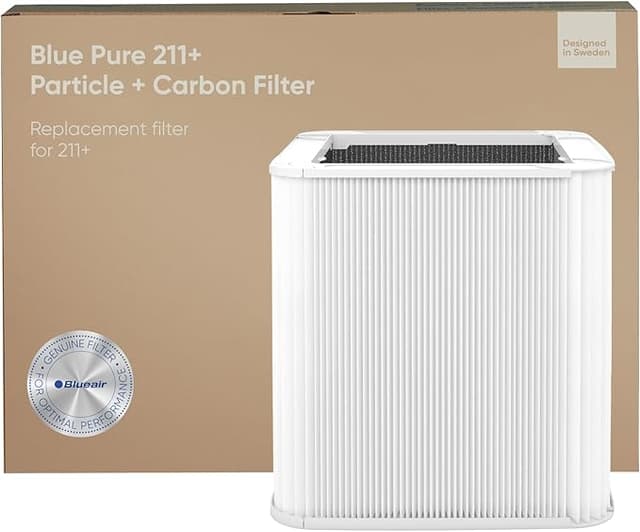
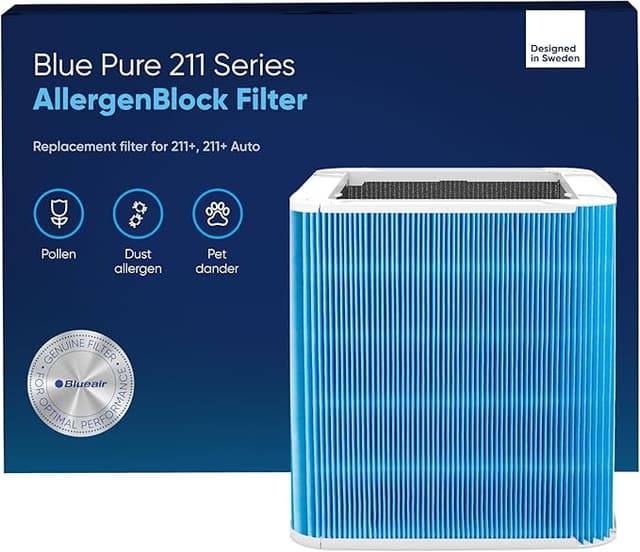
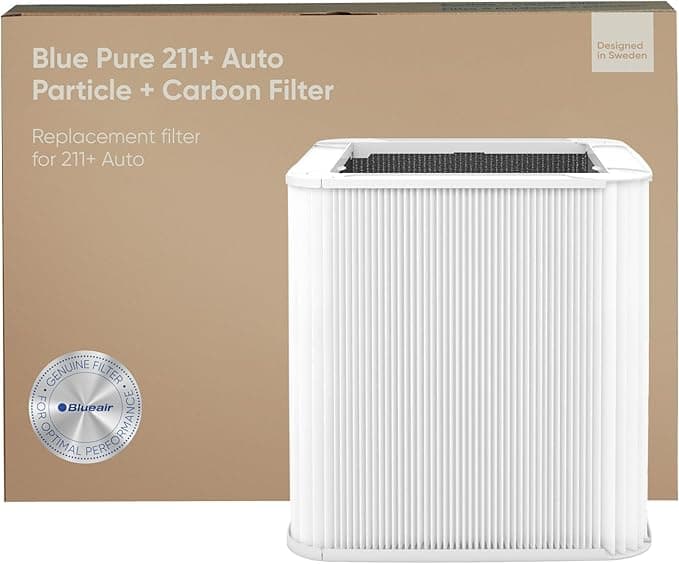
So that's the backdrop for why I started buying compatible filters for this thing instead of the Blueair ones. Once you've smelled that, you don't skip replacements anymore — and at Blueair's prices, replacing on schedule is genuinely expensive.
The price gap is the whole story
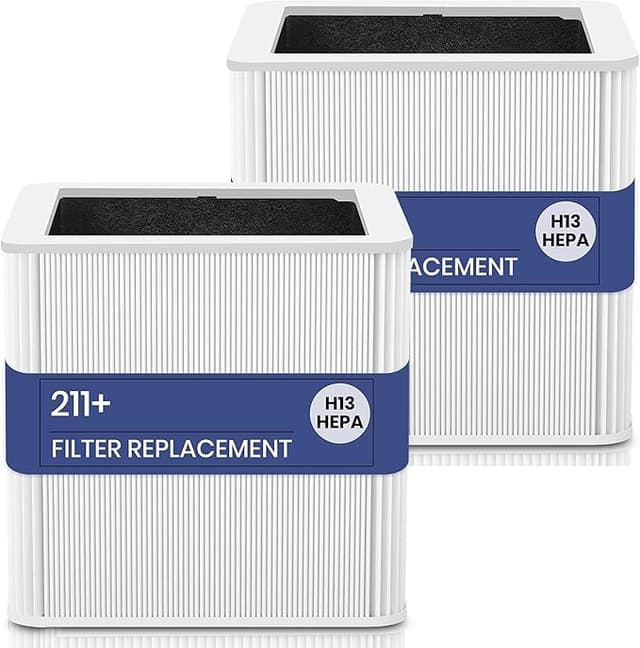
The genuine Blueair filter for the 211 runs me around $50 to $55 depending on where I catch it. The compatible True HEPA H13 unit I've been buying lands at about $25 — call it half. The 211 wants a fresh filter roughly every six months if you run it most of the day, which I do. So over a year that's two filters: $100-ish on OEM, $50-ish on the compatible. Stretch that across the four or five years one of these purifiers actually lasts and you're talking a couple hundred dollars, just on filters, for the same job.
And here's the part that nags me about OEM pricing on this model specifically: the 211 isn't some exotic machine. It's a foam pre-filter wrapped around a cylindrical HEPA. The compatible makers reproduce that geometry just fine. You're not paying $50 for engineering. You're paying for the badge.
Does it actually fit?
This is the question that kept me on OEM longer than I should've been, because a HEPA that seats even slightly proud lets dirty air sneak around the edges, and then what's the point. Install on the 211 is almost stupidly simple — unplug it, lift the top grille off, slide the spent filter up and out, drop the new one in, snap the grille back, and hold the reset until the light clears. Ninety seconds.
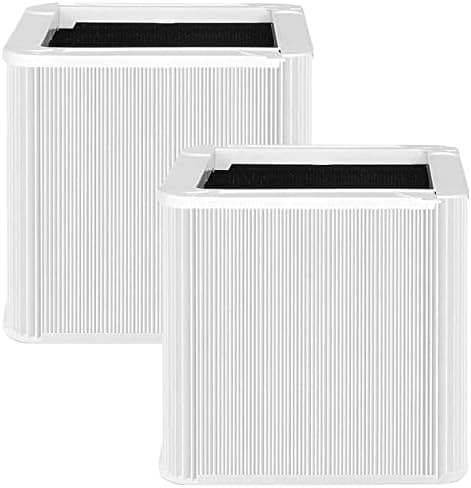
On fit: the compatible filter goes in clean and the foam pre-filter sleeve stretches over it without fighting me. I will say the seam where the pre-filter wraps is a hair less tailored than Blueair's — there's a little extra slack, and the first time I felt like I was tugging it into place. But once the grille clicks down it's snugged tight against the gasket. No light gaps, no air whistling past. I checked, because I'm paranoid now.
How it actually performs
I run a cheap particle meter in that bedroom, mostly because I'm a nerd about this stuff. With a fresh compatible filter the 211 pulls PM2.5 down from the 30s to low single digits in about twenty minutes on medium — same ballpark as I ever got from the Blueair filter. Pollen season, cooking smoke drifting in from the kitchen, the dog — it eats all of it at a pace I can't tell apart from OEM by the numbers.
Where it's a touch behind: the H13 media on the compatible loads up maybe a little faster. By month five I notice the airflow on high feels slightly weaker than a Blueair filter does at the same age — like it's working a bit harder to push through. Not dramatic, but it's there, and it's why I treat six months as a hard ceiling rather than a suggestion. The OEM seemed to coast to month seven without complaint. The compatible, I retire on time.
The honest downside
Two, really. The new-filter plastic smell on these is more noticeable than Blueair's — faint, but for the first two or three days there's a slight plasticky note when the fan kicks to high. It fades. I run the unit on max for an hour with a window open the day I install one and by day four I forget it was ever there. The other thing is the packaging, which is flimsy cardboard with no inner sleeve, so if your delivery gets thrown around the foam pre-filter can arrive a little creased. It always relaxes back into shape, but it doesn't inspire confidence opening the box.
Who should just buy Blueair
If you've got someone in the house with serious respiratory issues — bad asthma, an immune thing, a newborn — and you want zero question marks on the media, buy the OEM and replace it on the dot. The $25 saved isn't worth a second-guess in that situation. Same if you're the type who'll forget to swap filters and let one run a year and a half. (Hi. That was me.) A slightly-behind filter left too long is worse than a perfect filter, and that whole mold story up top is exactly what a saturated filter becomes — a damp trap breeding the stuff you bought the machine to remove.
But for me, in a normal bedroom, running it daily, swapping every six months without fail? The compatible H13 does the same work for half the money, and I've now bought it four times in a row. The frame's a hair looser, the box is cheap, it off-gasses for a couple days. And it still drops my air to single digits for $25. I'll take that trade every time — and clearly I have.