Troubleshooting & Analysis
The white dust was my first clue something was wrong
I noticed it on the black top of my dresser first — a fine chalky film, like someone had dusted the room with powdered sugar. Wiped it off Tuesday, it was back by Thursday. My Aprilaire humidifier was still humming away, still putting moisture in the air, so I figured it was fine. It was not fine. When I finally pulled the access panel and looked at the FILTER W pad inside, it had gone stiff and crusty, caked white with mineral scale, basically a brick. It hadn't filtered anything in weeks. It had just been blowing my hard-water minerals straight into the bedroom.
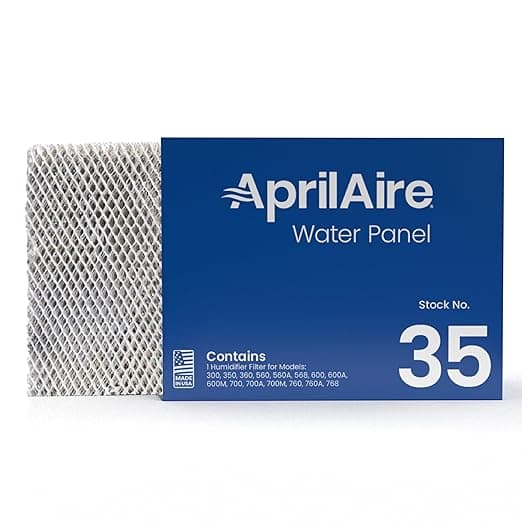
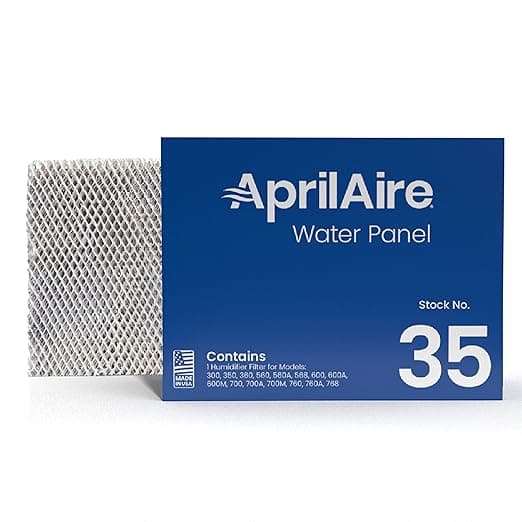
That's the thing nobody tells you when you buy one of these humidifiers. The pad is a wear part. It looks permanent — it's just sitting there in a plastic frame — but it's doing real work, and when it's spent it doesn't politely shut off. It keeps going and starts coating your house. So when mine died I had a decision to make, and it's the same one you're probably staring at right now: buy the Aprilaire-branded replacement, or grab the generic FILTER W compatible pad for a lot less.
The price gap is real, and it adds up faster than you'd think
Here's what got my attention. The OEM Aprilaire pad ran me close to $22 at the time. The generic compatible FILTER W I switched to was about $13. Nine bucks a panel doesn't sound like a fortune, sure. But this isn't a once-a-year thing if you run your humidifier hard. I change mine at the start of every heating season, and honestly, with my water I should do it mid-season too. Two pads a year, year after year — that $9 difference becomes $18, then $36 over a couple winters, for a part that is a folded sheet of treated paper in a frame. Once I did that math I felt a little silly for ever paying OEM.
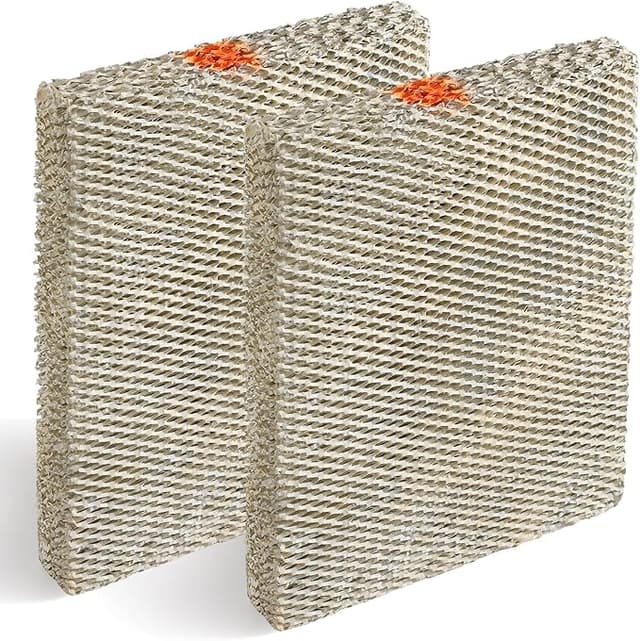
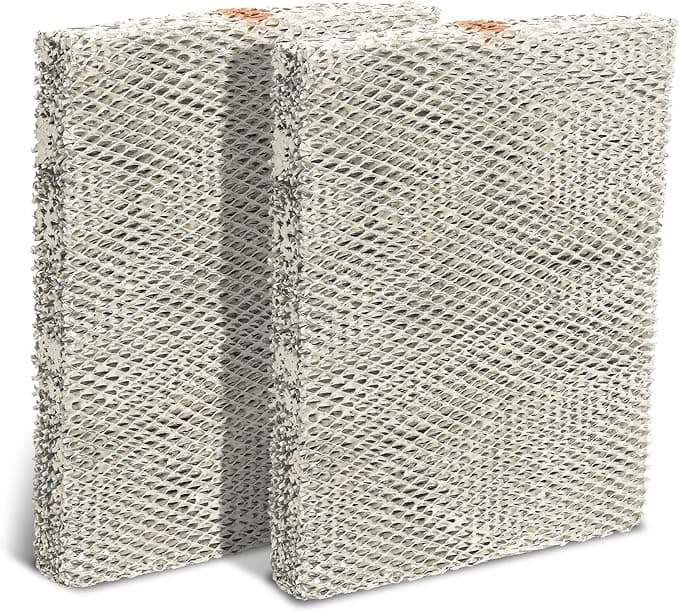
And let me be straight about what you're actually buying. This is a paper evaporative pad. It is not high technology. The OEM version and the generic version are doing the identical job — wicking water up so the air blowing through gets humidified, while the minerals get left behind on the pad instead of in your air. There is no secret OEM coating that justifies the markup I could ever find.
Does the generic actually fit? Mostly yes — with one fiddle
Install is genuinely simple, and the steps are the same regardless of brand. I shut the humidifier off and unplugged it first — do this, there's water involved and you don't want it cycling on while your hands are in there. Then I popped the access panel (mine lifts and twists), noted which way the old pad was facing before I yanked it, and slid the new one into the slot. Panel back on, plug it in, done. Five minutes, no tools.
Now the honest part. The generic frame seated a hair looser than the OEM one did. Not loose enough to rattle or fall, but when I pushed it in there wasn't quite that satisfying snug "click" the Aprilaire pad gave me. I pressed it firmly to the back of the slot and it held fine all season, never shifted. But if you're the type who wants everything to seat with zero play, you'll notice the difference for about three seconds during install. After that, you forget it exists. Just pay attention to the orientation arrow — the pad has a right way up for water flow, and the cheap one's printing is fainter, so look closely before you slide it in.
Performance, and where it's a touch behind
Through a full winter in a dry upstairs bedroom, the generic pad held my humidity right where the OEM one had. The hygrometer didn't budge. The air felt the same — no more waking up with a sandpaper throat, no static shocks off the doorknob. That's the whole job, and it did it.
Where's it behind? Two small things. First, the paper feels a little thinner and cheaper in the hand than the Aprilaire pad. Whether that means it'll break down faster over a very long season, I can't swear to — mine made it through fine, but I wouldn't be shocked if a heavy-use setup wears one of these out a few weeks sooner than the brand pad. Second, and this is minor: the packaging is flimsy. The OEM one comes in a sturdy box; the generic showed up in a thin sleeve that was a little crushed at one corner. The pad itself was fine, but it doesn't inspire the same confidence on arrival.
There was also a faint papery smell the first day or two of running it — not chemical, not bad, just that fresh-cardboard scent as the new pad got wet and broke in. Gone by day three. If you're sensitive to that, run it a day before you sleep next to it.
Why you can't just let the old one ride
Back to that white dust, because it's the real reason any of this matters. A clogged, scaled-over pad isn't just lazy — it's a small problem waiting to become a bigger one. The minerals it stops catching end up on your furniture and in your lungs. Worse, a pad that stays damp and dead can become a little petri dish; standing moisture on spent paper is exactly where mold and bacteria like to set up. And your humidifier works harder pushing air through a crusted brick, which is wear you don't need on the unit. A $13 pad on schedule is cheap insurance against all of that.
So who should buy what?
If you've got a unit under warranty that specifically requires OEM parts to stay covered, or you genuinely run the humidifier flat-out all winter and want the slightly beefier paper for peace of — for confidence's sake, pay the extra nine bucks and get the Aprilaire-branded FILTER W. No shame in it.
But me? I've now run the generic compatible FILTER W for two seasons. It fit, it held my humidity dead even with OEM, it survived the winter, and it cost me roughly $13 against $22. The looser frame and the cheap sleeve are the price of admission, and they're a price I'll happily pay. For doing the exact same job for nine dollars less, I'd buy it again — and I already have.