Troubleshooting & Analysis
Forty-something dollars for a folded piece of treated paper
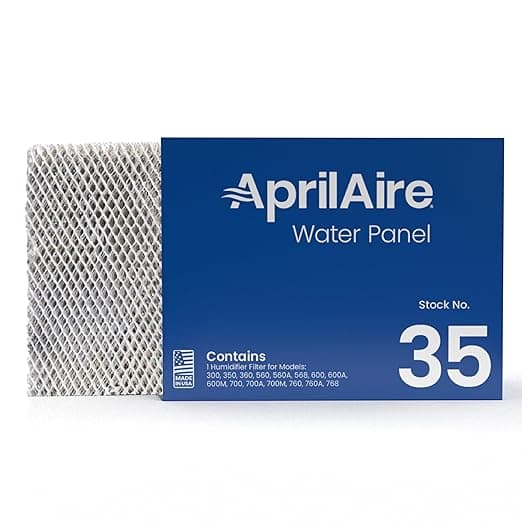
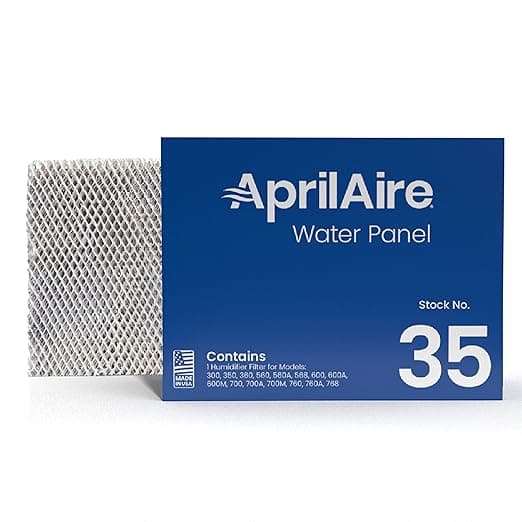
That was the moment I almost laughed. My Aprilaire whole-house humidifier was screaming for a new water panel in February — bone-dry house, static shocks off the doorknob, my kid's nose bleeding at night — and the genuine Aprilaire panel I'd always bought had crept up to right around $24 a pop at the hardware store, more like $28 if I wanted it shipped fast. The compatible one I finally tried? $11. Sometimes a two-pack for under $20, which works out to roughly $9 each.
So that's the real gap. Call it a $13-to-$15 swing per panel. Doesn't sound like a fortune until you remember these things aren't a once-a-decade purchase. A water panel in a humidifier — whether you're running the Filter C, Filter F, or Filter R style pad — is a consumable. You swap it at least once a heating season, and if you've got hard water like I do, honestly twice. Two genuine panels a year is close to $50. Two compatibles is twenty bucks. Over the five winters I've owned this unit, that's the difference between $250 and $100 on what is, functionally, a stiff sponge.
What you're actually buying (and why the price is a little insulting)
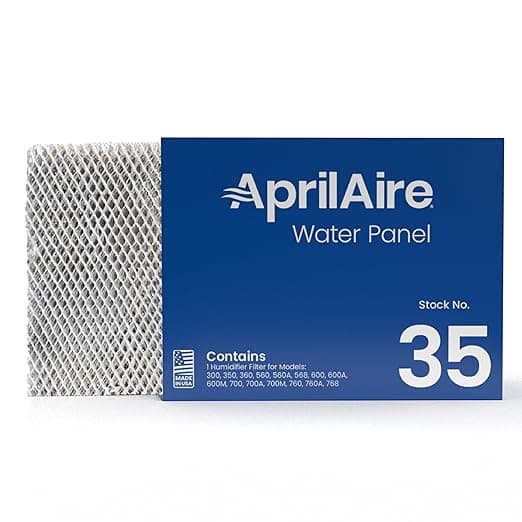
Let me be straight about what this part does, because it matters for trusting the cheap version. A humidifier water panel isn't a HEPA air filter scrubbing your lungs. It's an evaporator pad. Water trickles down over it, your furnace blower pushes warm air through it, the water evaporates into that air, and your house stops feeling like the Sahara. The "filtration" is mostly the aluminum mesh and clay-coated paper resisting the mineral crud your water leaves behind so the whole thing doesn't turn into a brick by March.
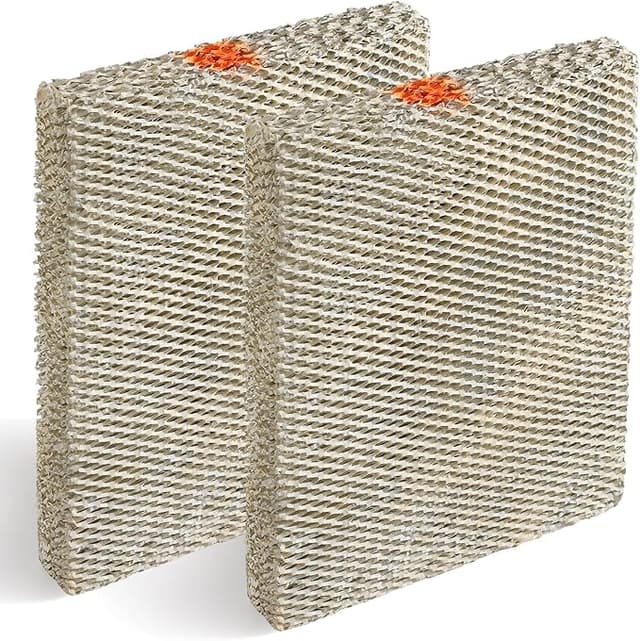
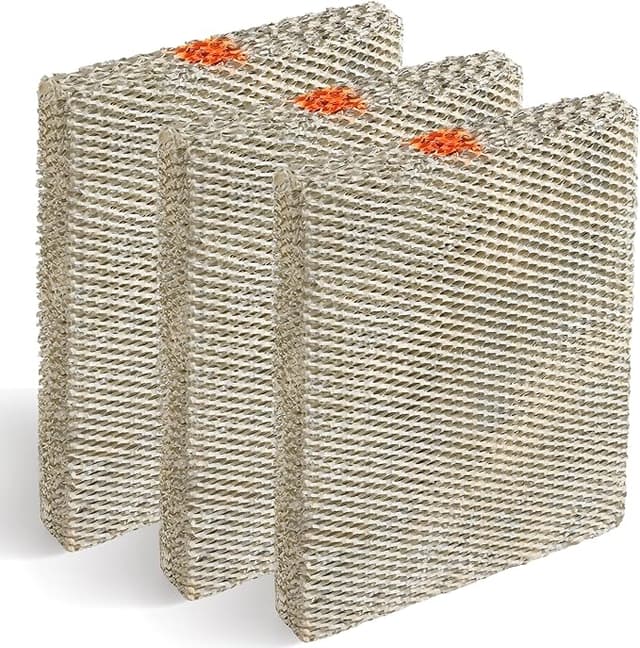
Which is exactly why paying OEM money used to bug me. There's not a lot of precision engineering in a pleated paper-and-mesh panel. The compatible Filter C/F/R I bought matched the genuine one on the stuff that counts: same outer dimensions, same mesh frame, same coated media, same airflow-direction arrow stamped on the side so you don't put it in backward.
Fit and install — does the off-brand actually seat?
This was my real worry. A water panel that's a couple millimeters off doesn't just annoy you — it lets air and water sneak around the edges instead of through the pad, and you get a humidifier that runs constantly and does nothing. So I paid attention.
Install is genuinely a two-minute job, and the steps are the same as OEM. I killed the HVAC at the thermostat first — you don't want the blower kicking on with the cabinet open. Popped the front cover off the humidifier housing, slid the old panel and its plastic frame out, and noted which way it'd been sitting. The old one came out looking like a chalk-crusted tombstone, by the way; that white scale is your sign you waited about a week too long. I peeled the new compatible panel out of the wrap, lined the airflow arrow up the same direction as the old one, snapped it into the frame, and slid the whole assembly back in. Cover back on, HVAC back on.
Did it seat right? Yes — with one honest caveat I'll get to. The frame clicked into the track and the cover closed without me having to force it. No gaps I could see or feel along the edges. First run, water flowed down evenly across the whole face of the pad, not channeling down one side, which is the thing you watch for with a panel that doesn't fit.
The downsides, because there are real ones
Here's where I earn your trust instead of just selling you. The compatible panel is not identical, and pretending otherwise would be a lie.
First — the frame fit. On mine, the plastic edge of the aftermarket frame was a hair looser in the track than the genuine Aprilaire. Not loose enough to leak or rattle, but I could feel a little more play when I slid it home. I gave it a gentle press to make sure it was fully seated, and it's been rock solid since, but if you're the type who notices that stuff, you'll notice it.
Second — the smell. The first day or two of running it, there was a faint papery, slightly cardboard-y odor coming through the vents when the humidifier cycled. Not chemical, not strong, but there. It baked off completely within about three days and I haven't caught it since. Cheaper coating, I'd guess. If you've got a sensitive nose or someone in the house does, run it a day before you stop thinking about it.
Third — the packaging is straight-up cheap. Thin plastic sleeve, no rigid backing, and one of mine arrived with a slightly bent corner on the mesh. I flexed it back flat with my fingers and it was fine — the mesh is forgiving — but the genuine panels ship in a sturdier box for a reason. Buy from a seller with decent return handling and check the corners when it lands.
And the longevity question, since it's the obvious one: does the cheaper pad clog faster and force you to replace it sooner, eating your savings? In my house, with genuinely hard water, the compatible panel got me a full heating season before it scaled up — same as the OEM did. I won't swear yours will behave identically; water chemistry varies wildly. But at half the price, even if it gave me slightly less life, the math would still land in its favor.
Why you don't want to just skip this
One thing I won't soft-pedal: running a humidifier on a dead, scaled-over panel isn't just useless, it's a problem. A saturated, mineral-clogged pad stays wet without evaporating properly, and a pad that stays wet and stagnant is exactly where mold and that musty basement smell start. Then it rides into your air. A fresh panel evaporates cleanly and dries between cycles. Whichever brand you buy, the cardinal sin is leaving the crusty one in there "just one more month." Don't.
The verdict — who buys what
If your unit is under warranty and the manufacturer makes genuine panels a condition of it, buy OEM and don't think twice — $13 isn't worth a warranty fight. Same if you're the kind of person a faint two-day smell or a slightly looser frame will genuinely bother; the real Aprilaire is a touch more polished and you'll sleep better.
For everyone else — and that's most of us — I grab the compatible Filter C/F/R and I have, season after season. It fits, it evaporates the same, it lasts a full winter, and it costs me about $11 instead of $24 to do an identical job. The downsides are real but small, and the savings are real and not small. For a stiff pad of treated paper that turns to chalk by spring either way, I'm not paying double for the logo. Neither should you.