Troubleshooting & Analysis
I genuinely thought a $14 water panel would wreck my furnace
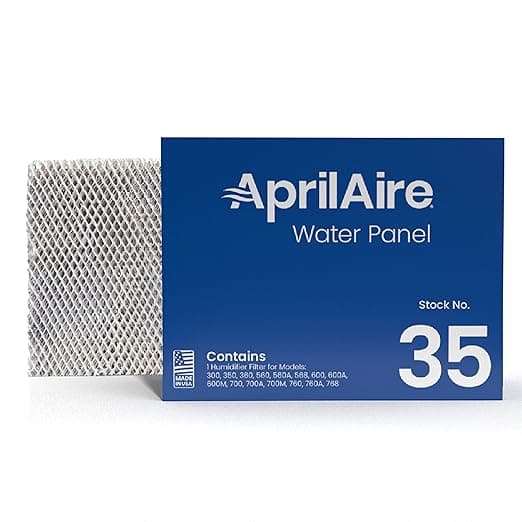
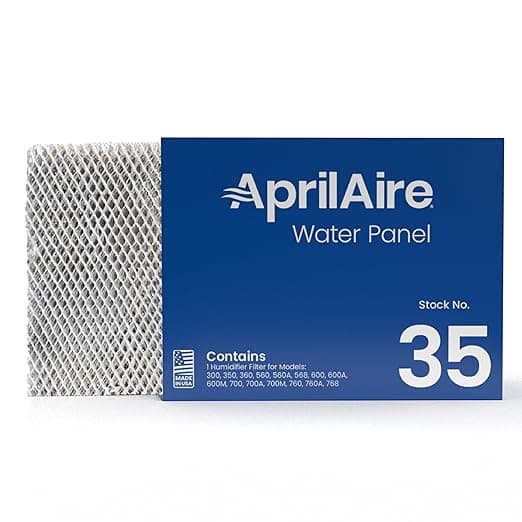
Here's the embarrassing part: I almost didn't buy it. I'd been running the OEM Aprilaire panels in my whole-house humidifier for years — the FILTER C in the bigger unit, a FILTER R rattling around in a friend's older setup — and every spring I'd grit my teeth and pay the brand price like it was a tax. Then I saw a compatible one for less than half. And my first reaction wasn't "great deal." It was "no way. There's a catch. The wicking material's going to be thinner, it'll mineral up in three weeks, the frame won't sit flush and water's going to sheet down the wrong side of the panel and rot my plenum."
I didn't believe a fourteen-dollar filter could be fine. So I did what I always do when I'm suspicious — I bought one of each and ran them back to back. Here's what actually happened.
The price gap is the whole reason you're here
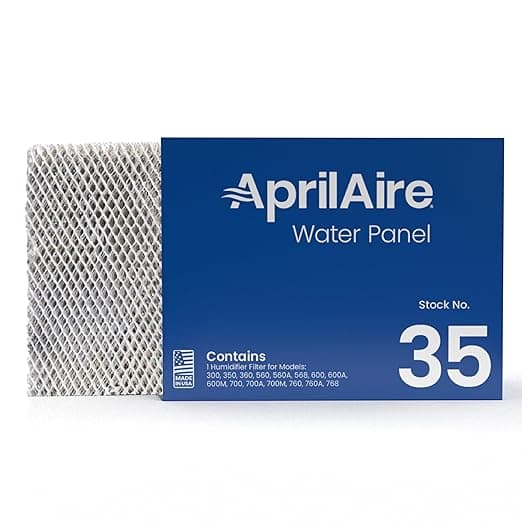
Let's just put the numbers down. The genuine Aprilaire water panel — depending on whether your unit takes the FILTER C, FILTER F, or FILTER R — runs me around $28 to $32 at full freight. The compatible panel I tested? $14. Call it $15 if shipping isn't free.
Now do the yearly math, because that's where it gets real. A whole-house humidifier panel isn't a once-a-decade thing. You're swapping it at least once a heating season, and if you've got hard water like I do, honestly twice. So OEM is roughly $30 a year, sometimes $60. Compatible is $14, maybe $28 if you're changing it mid-winter. Over five years that's the difference between spending around $150 and spending around $300-plus on a consumable strip of treated paper and aluminum. For a part whose entire job is to get wet, wick, and get thrown away.
That framing is what finally got me to stop being precious about it. You're not buying a heirloom. You're buying something you will deliberately soak and discard.
Fit and install — the part I was most worried about
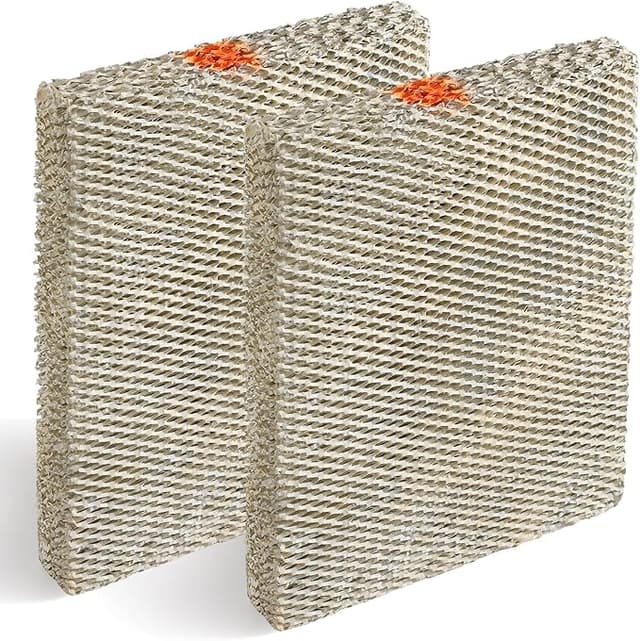
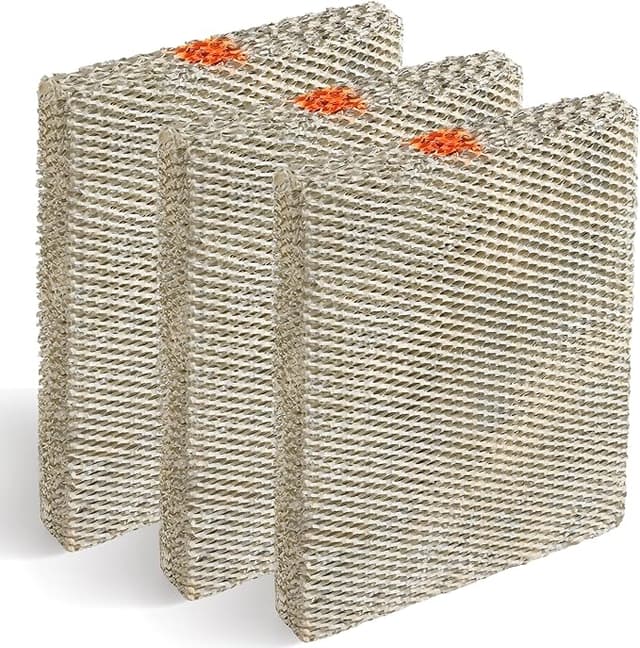
This is where compatible parts usually betray you, so I went in looking for problems. Power down the unit first and kill the water supply line — I always shut the saddle valve too, no reason to gamble. Pop the cover (mine's a single clip on each side), slide the old panel and its distribution tray out, and note which way the colored stripe faces, because that orientation matters more than people think. Wipe the housing out with a dry rag — there's always a little scale dust in there.
The compatible panel slid into the frame channels with no fighting. Stripe up, same as the original, tray clicked back over it. Cover snapped on. Water back on, power on, ran a cycle.
And look — I'll be honest about the one thing. The aftermarket frame is a hair looser in the tray than the OEM was. Not loose enough to leak, not loose enough to sag, but if you wiggle it you feel a little more play than the genuine part. I checked it twice the first week because I'm paranoid like that. Water tracked through the panel exactly where it should, no sheeting down the side, no dry channels. So the play is cosmetic-nervous, not functional. But you asked me to be straight with you, and that's the real one.
How it actually performed over a full season
I ran the compatible panel in my main unit from October through March — a full Midwest heating season, dry-air central. My target humidity sits around 38-40%, and the cheap panel held it just as steadily as the OEM did the year before. Same wick rate, same evaporation, same "the house doesn't feel like a cracker anymore" result. My static-shock-doorknob test (deeply scientific, I know) was identical to OEM years.
Where's it a touch behind? Two honest things. One, the treated coating that helps the paper wick evenly seems a little less generous — by late February I saw mineral crust building toward the edges a bit sooner than I remembered with the genuine panel. Didn't choke airflow, didn't drop my humidity, but it's why I'd lean toward changing it once a season rather than trying to stretch it. Two, the packaging is flat-out cheap. Thin plastic sleeve, a label that looks photocopied. It does nothing to the performance, but it doesn't inspire confidence on the porch, and I get why people open the box and immediately doubt what they bought. I did too.
Why you can't just let the old one ride
Quick word on why any of this matters, because it's tempting to skip a replacement and save the $14. A water panel that's crusted over with mineral scale doesn't just humidify less — it forces the rest of the system to work around a part that's choking. Your humidistat keeps calling for moisture it isn't getting, the solenoid and water feed run longer than they were meant to, and you can end up with mineral runoff and standing water where you don't want it. The panel is the cheap sacrificial piece in that whole chain by design. Letting it die in place to save fifteen bucks is how you end up paying a tech a couple hundred to look at the unit. Change the panel. It's the one job here that's genuinely on you.
So — OEM or the cheap one?
Who should still buy genuine Aprilaire? If your unit's under a warranty that's fussy about non-OEM consumables, or you're the kind of person who will lie awake over that tiny bit of frame play, pay the $30 and sleep. No judgment — peace of m— no, I'll say it plainly: buy the one that lets you stop thinking about it.
But me? I've now run the compatible FILTER C panel through a full winter, watched it hold my humidity dead even with the genuine part, and the only knocks against it are sad packaging and a frame that's a millimeter loose in a tray it never leaves. For half the price on something I'm going to soak and toss in six months, that's not a close call. I bought three more for the next two seasons, and I'd do it again. The distrust was the right instinct — I just tested my way out of it, and the cheap one earned the spot.