Troubleshooting & Analysis
The click was the first thing that told me it was fine
I'll be honest — I expected the cheap one to feel like a toy. I'd just pulled the crusty, mineral-caked old pad out of my Aprilaire whole-home humidifier, and I was standing there in the basement with this generic replacement panel in one hand and a vague sense of buyer's remorse already setting in. Then I slid it into the track, pushed until the housing seated, and heard that little plastic click — the same click the OEM one makes. Same snug nothing-rattles fit. And I thought: huh. Maybe I just stopped overpaying.
That moment is basically the whole review, but let me give you the four months that came after it, because a click isn't proof of anything on day one.
The price gap is the entire reason you're here
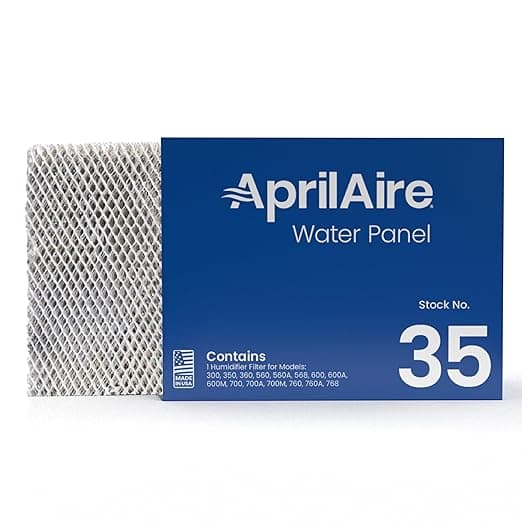
Let's talk money first, because that's what made me nervous enough to test this in the first place. The genuine Aprilaire water panel for these units — the FILTER M / FILTER S / FILTER E setups — runs me right around $28 every time I reorder, and on a humidifier you're swapping that pad at least once a heating season, sometimes twice if your water is hard like mine. The compatible one I bought was a hair over $14. So we're talking roughly half. Call it a $14 savings per swap, $14–$28 a year depending on how aggressively you replace.
That doesn't sound like a fortune until you do the boring math across the life of the unit. Ten heating seasons, two pads a year, and that's a couple hundred bucks handed to a brand for what is — let me be blunt — a folded sheet of treated aluminum mesh and a cardboard frame. It is a consumable. It exists to get clogged and thrown away. Paying a premium for a part whose entire job is to wear out always struck me as a little backwards.
Install: there was nothing to it (but read this one bit)
Installation is where compatible parts usually expose themselves, so I went in skeptical. The process itself is genuinely simple — kill power to the unit first, pop the front cover off the humidifier housing, and slide the old panel up and out of its frame. I wiped down the inside of the tray with a dry rag to clear the white scale buildup (do this — that crud holds moisture and gunks up the next pad faster), then dropped the new one in the same orientation as the old.
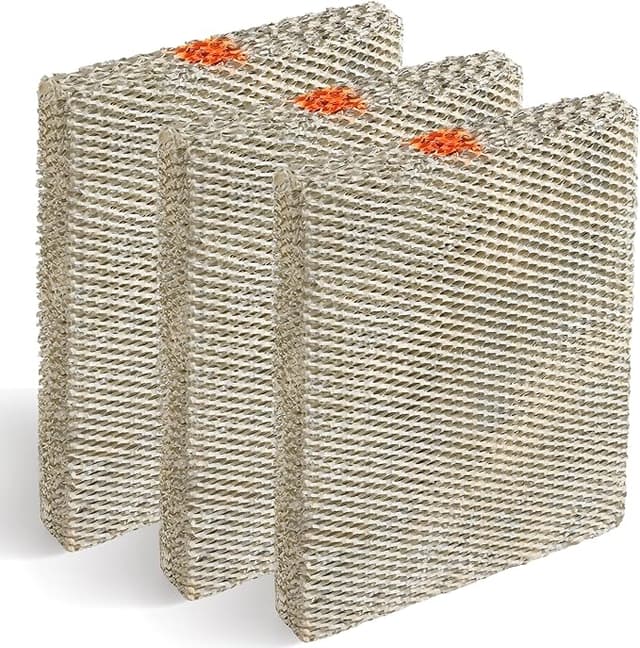
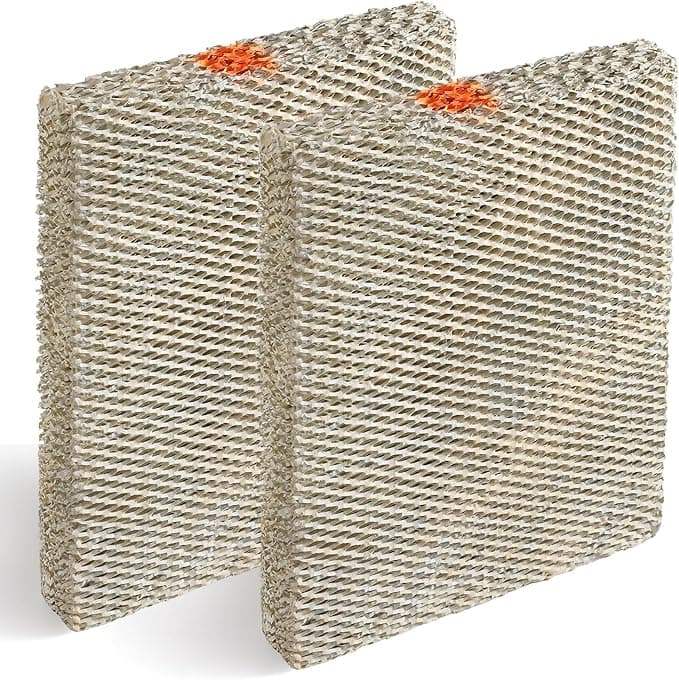
Here's the one thing worth slowing down for: orientation. These panels usually have a colored stripe or a "this side toward the airflow" marking, and the compatible one I got did have it, just printed fainter than the OEM. Glance at the old pad before you toss it, match the direction, and you're done. The whole thing took me maybe four minutes, cover off to cover back on. It seated flush, the housing closed without that fighting-the-cover feeling you get when a part is a touch too big, and the saddle valve flow ran over it evenly on the first cycle.
How it actually performed
For four months — basically my whole dry-winter stretch, when the furnace is running constantly and the air gets to that nosebleed-static-shock level — this pad did the job. My hygrometer upstairs sat in the same 38–42% range it always does with the genuine panel. No drop in output, no dry-throat mornings creeping back in. The wicking was even; when I pulled the cover a month in to check, the whole surface was evenly damp and evaporating, not channeling water down one side the way a badly-made pad will.
Where it matters most — does it keep your house humidified and keep the unit from running itself ragged trying to compensate — it performed like the part it's replacing. And that second part is the quiet important one. A humidifier with a clogged, scaled-over pad doesn't just under-humidify; it keeps cycling water and air across a panel that can't evaporate, and that's how you cook the solenoid valve and stress the whole assembly. The pad is the cheap thing protecting the expensive thing. Letting it go is the actual risk — not the brand on the box.
The downsides, because there are some
I'm not going to pretend this thing is identical, because it isn't, and a review that's all upside is worthless to you.
First: the frame. The cardboard surround on the compatible panel is noticeably thinner and cheaper than the OEM's. It held up fine through a full season in a dry, enclosed housing, but if your humidifier setup gets any standing water or you're rough sliding it in, I could see the budget frame softening at a corner faster than the genuine one would. It survived me, but I handled it like it might not.
Second: there's a faint papery, slightly metallic smell the first day or two of running. Not chemical, not alarming — it's the treatment coating on fresh mesh off-gassing as the first water hits warm air. It rode the airflow up into the house for maybe 48 hours and then vanished completely. If you're scent-sensitive, you'll notice it. By day three I'd forgotten it existed.
Third, smaller: the packaging is bare-bones. A thin plastic sleeve, no rigid backing, so mine arrived with one corner of the frame slightly bowed. It flexed right back into shape and seated fine, but it tells you where the cost got cut.
Who should actually buy the OEM instead
I'll give you the honest carve-out. If your humidifier is under warranty and you're the type who worries a non-genuine consumable could give a service tech an excuse to deny a claim — buy the OEM pad and sleep easy, the $14 isn't worth that argument. Same goes if you have brutally hard water and you know you abuse pads; the sturdier OEM frame buys you a little margin. And if four minutes of checking an orientation stripe genuinely isn't your thing, the brand-name version is a touch more idiot-proof out of the box.
The verdict
For everyone else — which is most of us — I grab the compatible one now, and I have, twice since that first basement click. It fit right, it humidified my house through the worst of a dry winter exactly like the $28 panel did, and it did it for around $14. The cheaper frame and the day-one smell are real, and I told you about them on purpose. Neither one is a reason to hand the brand double the money for a part designed to get thrown in the trash. Same job, same result, half the price. I'd buy it again — and the next time my hygrometer dips, I will.