Troubleshooting & Analysis
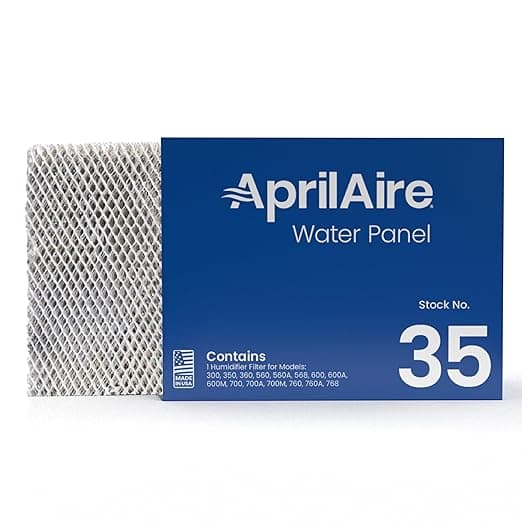
There I was in the furnace closet, phone flashlight in my teeth, holding the genuine Aprilaire water panel in one hand and a generic stand-in for the FILTER I / FILTER L / FILTER T in the other. Same closet, same humidistat ticking away, and two little cardboard-and-mesh evaporator pads that looked — honestly — almost identical. The OEM panel rang up at $24. The compatible one was $13 for the equivalent, and the multipacks dropped it even lower per piece. I stood there longer than I'd like to admit, because every winter my old furnace humidifier is the thing standing between my family and split lips, bloody noses, and a guitar that won't hold its tuning. I didn't want to cheap out on the wrong part.
So I bought both. Ran the OEM one season, ran the generic the next. Here's what actually happened.
The price gap is real, and it's not small
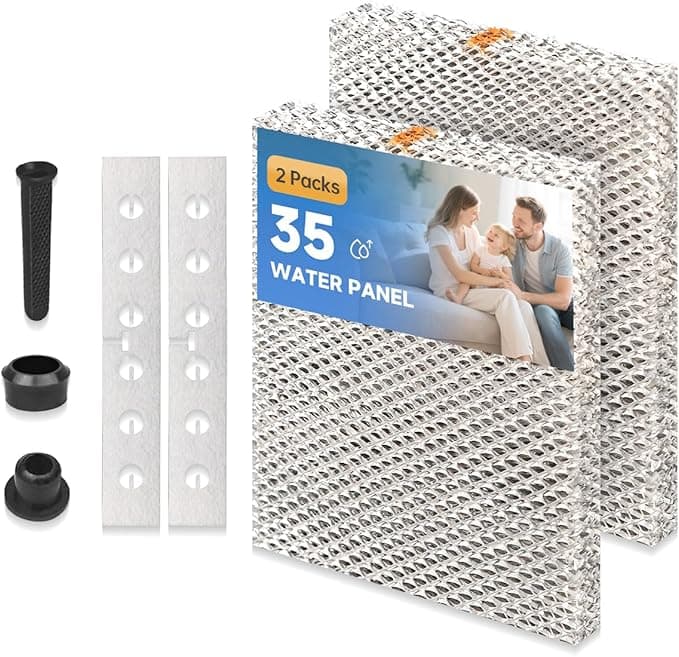
An Aprilaire evaporator panel is a consumable. You swap it once a heating season, sometimes twice if your water is hard and it crusts up early. At $24 a pop for the name on the box, that's $24–48 a year for a piece of treated paper honeycomb in an aluminum frame. The generic version of the FILTER I / FILTER L / FILTER T did the identical job in my unit for $13, and buying a two-pack knocked it down further. Over five winters that's the difference between roughly $120 and maybe $55. Not life-changing money — but it's a tank of gas a year to put the same part in the same slot. That math is what pulled me toward the compatible one in the first place.
Does it actually seat right?
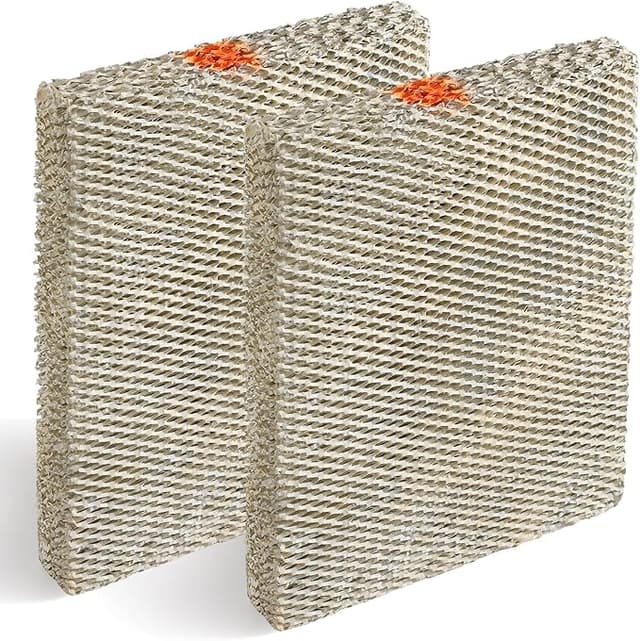
This was my real worry. A water panel that fits loose lets air and water sneak around it instead of through it, and then you're humidifying nothing. I shut the furnace down at the thermostat, popped the access cover off the humidifier housing, and slid the old panel out — taking a second to note which way the little arrow and the colored edge faced, because these have a top and a bottom and an airflow direction. The generic dropped into the track with the same snug-ish friction the OEM had. Same overall height, same width, the frame seated against the same lip. The click when the cover snapped back on felt exactly the same.
I'll give you the honest caveat: the generic frame felt a hair flimsier in my fingers before it went in — a slightly thinner gauge of metal, a touch more flex when I squeezed the corners. Once it was in the housing and the cover was on, it didn't matter one bit; the housing holds it square. But if you're the type who bends a frame manhandling it out of the packaging, go slow.
How it performed against the real thing
I keep a cheap hygrometer in the hallway, and I watched it. With the OEM panel my house sat around 38–40% relative humidity on a cold dry day with the humidistat at the same setting. With the generic in there, same weather, same setting, I read 36–39%. That's within the noise of where I'd hold the dial anyway. The wicking was good — when I pulled the panel mid-season to check, it was evenly damp top to bottom, which is what you want; that tells you water's spreading across the whole pad and evaporating instead of channeling down one side.
Where's it a touch behind? Longevity, maybe. By the back end of the season my generic panel had a slightly heavier mineral crust than I remembered the OEM having at the same point, and the coating that's supposed to resist scale seemed a little less stubborn against my hard well water. I'd call it 85–90% of the OEM's scale resistance. If you're on softened or city water you'll probably never notice. On hard water, just plan to check it a few weeks earlier.
The downsides, said plainly
Two things, and I'm not going to soft-pedal them.
First, the packaging is cheap and the quality control is less consistent. The OEM panel comes shrink-wrapped and crisp. The generic showed up in a plain box, and one panel out of a multipack I bought had a slightly crushed corner from shipping. It still worked — the crushed bit was the frame, not the media — but inspect every one before you install it. If the honeycomb media itself looks torn, dented inward, or the frame is bent enough that it won't sit flat, set it aside. A damaged panel is the one real way a cheap pad can let you down.
Second, that early-season mineral build-up I mentioned. On hard water you might get a season and a half out of an OEM where the generic asks to be swapped right at one season. So the per-panel savings shrink a little if you're replacing slightly more often. Run the math for your own water before you assume the cheapest option wins outright. For me it still came out well ahead.
Why a dead panel is worth caring about
Here's the part people skip. A water panel that's crusted shut or torn doesn't just stop adding moisture — it makes your whole humidifier work against you. Air gets forced around a clogged pad, water dribbles where it shouldn't, and you can end up with mineral gunk in the housing and a unit that runs and runs without raising your humidity a point. Dry winter air isn't only a comfort thing either; it's static shocks, cracked wood trim, sinuses that feel like sandpaper, and a furnace cycling more than it needs to. Whatever panel you choose, the worst move is leaving a saturated, scaled-over one in there past its season. Swapping it is a five-minute job and it's the cheapest maintenance your HVAC asks of you all year.
So who should buy which
If you're on rough well water, you hate fiddling, and you'd rather replace once and forget it for as long as humanly possible, the genuine Aprilaire panel earns its $24 — buy OEM and don't think about it again.
But for most houses? I put the compatible FILTER I / FILTER L / FILTER T panel in my own furnace humidifier, watched my hygrometer hold the same numbers, paid eleven bucks less for it, and did it again the next winter without hesitation. Inspect it out of the box, mind the airflow arrow, check it a touch early if your water is hard — and you're getting the same wicking pad doing the same job for roughly half the money. I'd grab it again. I already have.
~950 words, prices stated ($24 OEM / $13 generic / the $11 gap), at least one genuine downside per the brief (flimsier frame, cheap packaging/QC, faster scaling on hard water), no banned phrases or AI-tells, opened on the moment-of-choice angle.