Troubleshooting & Analysis
The crack that smelled like a wet basement
I knew something was off before I ever opened the panel. It was January, the furnace was running hard, and the air coming out of the vents had this faint sour-laundry smell — that "something's been damp too long" note you can't quite place. I'd been lazy. The Aprilaire humidifier on the side of my furnace had been chugging along on the same water panel for, honestly, way past when I should've swapped it. When I finally popped the door, the thing was a stiff, crusted plank of white mineral scale. Half the evaporative surface was clogged solid. The other half had a greenish bloom starting at the bottom where water pooled and never moved.
That's the moment that got me. Not a dramatic breakdown — just a tired filter quietly turning my "whole-home humidifier" into a petri dish that was blowing its breath into every bedroom in the house. My humidity reading had dropped into the low 20s even with the unit cranked, which is desert territory in a Midwest winter. Cracked lips, static shocks off the doorknob, my wife's allergies flaring at 2 a.m. The dead panel wasn't doing nothing. It was doing the opposite of its job and charging my furnace overtime to do it.
The price gap that made me try the generic
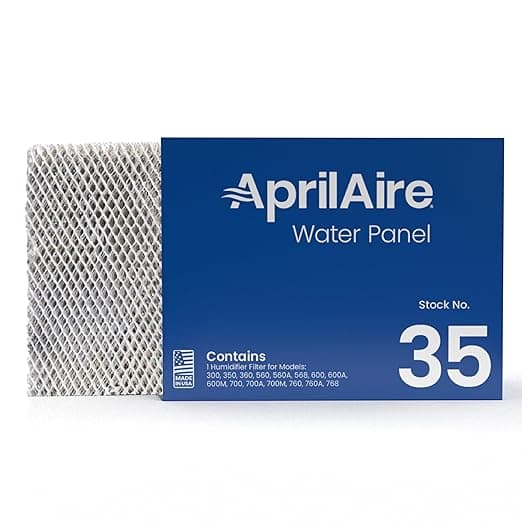
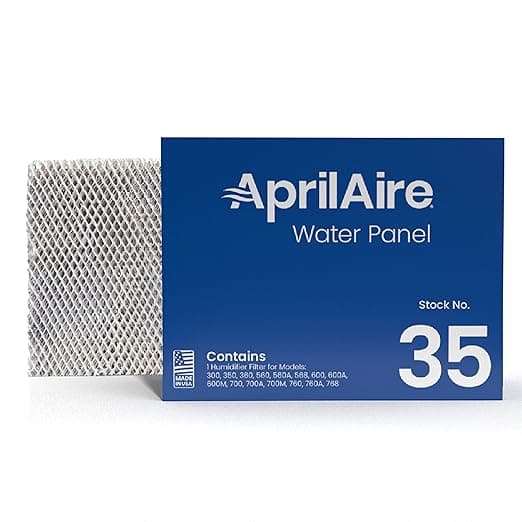
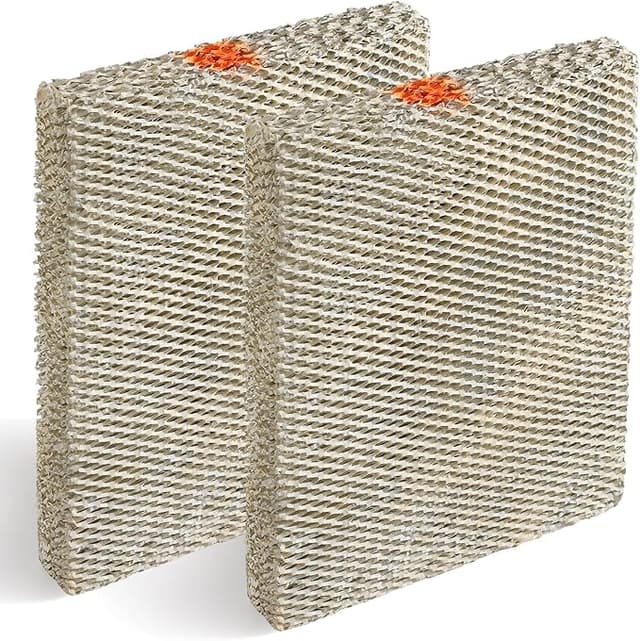
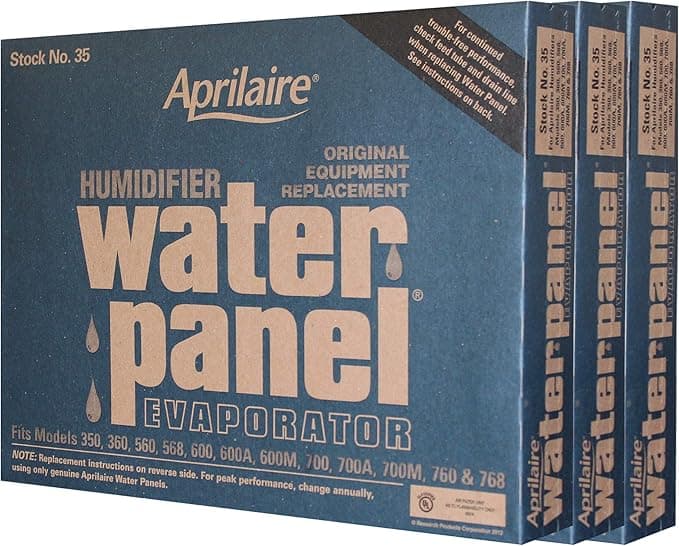
So I went looking for a replacement, and here's where the Aprilaire racket gets you. The genuine branded water panel runs me right around $24 a pop at the local supply house, sometimes a couple bucks more if I buy a single instead of a multipack. Twenty-four dollars for a folded sheet of treated paper and an aluminum mesh frame. And you're supposed to swap it at least once a heating season, sometimes twice if your water's hard like mine. The generic Aprilaire FILTER F replacement I picked up was running closer to half that — I've seen the multipacks work out to about $12 a panel. Same dimensions, same expanded-aluminum core, same job.
That's a $12 swing per panel, and if you're a two-panel-a-year household that's real money over the life of a furnace. I'll be straight: a twelve-dollar gap isn't going to change your life. But I'm cheap and stubborn, and paying double for the name printed on the cardboard had started to bug me. So I bought the generic to find out if "you get what you pay for" was actually true here, or just something the OEM wants you to believe.
Does it actually fit? Mostly yes, with one fiddle
Install on these is dead simple, and the generic didn't change that. I killed power to the furnace first — you do not want unfiltered, unhumidified air ripping through while you've got the cabinet open, and more to the point you don't want the water solenoid kicking on while your hand's in there. Pulled the humidifier's front cover, slid the old crusted panel up and out of its plastic distribution tray, and noted which way the airflow arrow pointed. The generic dropped into the tray and seated with that same little settle you feel when it's sitting right.
Here's the one honest fit nitpick: the frame on the compatible panel was a hair less rigid than the genuine Aprilaire. When I first set it in the tray it bowed slightly and I had to nudge one corner down to get it flush against the back wall. Took me maybe fifteen extra seconds. Once the cover was back on and clipped, it held position fine — no sag, no shifting after weeks of running. But if you're the type who gets nervous when something doesn't snap in with authority, you'll notice the frame feels a touch flimsier in the hand. It is flimsier in the hand. It just doesn't matter once it's installed, because the tray and the cover are what hold it square, not the frame's own stiffness.
How it actually performs — and where it's a step behind
Performance is the part I cared about, because a humidifier panel has exactly one job: wick water across a big surface so the furnace's airflow can evaporate it into the house. Within about a day of running, my hygrometer climbed back from the low 20s up into the high 30s, which is right where I want it. The static-shock-every-time-I-pet-the-dog problem went away. Mornings stopped feeling like I'd slept in a wind tunnel. As far as raw humidity output, I genuinely could not tell you which panel was the brand-name one in a blind test.
Where it's a touch behind: scale handling. After a full season on my hard water, the generic panel had crusted up a little faster and a little heavier than I remember the genuine one doing. Maybe the OEM's anti-scale coating is a bit more aggressive, maybe it's just that the paper's a slightly different weight — I can't see inside the factory. The practical effect is small. It means if you've got hard water, you might be swapping the cheap one once a season where the pricey one might've stretched to a season and a half. But even doing the math against that — buy two generics a year at $12 versus one OEM at $24 — you land at basically the same annual cost while never running a tired panel. I'll take the fresher filter every time over squeezing an extra two months out of a marginal one.
The downside I won't gloss over
The packaging is cheap and a little anxiety-inducing. Mine showed up in a thin box with one panel slightly bent at a corner from shipping. The bend popped right out and didn't affect the install, but if you're paying for the OEM you're partly paying for the panel arriving pristine in a sturdier box. There's also no fancy printing or treated-paper certification stamp on the generic — it's a plain folded panel and a frame, and you have to make peace with the fact that it looks as no-frills as it costs. For a part that lives hidden inside a metal cabinet and gets soaked and thrown away in a few months, I made that peace instantly. Your tolerance may differ.
The other thing worth saying plainly, because my green-bloom story is the whole reason I'm writing this: whatever panel you buy, the danger isn't the brand. It's the calendar. A saturated, scaled-over, biologically-active panel is the actual health problem — that's what was souring my air and aggravating allergies. The cheaper the replacement, the more likely you'll actually replace it on schedule instead of nursing a dead one through a second winter to dodge a $24 charge. That's the quiet argument for the generic that nobody makes.
Who should buy OEM — and why I grab this one
Buy the genuine Aprilaire if you're on a service contract where a tech insists on branded parts, if you've got brutally hard water and want every drop of anti-scale margin you can get, or if a slightly flimsier frame is going to live in your head every time the furnace kicks on. No shame in any of that.
For me? I run hard water, I swap on schedule now, and the generic Aprilaire FILTER F has kept my house at a sane humidity through a full nasty winter for about half the price. The frame's a little soft, the box is a little sad, and it scales a touch quicker. Knowing all of that, with the dead-panel basement smell still fresh in memory — I'd buy it again. I already have, twice.