Troubleshooting & Analysis
The first thing I noticed was the squeak
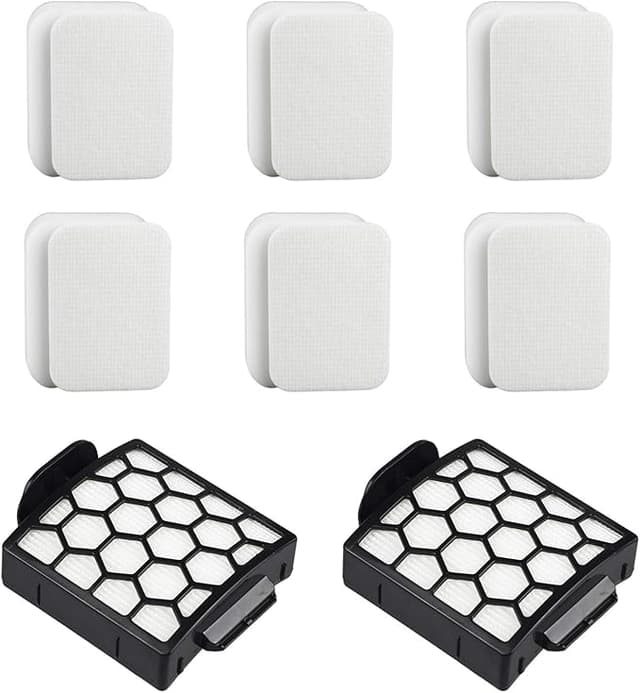
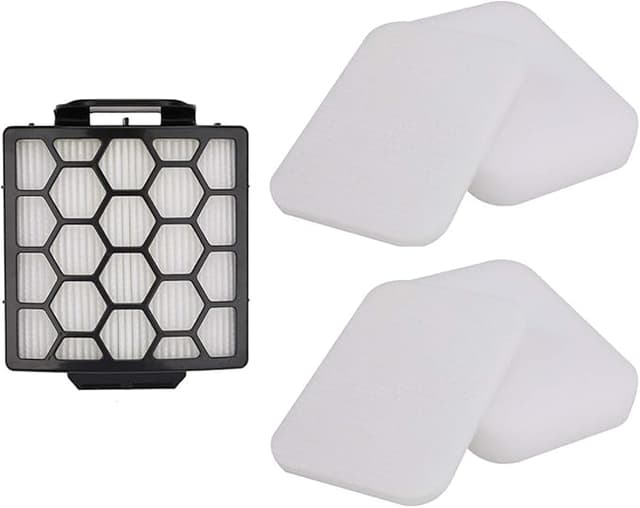
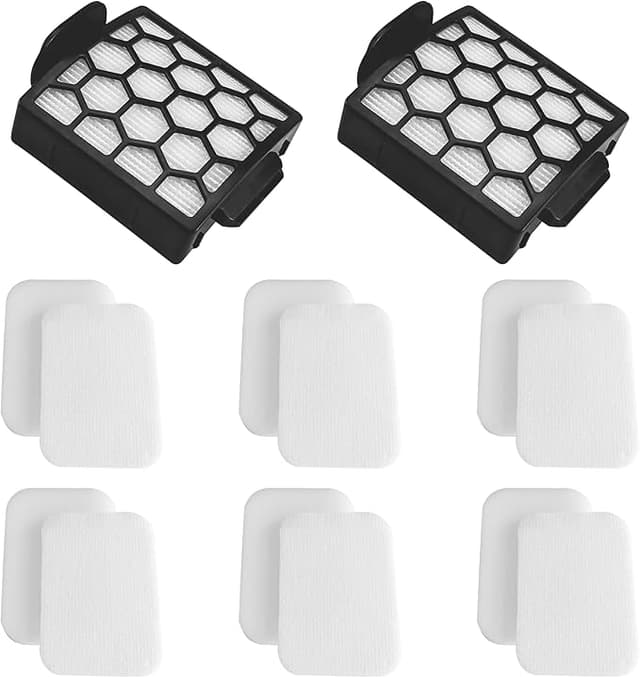
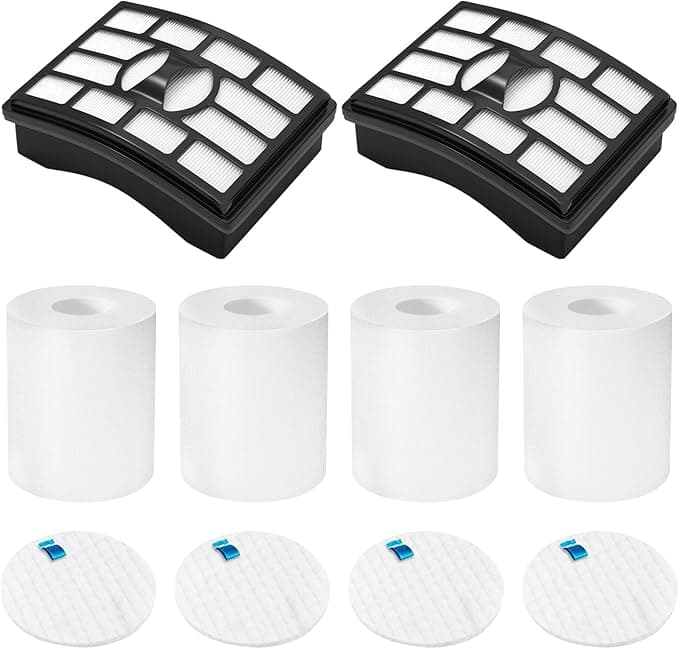
When I pulled the brand-new washable filter out of its bag and pressed it into the dust cup of my Shark ZU782, it made this faint rubbery squeak as the foam edge dragged against the plastic wall. OEM filters don't squeak. They just slide. That tiny difference told me everything I needed to know before I'd even turned the machine on — this is a compatible part, made by someone other than Shark, and it's going to be a little tighter than what came in the box. Honestly? That squeak is also why it sealed fine.
I'd been putting off replacing my filters for months. My ZU782 had started doing that thing where it climbs the stairs fine but loses its grip on the landing rug halfway through — suction was clearly down. I pulled the old foam-and-felt stack out and it was gray. Not dusty. Gray, all the way through, packed like felt insulation. That's the moment a filter stops being a filter and starts being a wall your motor has to suck air through.
What Shark wanted versus what I paid
Here's the math that pushed me to the aftermarket one. A genuine Shark filter kit for this series runs you somewhere in the $25–$35 range depending on where you buy and whether they bundle the foam pre-filter with the felt one and the HEPA. The compatible washable set I bought was under twenty bucks — and the whole pitch is that you rinse it instead of tossing it, so you're theoretically buying it once instead of twice a year.
Run that out over the life of the vacuum and it's not pocket change. Two OEM replacements a year for three years is real money for a part you spray off in your kitchen sink. So the question was never "is the compatible one cheaper." It was "is the compatible one good enough that I'm not slowly cooking my motor to save thirty bucks." Different question. Scarier one.
The install, and the one bit of fiddling
Swapping it is genuinely a two-minute job. Pop the dust bin off the body, lift the lid, and the old filter stack pulls straight up and out — no tools, no tabs to fight. The new washable one drops into the same well. The guide tells you to rinse it (if it's the washable type), let it dry completely, then reinstall, and that drying step is the part people skip and regret. I'll come back to that.
The fiddling: because the foam is a hair thicker than OEM out of the bag, I had to actually push it down and give it a little twist to get it to seat flat instead of doming up in the middle. On the genuine part it just falls into place. On this one I pressed, felt the edge catch, and got that squeak. Once it's down, though, the lid closes with the same click it always has — no gap, no lid-won't-latch nonsense. It fits. It just doesn't fit effortlessly, and I'd rather tell you that than pretend.
How it actually runs
First pass on the bedroom carpet, the suction was back. Fully back — the stair landing rug got grabbed and held the way it hadn't in months. The claim on these is that they catch 99.9% of dust and allergens, and I can't put a particle counter on my floor, but I can tell you my downstream exhaust didn't smell dusty and my allergies didn't flare the first week, which is the home-test version of the same thing.
Where it's a touch behind OEM: the felt layer feels a little less dense in the hand, and I suspect over a really long haul it'll load up and need rinsing slightly more often than the genuine one would. Not dramatically. But if you're the kind of person who vacuums up fireplace ash or fine drywall dust, you'll notice you're at the sink a bit sooner. For normal house dust, pet hair, the usual — it's keeping pace.
The downside nobody mentions
The plastic-and-foam smell. For the first two or three days, when the motor warmed up, there was a faint new-foam odor coming off the exhaust — not chemical-burn alarming, just that "new product" smell warming up. It faded completely by day four. And the packaging is cheap, a thin poly bag with a sticker, no nice box. None of that affects how it cleans. It just reminds you, again, that you bought the twenty-dollar one.
The bigger thing, and this is the actual safety point: a clogged filter on the ZU782 doesn't just clean worse, it makes the motor work against a wall of trapped dust, and that's how vacuums overheat and die young — or blow fine dust back into the room you're trying to clean. So whichever filter you run, the win here is that a washable one removes your excuse not to rinse it. Cheap enough that you don't baby it, washable enough that you actually maintain it. That combination is what protects the motor, not the brand name on the bag.
Who should skip it — and what I do
If your ZU782 is still under warranty and you're the type who reads the fine print, buy OEM and keep your paperwork clean; some warranty language gets twitchy about third-party parts. And if you genuinely cannot be trusted to let a filter dry fully before reinstalling — wet foam into a running motor is a real way to kill it — then a toss-and-replace OEM might suit your habits better.
For everyone else? I rinsed mine, stood it on the windowsill overnight, dropped it back in the next morning, and my vacuum has its grip back for half the price. The frame's a little tight, it smelled like new foam for a weekend, the bag it came in is junk. And I'd buy it again — I already did, for my mom's identical unit.