Troubleshooting & Analysis
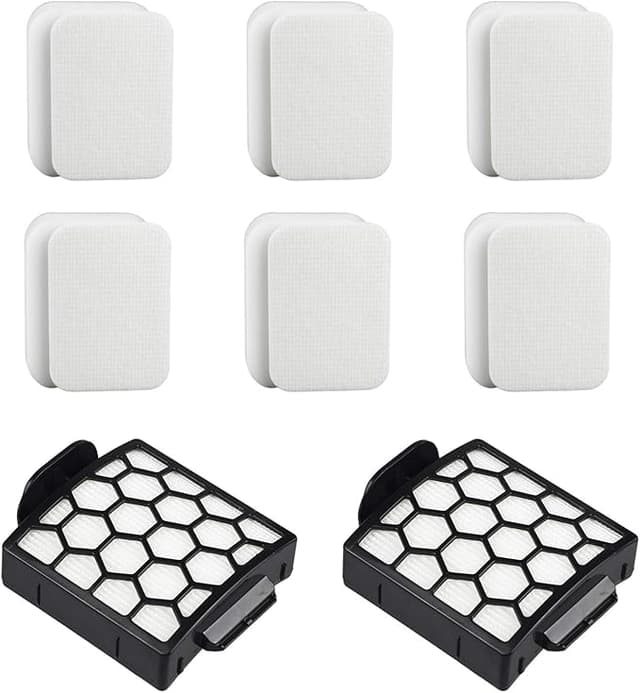
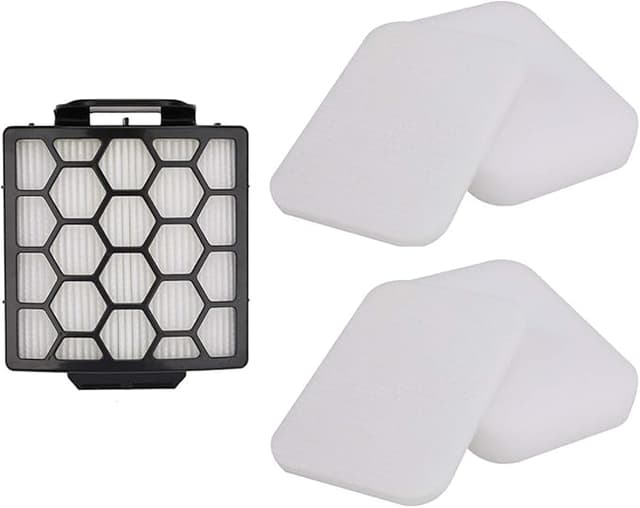
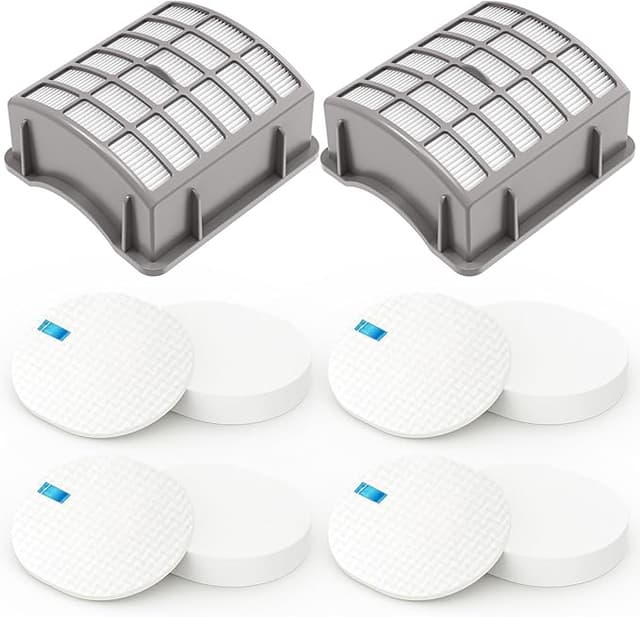
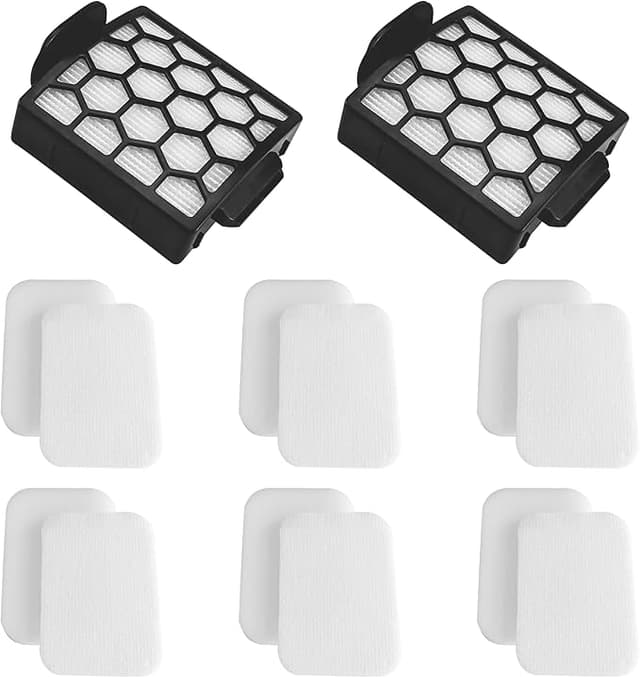
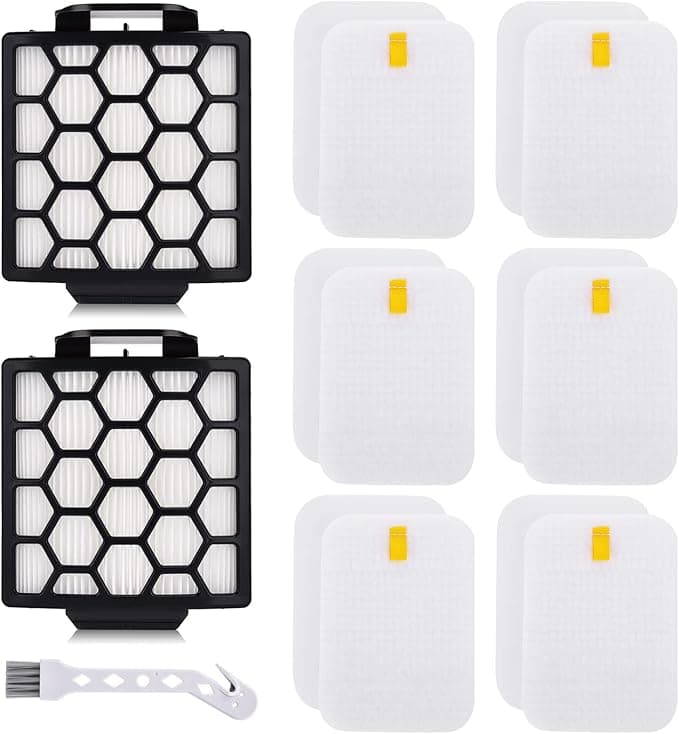
Forty-two dollars. That's what Shark wanted for a replacement filter set for my NV150 — a foam pad, a felt pad, and one of those little white HEPA pucks that lives behind the dust bin. Forty-two dollars for what is, when you hold it in your hand, a couple of ounces of foam and pleated paper. I stood there in the kitchen with the old clogged set in one hand and my phone in the other, and the compatible set on Amazon was nineteen bucks for the same three pieces. Sometimes a two-pack for twenty-three. I bought the cheap one mostly out of spite, honestly, fully expecting to regret it.
I didn't.
The math that made me switch
Here's the part nobody tells you when you buy a Navigator Lift-Away: those filters aren't a one-time thing. The foam and felt pads you're supposed to rinse monthly, sure, but they break down. After about a year of washing, the foam starts to crumble at the edges and the felt gets that permanent gray matted look that no rinse fixes. The HEPA element behind the bin? Shark says swap it every year or so, and they're right — mine was visibly loaded after eleven months.
So you're not paying $42 once. If you're running OEM on a yearly cadence, that's $42 a year, every year, for the life of a vacuum that'll easily last six or seven. Call it $250-$280 over the machine's life just in filters. The compatible route, at $19-$23 a set and often coming two to a pack, cuts that by more than half. Over the life of the NV150 I'll save somewhere north of a hundred and fifty bucks. On foam. That's a tank of gas and a dinner out for filtering the same dust.
Does it actually fit?
This was my real worry. Aftermarket fit on Shark stuff can be hit or miss because the foam pads have to sit flat against the screen or you get air leaking past instead of through. Pulling the old set was the usual drill — pop the dust bin off, lift it out, and the foam and felt pads are right there stacked on top. The HEPA piece is the one you have to dig for, around the back behind its own little door.
The compatible foam pad dropped in like it was made for the slot. The felt pad too. If anything the felt was a hair thicker than the Shark original, which actually seated tighter, not looser. The HEPA puck is where I'll be honest with you: it fit, but the plastic frame around it was a touch less rigid than OEM, and I had to press it in with a little more deliberate push to feel it sit flush. Not a fight. Just — pay attention on that one piece, make sure it's seated and not cocked at an angle, and you're fine.
The first three days, and the honest downside
New foam smells like new foam. There's a faint plastic-y odor the first couple of days, most noticeable in the first ten minutes of a run while the motor warms it up. By day three I couldn't smell it at all. If you've got a sensitive nose or someone in the house who reacts to that stuff, run the vacuum in an empty room for a few minutes before you really use it and you'll burn most of it off.
The other thing — and this is the one real knock — the packaging is cheap and the quality control isn't Shark's. One of my two HEPA pucks had a slightly uneven pleat, a spot where the paper bunched. Did it matter for performance? Honestly, no, I couldn't measure a difference. But OEM you don't see that. When you pay aftermarket prices you're trading a little bit of consistency for a lot of money, and the uneven pleat is what that trade looks like up close.
How it actually cleans
Suction is the whole ballgame here, and this is where a clogged or wrong filter will burn you. A saturated filter on the NV150 doesn't just clean worse — it chokes the airflow, the motor pulls harder against the resistance, and the thing gets hot. I've had a Shark overheat-and-shut-off on me before with a gunked-up filter, and it is not subtle. That's the actual reason the filter matters: it's protecting a $150 motor, not just trapping dust.
With the fresh compatible set in, suction came right back. Picked up the dog hair off the stair edge in one pass, which the old loaded filter had stopped doing. I ran it across hardwood, a low-pile rug, and the car mats over about four months now and I genuinely cannot tell you it performs worse than the Shark set did when that was new. The dust bin fills the same. The exhaust air doesn't smell. No blowback.
Is the HEPA media capturing the exact same micron count as Shark's lab claims? I can't put a particle counter on it, and I'd be lying if I said I could. What I can say is that washing the foam and felt monthly and swapping the cheap HEPA yearly has kept my air no worse than it ever was, and my allergies haven't flared.
So who should skip it?
If you've got serious respiratory stuff going on — bad asthma, someone in the house who genuinely needs certified HEPA numbers they can trust — buy the Shark set and don't think twice. The few extra dollars for guaranteed, validated media is worth it when health is the variable. Same if you just hate fussing and want zero chance of an off piece.
For everyone else — which is most of us, with a normal house and a normal amount of dust — I'd grab the compatible set again. I have, twice now. It fits, it pulls suction like the real thing, the only costs are a two-day smell and slightly scrappier packaging, and it puts a hundred and fifty bucks back in your pocket over the life of the vacuum. That's not a hard call. That's just paying for foam at foam prices.