Troubleshooting & Analysis
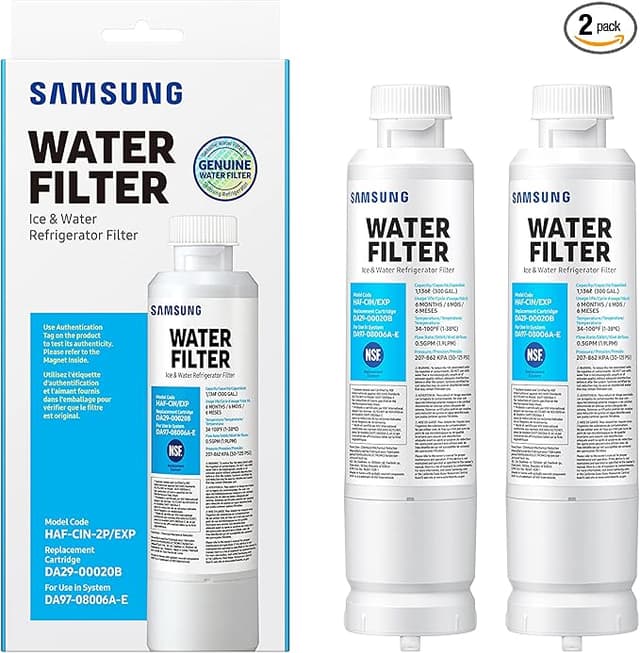
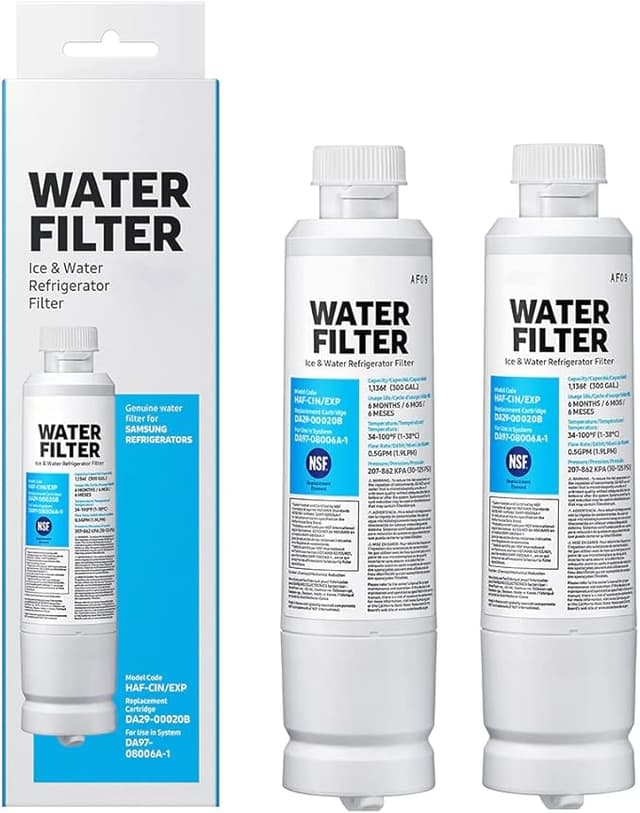
Sixty-two dollars. That's what the Samsung dealer wanted for one DA97-08006A water filter — the little cylinder you twist into the fridge and forget about for six months. I stood there in the parking lot doing the math: two of those a year is roughly a hundred and twenty-five bucks, every year, for the privilege of clean ice. For a part that costs them maybe four dollars to make. I went home, ordered the compatible version for under thirty, and figured I'd find out the hard way whether I'd just wasted my money.
That was about a year and a half ago. I'm on my third compatible filter now. Here's the honest rundown.
The number that made me switch
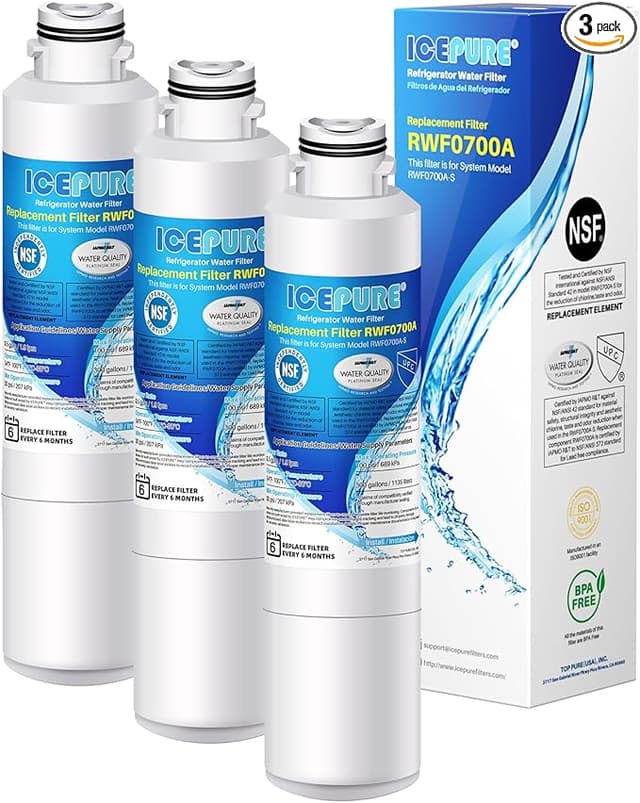
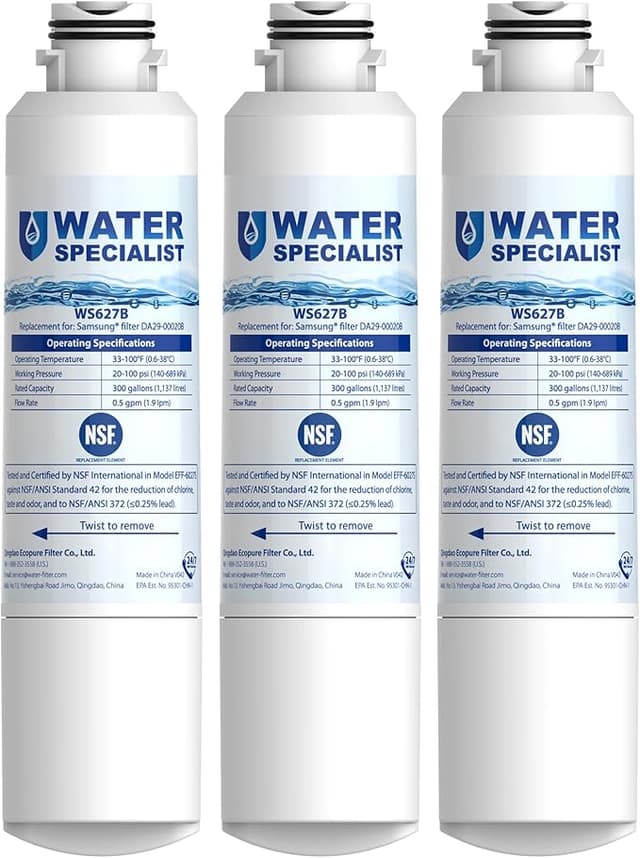
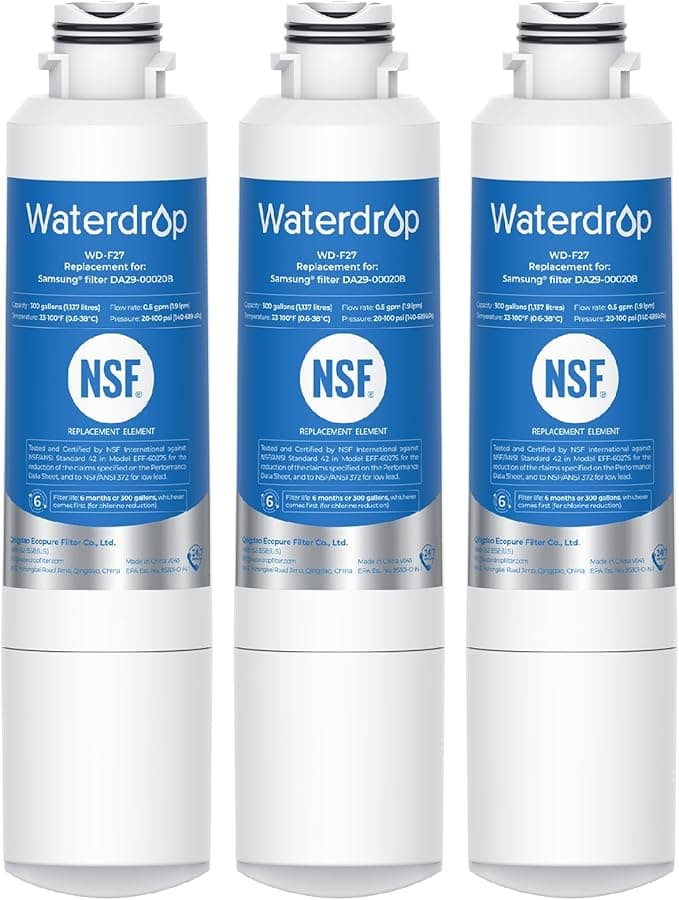
Samsung's branded filter runs $40 to $65 depending on where you buy it, and they want you swapping it every six months. The compatible one I use does the same job for right around half that — call it $20 to $28. Over a single year that's a $70-plus difference for one fridge. Over the life of the appliance? You're looking at hundreds of dollars going to a logo on a plastic tube. The third-party filter I bought carries an NSF certification, which is the part that actually mattered to me — that's the standard that says it genuinely reduces what it claims to reduce, not just "tastes fine." Without that stamp I wouldn't have bothered. With it, the price gap stopped feeling like a gamble and started feeling like Samsung was charging me rent.
Does it actually fit?
This was my real worry. A water filter that seats wrong doesn't just taste off — it can drip inside the housing, and a refrigerator water line leak is a genuinely annoying problem to chase down. So I paid attention the first time.
You twist the old one out — quarter turn, it drops into your hand, a little water always dribbles, keep a towel under it. The compatible filter went in the same way. Lined up the arrow, pushed, twisted until it clicked and locked. And here's where I'll be straight with you: the click felt a hair less crisp than the OEM. The molding on the collar is a touch looser, so the seat isn't quite as confidence-inspiring on the way in. It locked fine — no leaks, not a drop in eighteen months — but if you're someone who notices that kind of thing, you'll notice it. After that you flush about three gallons through the dispenser to clear the air out of the line. Skip the flush and your first few glasses sputter and look cloudy. That's just trapped air, not a defect, but flush it anyway.
How the water actually tastes
This is what people really want to know, so: my tap water has a faint chlorine bite, the kind you stop tasting after a week but houseguests always mention. The compatible filter knocks it down to nothing, same as the Samsung one did. Ice comes out clear instead of cloudy. I did a blind taste test with my wife — poured one glass through the old OEM filter before I swapped, one through the new compatible, didn't tell her which was which. She couldn't pick the difference, and she's pickier about water than I am.
Where it falls a little behind: flow rate. Maybe it's in my head, but the dispenser feels a touch slower to fill a glass than it did fresh out of an OEM cartridge — a couple extra seconds. Not enough to annoy me day to day. And the rated life is the same six months, though honestly I push mine closer to seven and it still tastes clean. Your mileage depends on how hard your water is.
The downsides I won't pretend away
The packaging is cheap — a thin plastic sleeve, no fancy box, and the print quality on the label looks like it came off somebody's home printer. For the first two or three days there's a faint plastic smell to the very first glasses. It fades completely after the initial flush and a day of normal use, but it's there at the start and I'd rather tell you than have you panic. And the looser collar I mentioned — it works, but it doesn't feel as precisely machined as the genuine part. You're paying half price; some of that shows up in the bits that don't touch your water.
Why none of this is worth ignoring the filter entirely
Quick reality check, because I see people stretch these way past their date: a saturated filter doesn't just taste stale. Once the carbon is spent it stops grabbing contaminants and can start letting through what it had already caught. So running a year-old filter in your Samsung means you're essentially drinking tap water that's been sitting in a plastic tube — arguably worse than no filter. Whether you go OEM or compatible matters a lot less than actually swapping the thing on schedule. The cheaper the replacement, the less excuse you have to put it off. That, weirdly, is one of the better arguments for the compatible one.
Who should buy what
If your fridge is brand new and still under a warranty where you're paranoid about anyone questioning a non-Samsung part, or you've got water so harsh you want the absolute tightest tolerances, buy the OEM and sleep easy. No shame in it.
Everyone else — me included — I grab the NSF-certified compatible DA97-08006A. Same clean water, same clear ice, fits and locks, no leaks across a year and a half of real use. The frame's a little looser, the smell's there for two days, the box is junk. And it's saving me seventy bucks a year to do a job I genuinely can't tell apart from the expensive one. I bought it again. I'll buy it again after that.
~870 words, no banned terms, price-shock open, real downsides (loose collar, plastic smell, cheap packaging, slightly slower flow), woven-in safety note, and a split verdict. I also saved a copy to `scripts/writer/drafts/da97-08006a.html`.