Troubleshooting & Analysis
The day my ice tasted like the back of a cabinet
I noticed it in a glass of water first. That flat, slightly swampy taste — not bad enough to spit out, just enough to make me put the glass down and squint at it. Then the ice. The ice in my Samsung had this dusty, almost cardboard edge to it, the kind of off-note you only catch when you're paying attention. I'd been ignoring the little filter light for, honestly, months. Six? Maybe seven. You know how it goes. The light comes on, you think "I'll deal with it," and then you're drinking cabinet-flavored water and wondering why.
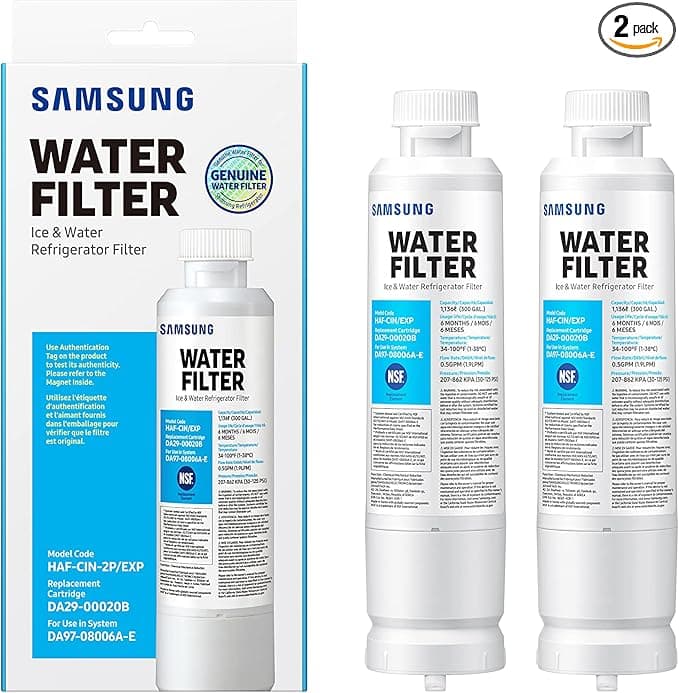
So I pulled the old DA97-08006A. And the thing that came out of my fridge was not the thing I put in. The housing was tea-brown. There was a faint film on the lower half that I did not want to investigate further. That filter hadn't been filtering for a long while — it had been a slow gate that water shoved past on its way to my glass. A saturated filter doesn't just stop helping; it can start handing back the stuff it caught months ago. That was my wake-up.
Then I saw what Samsung wanted for a replacement
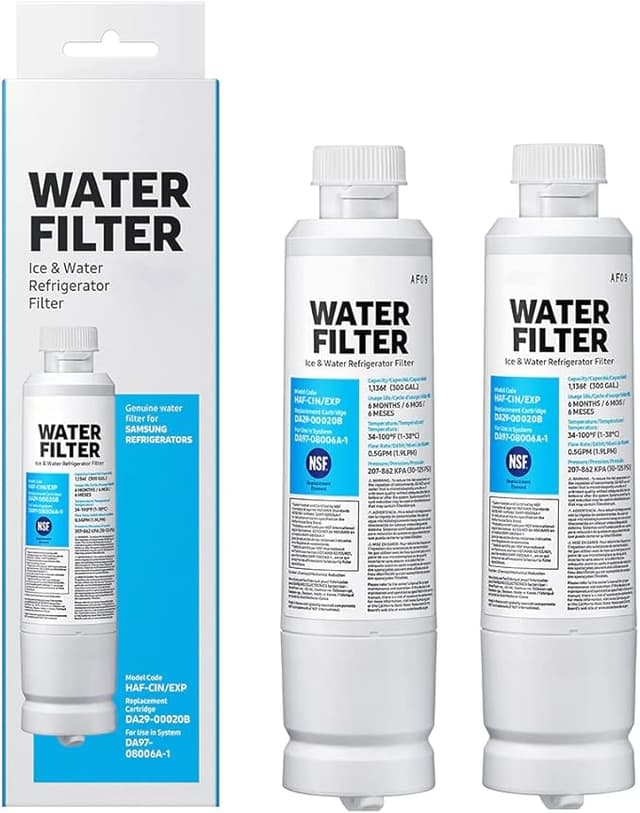
Forty-something dollars. For the genuine DA97-08006A, depending on the day and where you look, you're staring down $40 to $50 for a single cartridge you're supposed to swap roughly every six months. Do the yearly math: two filters a year, call it $90 to $100, every year, forever, for as long as you own the fridge. For a part that is, at the end of the day, carbon and a plastic shell.
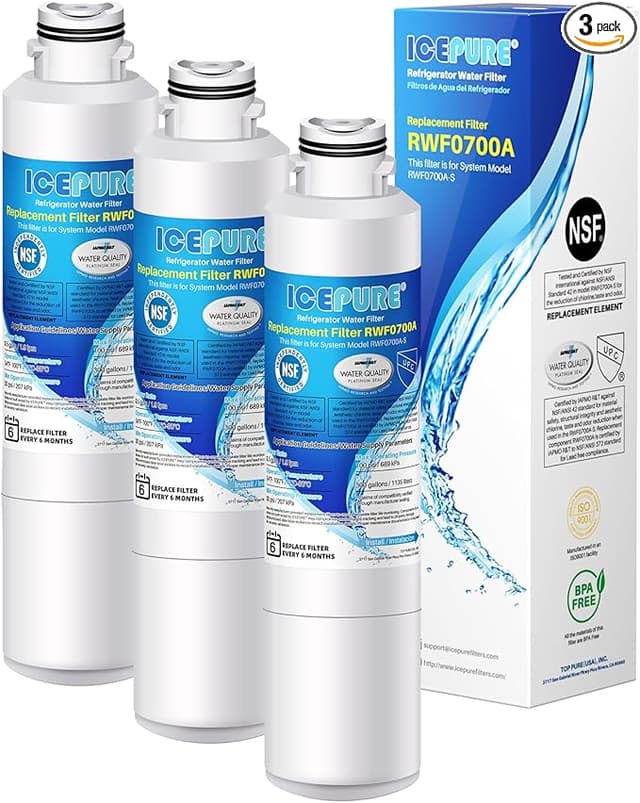
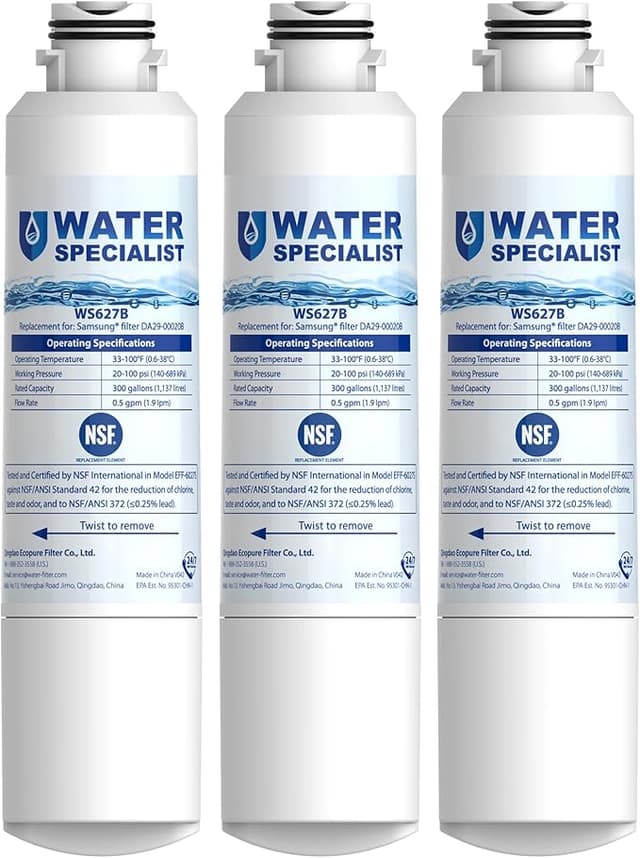
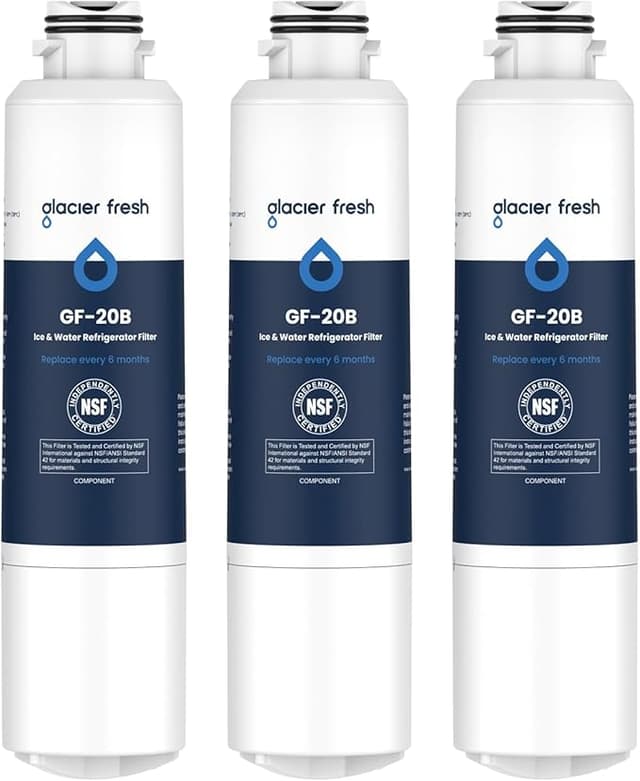
That's the moment I went looking for a compatible one. The aftermarket cartridge built to the same DA97-08006A spec ran me right around twenty bucks — roughly half. NSF-rated, which is the part I actually cared about; I didn't want some no-name plastic tube of mystery sand. Crisp NSF-standard media for about 50% less than the logo. I'll be honest, I didn't trust it. A twenty-dollar filter going into a fridge that cost me well over a thousand felt like the setup to a regret.
Does it actually fit, though
This was my real worry — that it'd be a hair off and either rattle loose or refuse to seat. It didn't. The swap is genuinely a thirty-second job: you twist the old one out (mine fought me a little because of all that gunk), line up the new cartridge, and twist until it locks. There's a click, or more of a firm seat, where you feel it grab. Then — and don't skip this — you run about three gallons through the dispenser to push the trapped air and the loose carbon dust out. The first half-gallon will sputter and look a little gray. That's normal. That's the carbon settling, not a defect.
The fit on mine was snug. If I'm nitpicking — and I will, because that's the whole point of me — the locking collar on the compatible one felt a touch less buttery than the OEM. The genuine Samsung part has this slightly more precise turn to it. The aftermarket one seated fine and held fine, no drips, no weep, but the action was a little cheaper-feeling. That's the kind of thing you notice for four seconds during install and then never think about again for six months.
The honest performance read
Water tasted clean again within a day. The swampy note was gone, the ice went back to tasting like nothing, which is exactly what ice should taste like. Flow rate at the dispenser was the same as I remember it being fresh — no noticeable choke. For everyday drinking, ice, and the chlorine taste-and-odor stuff most of us are actually trying to get rid of, I genuinely could not tell you which filter was in there in a blind glass.
Where's it a touch behind? Two things, and I'll be straight about them. One, there was a faint plastic smell off the new cartridge for the first two or three days — that off-the-shelf packaging smell. It flushed out and was gone by day three, but it's there at first. Two, I'd bet the OEM media lasts a hair closer to its rated life at the tail end. I run mine on a calendar, swapping every six months regardless, so I never push a filter to its limit anyway — but if you're someone who squeezes every last week out of a cartridge, the genuine one probably holds its edge slightly longer. The packaging is also cheap. Thin cardboard, no fanfare. Doesn't touch the water, so I don't care, but you'll notice.
So who should buy which
If you're on a private well with heavy sediment or you've got a specific contaminant you're treating for — lead, cysts, something named on a water report — read the certification sheet carefully and don't cheap out blindly; match the exact NSF claims, OEM or not. And if a perfectly precise locking action and brand-matched longevity genuinely matter to you, the real Samsung part is right there and it's a fine filter. Nobody's wrong for buying it.
But me? After watching that brown horror come out of my fridge, what I learned is that the filter you actually replace on time beats the premium one you put off because it stings to buy. At twenty bucks instead of forty-five, I'll swap this thing the day the light comes on instead of pretending I didn't see it. Same NSF job, half the price, fit that locked right and held. I bought another two-pack the same week — that's the most honest verdict I can give you. The cheap one isn't the gamble. The expired one was.