Troubleshooting & Analysis
The day my fridge water tasted like the inside of a garden hose
I noticed it before I admitted it. The water from my Samsung's door dispenser had picked up this faint, swampy edge — not bad enough to spit out, just bad enough to make me pause every time I filled a glass. I blamed the cup. Then I blamed the ice. Then one Sunday I pulled the filter, and yeah — there it was. The thing was the color of weak tea and the flow had dropped to a dribble. I'd been drinking through a clogged filter for who knows how long, telling myself it was fine.
It was not fine. A saturated filter isn't a neutral filter — it's worse than nothing once the carbon's spent, because now you've got a soggy lump sitting in your water line growing whatever it wants to grow. That's the part nobody tells you. A dead filter doesn't politely step aside and pass tap water through. It can start dumping back what it caught.
So I went looking, and the OEM price stopped me cold
I almost reordered the genuine Samsung cartridge out of habit. Then I saw it again — fifty-something dollars for one filter, and Samsung wants you swapping it every six months. Call it two a year. That's over a hundred bucks annually for what is, mechanically, a carbon block in a plastic shell. I have three other appliances that eat filters. I'm not made of money.
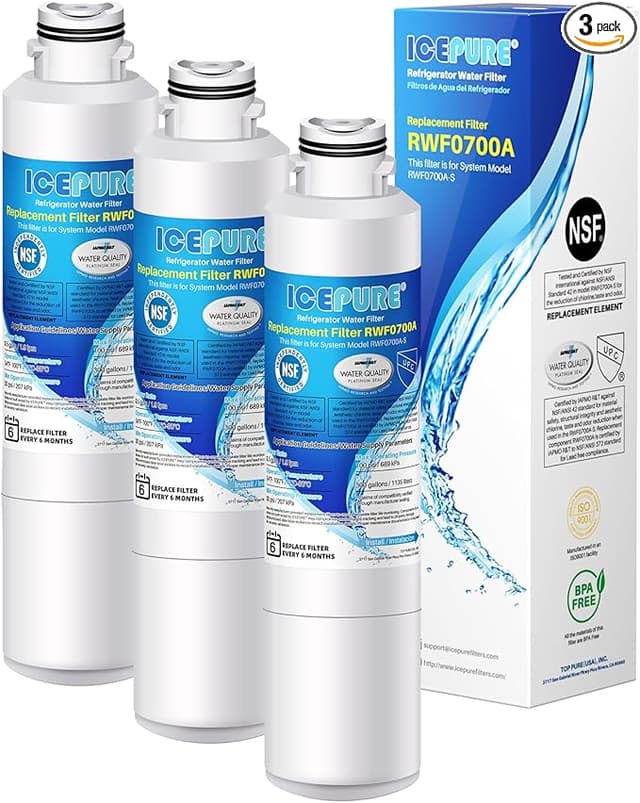
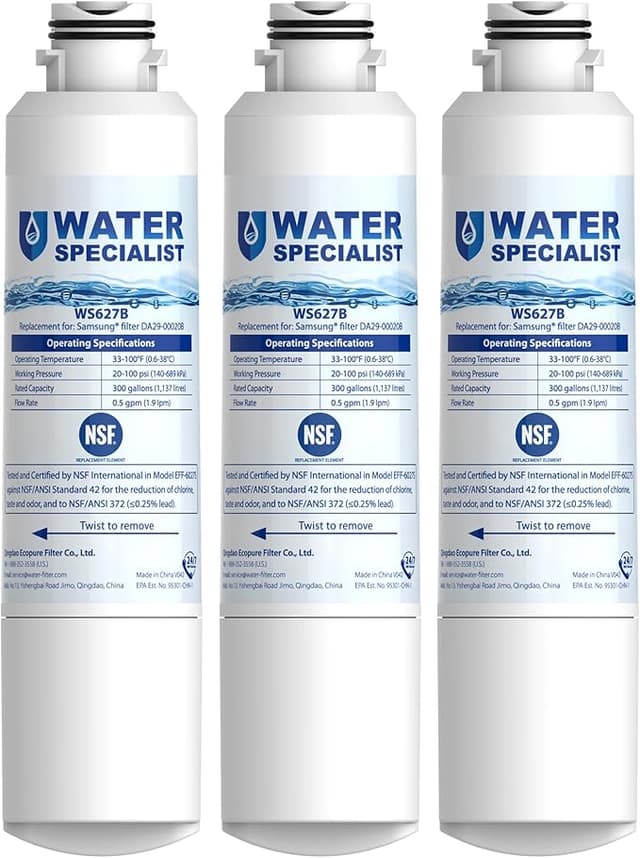
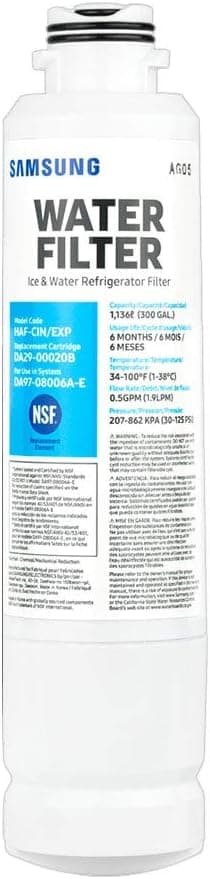
The compatible one I landed on runs about half that. Roughly $20-something versus $50-plus. Do the math across a year and you're keeping sixty, seventy dollars in your pocket for the same job. The one number that actually mattered to me, though, wasn't the price — it was whether it was tested to NSF standards for the stuff that matters, lead and chlorine. It is. That's the line I won't cross for savings. Cheap is fine. Cheap-and-untested is how you end up exactly where I started, drinking garden hose.
Putting it in: easier than I expected, with one catch
The swap itself is genuinely a two-minute job, and the compatible filter didn't fight me. You find the housing — mine's up inside the fridge compartment, some models hide it behind the bottom grille — twist the old one counter-clockwise, and it drops out. The new one goes in and locks with a quarter turn. You feel it seat. There's a click, or more of a firm stop, where it stops turning and you know it's home.
Here's the catch, and it's a real one: the frame on this compatible cartridge is a hair less precise than the Samsung original. The first time, I had to back it out and reseat it once because it didn't bite the threads cleanly on the first try. Two seconds of wiggle. Once it locked, it locked solid — no drip, no play. But if you're someone who expects it to glide in perfectly on attempt one like the OEM does, you'll notice the difference. It's not loose. It's just not quite as buttery.
Then you flush it. Run about three gallons through the dispenser before you drink any — this is not optional. Skip it and your first few glasses taste like, well, new filter. Faintly of carbon dust and plastic. After three gallons that clears completely and you forget it was ever there.
How it actually performs once it's broken in
This is where I expected to get burned and didn't. The water came back clear and clean — that flat, neutral taste good filtered water is supposed to have, the chlorine bite gone. Ice cubes froze up clear instead of cloudy after the first tray or two cycled through. Flow rate is strong; no more sad dribble. Side by side against my memory of the genuine filter, I honestly can't tell the water apart.
Where it's a touch behind: longevity. I'd swear the OEM held its flow a little longer into month five and six. This compatible one I'd plan to change right on schedule — six months, no pushing it to eight like I lazily did with the original. The savings are big enough that even swapping a hair more often, you're still way ahead. And honestly, swapping on time is what you should be doing anyway. My whole sob story started because I didn't.
The real downside, said plainly
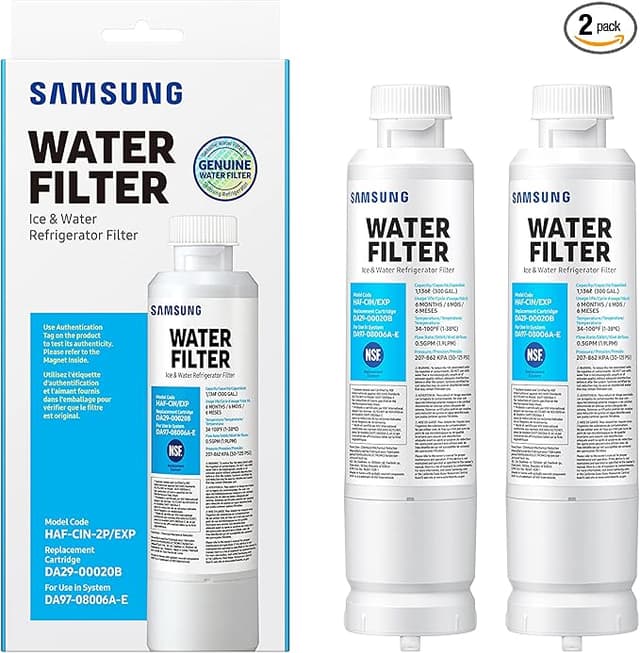
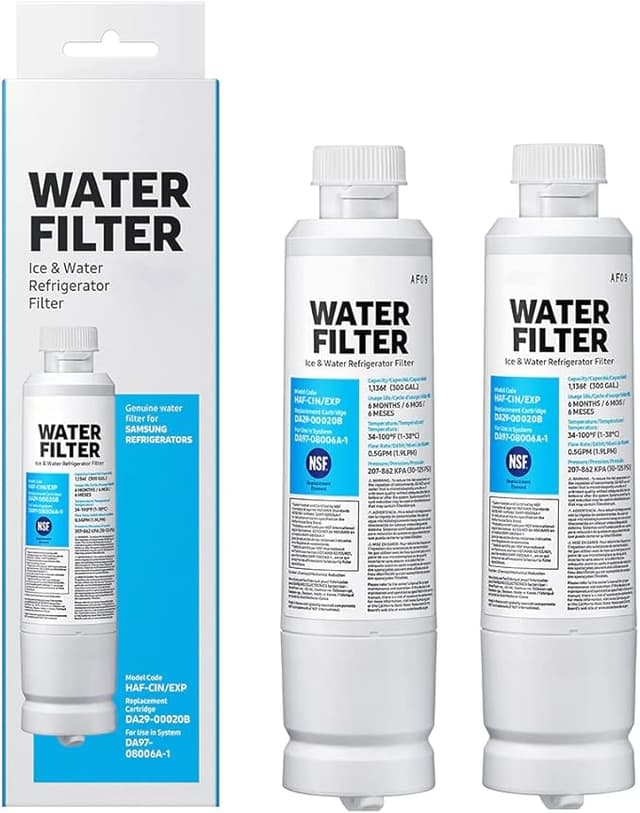
The packaging is cheap. It showed up in a thin plastic sleeve, no fancy box, and for a half-second that made me second-guess what was inside. Don't let it. The filter itself is solid; they just didn't spend money on the unboxing, which is exactly why it costs half as much. I'd rather they put the budget in the carbon than the cardboard.
Who should buy OEM instead — and who should grab this
If your fridge is still under a warranty that gets fussy about third-party parts, or you're the type who will lie awake over a logo, buy the Samsung filter and sleep well. That's a legitimate reason and I won't argue it.
But for me? I've now got the compatible one running in my kitchen, it pulls lead and chlorine to the standard that counts, the water tastes right, and it saved me sixty bucks a year. The slightly-loose frame and the cheap bag are the entire price of admission, and I'll pay it every time. I bought it again on schedule six months later without a second thought — which, after the garden-hose incident, is about the strongest endorsement I've got.