Troubleshooting & Analysis
I stood in the parts aisle of my own browser tab for twenty minutes over a plastic box
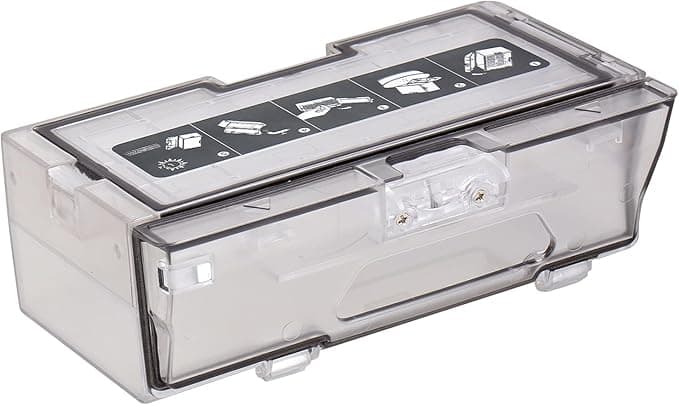
That's the embarrassing truth. My Roborock cracked its dust bin — hairline split along the seam where the lid hinges, right where mine takes a knock every time the robot wedges itself under the couch. And there I was, two tabs open. One was the official Roborock dust bin kit. The other was this generic DUST BIN BOX replacement, doing the exact same job, for a chunk less money. I genuinely sat there going, "it's a bin. It's a piece of molded plastic. Why am I nervous about a bin?"
But I was nervous, because the OEM part is the kind of thing the manufacturer prices like it's machined out of something special. It isn't. It's a tray with a flap and a seal. So I bought the generic, ran it in my unit for about four months of near-daily cleaning, and here's what actually happened.
The money, plainly
The official replacement bin runs you somewhere in the $45–$50 range depending on which kit they bundle it into — and they love bundling it, so half the time you're paying for a "kit" with a filter you didn't need yet. The generic DUST BIN BOX I went with was around $22. Call it a $25 gap on a single part. That's not life-changing money once. But these things take abuse. The bin is the part that gets dropped on the kitchen tile while you're emptying it, the part the dog knocks off the counter. If you replace it even once a year because you cracked another one, that gap adds up to real money over the life of a robot that's going to outlast two or three bins.
I'll be honest — the price gap is exactly what made me suspicious. Cheap plastic that doesn't seal means dust leaking back into the machine, and dust leaking back into the machine is how you cook a motor. So I went in expecting to find the corner they cut.
The fit, and whether it actually clicks
This is the part people are really asking about, so let me be specific. Installation is genuinely a non-event. You pop the compartment open, pull the old bin straight out — mine slid out clean, no fighting it — and dump it. The new one you give a quick once-over first (more on that in a second), peel whatever protective film is clinging to it, and seat it. On mine it went in with that same satisfying click the original had. Seated flush. The lid closed without me having to lean on it.
One real note: the very first time, I caught myself second-guessing whether it was fully home, because the seat tolerance felt a hair looser than the factory bin when it was sliding in. Not loose once it's locked — loose during the slide. Once it clicked, it was solid and stayed put through four months of the robot ramming furniture. But that first install, push until you hear it, then give it a gentle tug to confirm. Took me ten extra seconds of paranoia and then I never thought about it again.
How it actually performs
Suction held. That was my number-one worry — a bad seal on the bin and you lose airflow, the robot wanders around pretending to clean while picking up nothing. Didn't happen. Capacity feels identical to OEM; I empty it on the same schedule I always did, roughly every two to three runs in a house with a shedding dog. The flap that's supposed to keep dust from blowing back when the motor kicks does its job. After four months I pulled it and checked behind it for that telltale fine-dust blow-by, the gray film that tells you the seal's failing. It was clean back there. Clean enough that I stopped checking.
Emptying is the same one-handed flip-and-tap it always was. No new ritual to learn. If anything I notice it less than the old one, which is the highest compliment you can pay a dust bin — you want this part to be boring.
The downsides, because there are some
Here's where I earn your trust. The plastic is not the same plastic. The OEM bin has a slightly denser, more substantial feel — you can tell when you hold both. The generic is a touch lighter, a little more hollow-sounding when you tap it. Does that matter functionally? In four months, no. But if you're rough with it, I'd believe it has a shorter fuse before it cracks than the original. I treat mine gently when I empty it now, and honestly I should've been doing that with the OEM one too.
Second downside, and this is the one I want you to actually act on: inspect it before you install it. The packaging is cheap — thin bag, minimal padding — and the molding quality, while fine on the unit I got, is the kind of thing where I wouldn't be shocked if one in a batch shipped with a flash burr on the seal edge or a lid that's a millimeter off. Mine was fine. But run your finger along the seal lip and work the lid open and closed a few times before you trust it. Thirty seconds. If something feels off, that's your free return, not your dead motor three weeks later.
Third, smaller one: there's a faint plastic smell out of the bag the first day or two. It aired out completely and I never smelled it again, but if you're sensitive, let it sit out overnight before the first run.
Why I don't just shrug this off as "it's only a bin"
Because a compromised dust bin isn't only a bin. If the seal leaks, fine dust circulates back through the machine instead of staying trapped, and that's how the motor overheats and dies — and a dead Roborock motor is a new-robot conversation, not a $22 one. A bin that doesn't latch right can also let allergens drift back into the room every time the thing runs, which, in a house with anyone who's sensitive, is the opposite of why you bought a robot vacuum. So the bin matters more than its price tag suggests. That cuts both ways: it's the reason a cheap one would scare me, and it's exactly why I checked the seal so carefully and was relieved by what I found.
The verdict
Who should buy the official one? If you're the kind of person who will never inspect a part before installing it, who wants the absolute densest plastic because you know you're going to be rough with it, or you're still inside the window where mixing in non-OEM parts could give you grief on a warranty claim — pay the $45 and don't think about it. That's a legitimate choice.
But me? I held both, ran the generic for four months of dog hair and furniture-ramming, checked behind the flap for blow-by and found it clean, and saved about $25 doing it. The only price was thirty seconds of inspecting the part out of the bag — which, frankly, you should do with any replacement. I'd buy this generic DUST BIN BOX again. I already have, actually — bought a spare to keep in the drawer, so next time I crack one on the tile I'm not standing in that parts aisle for twenty minutes all over again.