Troubleshooting & Analysis
The week my hot tub turned into pea soup
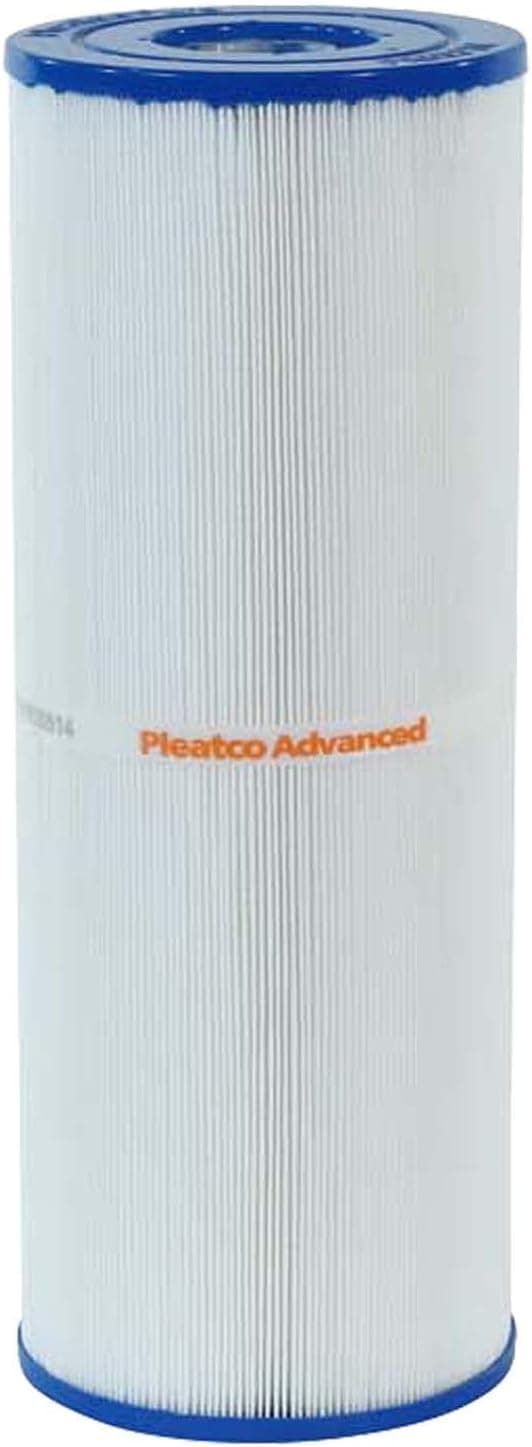
I knew something was wrong when the jets started sounding tired. Not loud — tired, like the pump was working twice as hard to push half the water. Then the water went cloudy. Then it went green-ish at the corners, that faint algae tint you only notice when the afternoon light hits it sideways. I pulled the cartridge expecting it to look dirty. It looked dead. The pleats were packed flat with a gray paste of body oil, sunscreen, and whatever else four months of soaking had left behind, and water was basically pushing around the filter instead of through it. That's the moment that sent me down the rabbit hole on the Pleatco PRB50-IN.
Because here's the thing nobody tells you when you buy a spa: the filter is the cheap part that quietly protects the expensive parts. I'd been lazy about it, and a clogged cartridge had my pump straining against a wall of gunk for who knows how long. That's how you cook a pump motor. So when I finally got serious, I wasn't shopping for the prettiest box — I wanted the right cartridge, at a price that wouldn't make me put it off again next time.
The price gap that made me stop and think
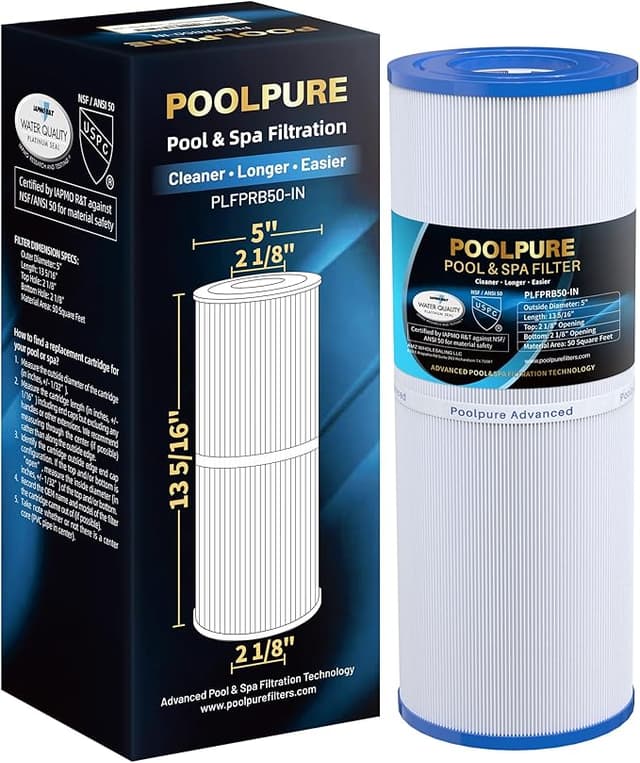
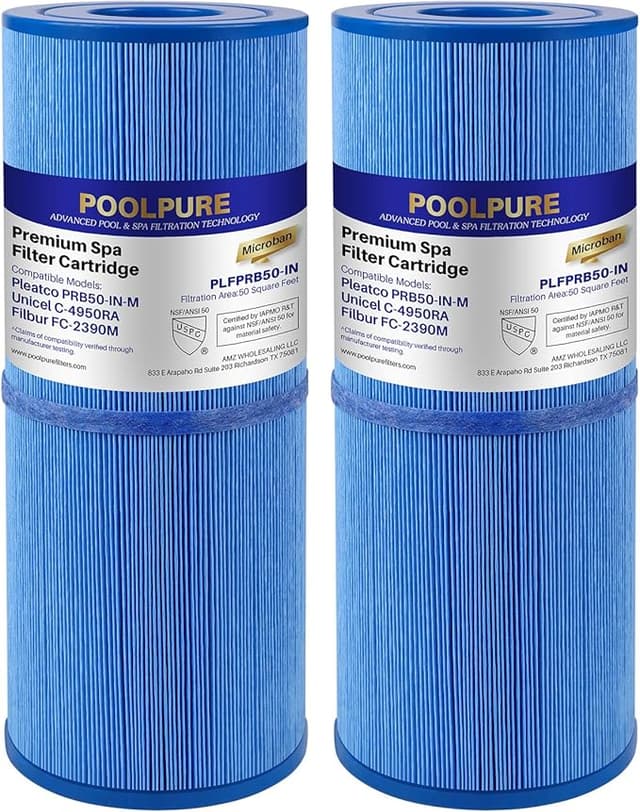
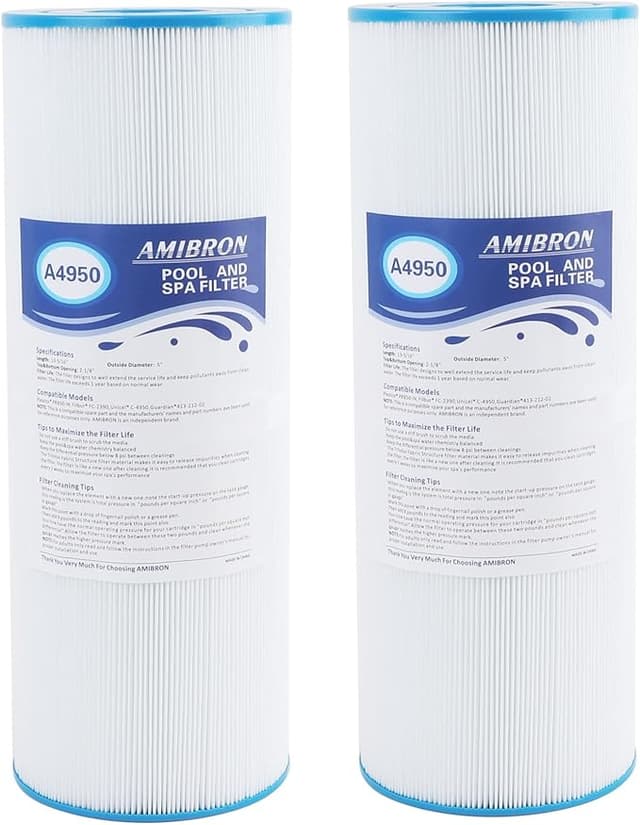
The PRB50-IN is the standard 50-square-foot pleated cartridge that fits a huge range of spas and hot tubs — it's the same body as the Unicel C-4950 and the Filbur FC-2390, so you'll see it sold under three or four names. When I went looking, the brand-name "OEM" versions and the premium sticker prices were sitting around $38 to $45 each. The compatible PRB50-IN I ended up buying ran me about $22. On one cartridge that's a $16-ish gap. Doesn't sound life-changing.
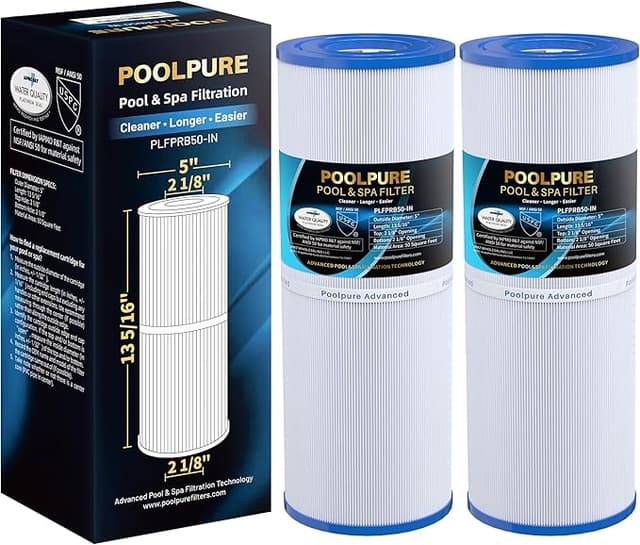
But do the actual math. Most spas this size run two cartridges, and you really should swap them every 12 to 15 months if you soak regularly. So we're talking two filters, once a year, more or less forever. At OEM money that's $80+ a year just in filters. At compatible prices it's closer to $44. Over five years of owning the tub, that gap pays for a decent cover. Honestly, once I saw it laid out like that, the only real question was whether the cheap one actually does the job — or whether I'd be back to green water in two months.
Does it actually fit?
This is where compatible cartridges usually fall apart, so I paid attention. Swapping it is genuinely a five-minute job: kill the power to the spa first (don't skip that — you do not want the pump kicking on while your hand is in the housing), pull the old cartridge straight up out of the canister, and give the empty housing a rinse so none of the old crud gets trapped under the new seat. The PRB50-IN dropped into the well and threaded down onto the bottom fitting without any forcing.
Now — the honest part. The fit is good, not perfect. The OEM cartridge seated with that confident little snug-click feel. This one threaded down fine but the top handle sits a hair looser in my hand than the original did, and the end-cap molding is a touch less crisp. Functionally it sealed and it hasn't moved or rattled, but if you're the kind of person who notices a 1mm gap, you'll notice it. It didn't affect the seal or the water for me. It's a cosmetic-feeling looseness, not a leak.
How it actually performs
I've had it running about four months now, same spa, same bather load — me most evenings, the whole family on weekends. Water clarity came back within a day of the swap and has stayed there. I can read the bottom step clearly, the jets are back to full punch, and the pump sounds normal again instead of strained. For straightforward filtration — pulling out the oils, the leaves, the fine cloudiness — I genuinely can't tell this apart from the name-brand cartridge I replaced.
Where it's a touch behind: the pleat fabric feels slightly thinner than the OEM, and after a deep chemical soak to clean it, the pleats don't spring back quite as tight as a premium cartridge does. Practically, that means I think this one will give me maybe 12 months of honest service rather than the 15+ you might squeeze from a top-tier filter. Given the price difference, I'm completely fine trading three months of cartridge life for paying half. I'd rather swap a $22 filter a little sooner than baby a $42 one.
One more real-world detail worth knowing: out of the bag there was a faint plastic-and-cardboard smell for the first day or two, and the packaging is bare-bones — a thin printed sleeve, no fancy box. The smell rinsed out completely after I soaked the cartridge in water for ten minutes before installing, which you should do anyway. None of it reached the water. But if you're expecting a premium unboxing, lower your expectations and raise them for the part that matters.
Why I won't slack on this again
The reason I'm even careful about cartridges now is that green-water week taught me what's at stake. A saturated filter doesn't just make the water look bad — it stops actually filtering, which means oils and bacteria stay in the water you're sitting in, and algae gets a foothold. At the same time the pump is grinding against the blockage, and pump motors are not a $22 problem. The filter is the cheap insurance policy on the whole system. The whole point of a cartridge that costs half as much is that you'll actually replace it on schedule instead of stretching a dead one another two months to save money.
Who should skip this — and what I personally do
If your spa is still under a warranty that specifically requires branded OEM cartridges, buy the OEM and keep your paperwork clean — not worth voiding coverage over $16. And if you run a heavily-used commercial tub where you're cleaning filters constantly, the sturdier premium pleats might genuinely earn their price in durability.
For a home spa, which is most of us? I buy the PRB50-IN and I've now done it twice. It fits, it cleared my water in a day, and it's been holding steady for four months with no drama. The handle's a little loose and the pleats are a little thinner — those are the real trade-offs, and they're small ones. For roughly $22 against $40-plus, doing the exact same job in my tub, I'd grab it again without thinking twice. Just rinse it before you install it, and actually replace it on schedule. The whole reason to buy the cheaper one is so that you will.