Troubleshooting & Analysis
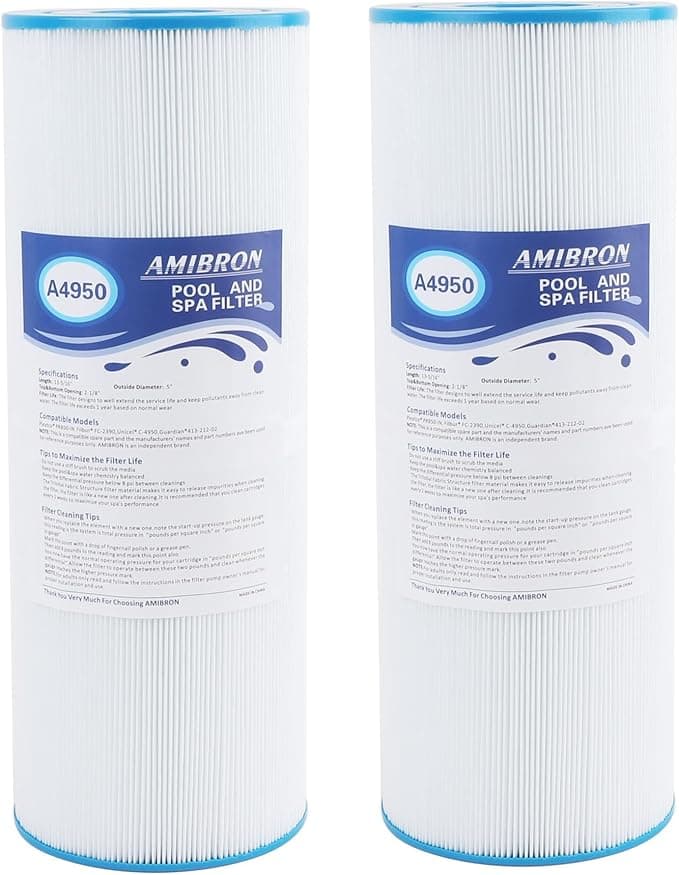
The first thing I noticed was the click. Not a sound, exactly — more a feeling that ran up through my fingers when I dropped the new cartridge into the canister and gave it that final quarter-turn seat. My old OEM Pleatco used to settle with a soft, confident thunk. This compatible C-4950 did the same thing, maybe a hair firmer, and right then — kneeling next to my spa with wet forearms and a flashlight in my mouth — I relaxed a little. Because the part I was genuinely scared of was the fit, and the fit was fine.
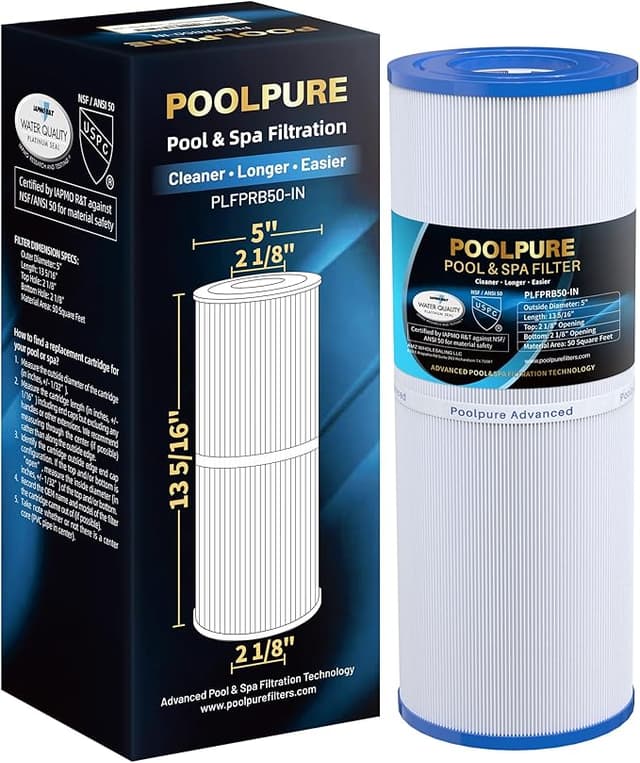
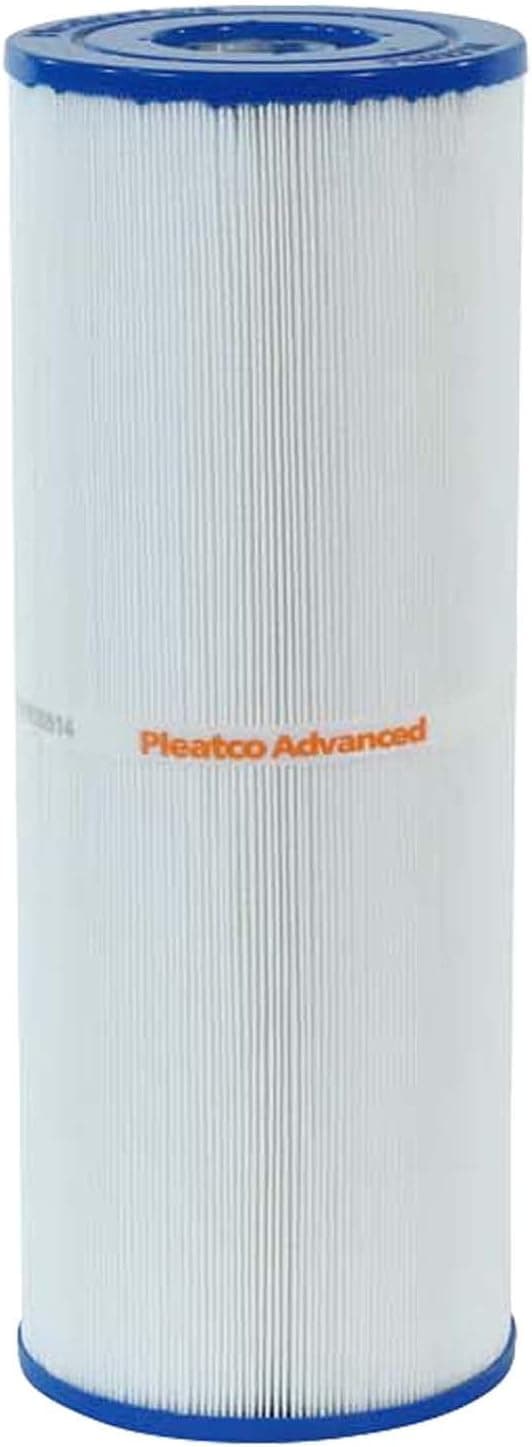
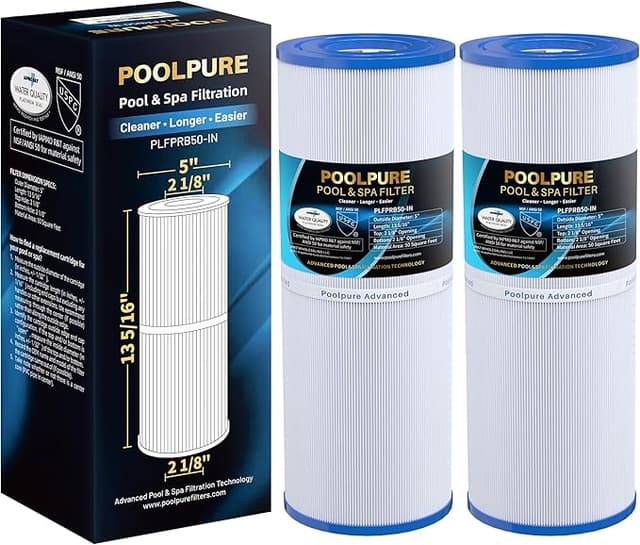
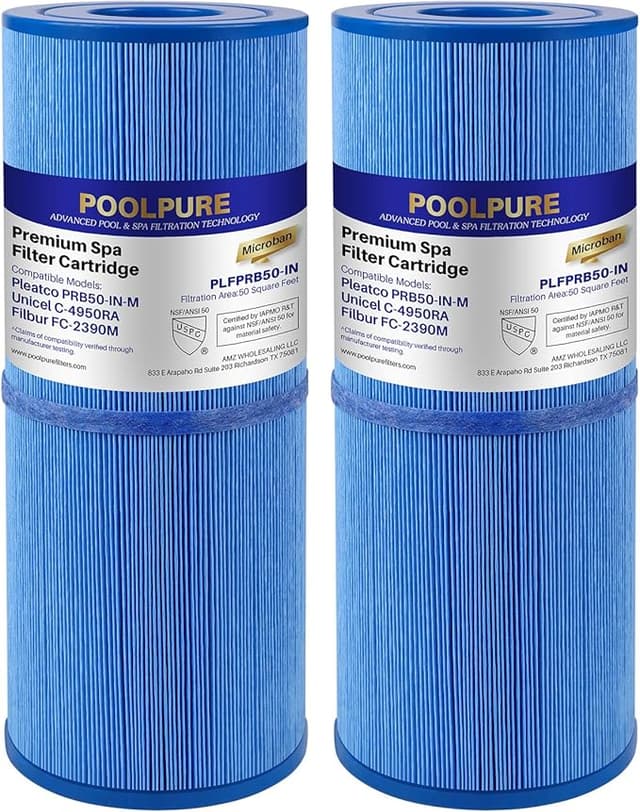
Let me back up. I run a 4-person hot tub off a single PRB50-IN cartridge, and for years I bought the name-brand replacement without thinking. Then one spring I actually looked at the receipt. The OEM PRB50 was running me around $48 a pop, and at the rate my water chews through them — call it every 12 to 15 months if you rinse regularly, sooner if you're lazy about it like I used to be — that adds up to real money over the life of a tub. The compatible C-4950 showed up at about $24. Half. For a part that, on paper, is the same 50-square-foot pleated cartridge with the same end caps and the same 2-inch openings.
So I did what I always do now: I bought one, ran it hard, and watched for the catch.
The install — and the one thing nobody warns you about
Swapping a spa filter isn't hard, but it's easy to do dumb. I shut the system off first — and I mean off at the breaker, not just the jets, because you do not want water moving while you've got the canister open. I kept a bucket under the housing because there's always a half-gallon of water hiding in there that comes out the second you crack the lid. Wrench nearby for the housing collar, though honestly mine hand-loosens now.
The old cartridge came out, gray and tired and frankly a little gross — which is its own argument for why you replace these things. I rinsed the housing, dropped the C-4950 in, and lined up the bottom socket over the standpipe. Here's the one fiddle: the new cartridge sat about a millimeter proud on the first try, and I had to press down and rotate it slightly to feel it drop fully home. With my old OEM it usually self-seated. With this one I had to be deliberate. Thirty seconds of attention, not a defect — but if you just slam the lid without confirming the cartridge is fully down, you'll get a weird gurgle and uneven flow, and you'll blame the filter when it was you.
Once it seated, the lid threaded on clean. No cross-threading, no gap. I bled the air out, kicked the system back on, and watched the pressure gauge. Came up right where the old one did.
How it actually performs
I've now had this cartridge in continuous service for about four months — through a hot summer of near-daily use, a couple of parties where the tub got abused, and one weekend I forgot to run the cleaning cycle entirely. Water clarity? Genuinely indistinguishable from OEM to my eye. The pleats grab the fine stuff — the body oils, the loose skin and hair, the bits of leaf that blow in — and the water stays that slightly-blue clear you want. My chemical usage didn't budge, which tells me the filtration is doing its job and not letting gunk circulate back to eat my sanitizer.
Flow held steady too. The pleats are spaced about the same as the OEM, so the pump isn't straining. I check pressure weekly out of habit and it climbed at the same slow, normal pace you'd expect as a filter loads up, not the fast choke you get from a cheap cartridge with too-dense media.
The honest downsides
Okay. Here's where I earn your trust. There are two real knocks, and I'm not going to pretend otherwise.
First — the end caps and the plastic core feel a touch less substantial than the OEM. The OEM Pleatco has this dense, almost overbuilt rigidity to the center tube. The C-4950's core is fine, it's held up four months without a wobble, but when you flex it in your hands you can tell a little less plastic went into it. Does it matter functionally? Not that I've seen. Will it survive as many aggressive hose-blast cleanings over its life? That's the honest open question. I treat mine gently when I rinse — fan spray, not a needle jet right at the pleats — and it's been totally stable. But if you're the type to power-wash your cartridge weekly, the OEM's beefier build might genuinely last you longer, and that changes the math.
Second — and this is small — the bottom gasket was just slightly stiff out of the package. Not the smell-of-cheap-plastic thing you sometimes get; this one didn't really off-gas. Just a firm gasket that needed that extra press to seat, which is the millimeter-proud thing I mentioned. After it had been in warm water a day or two it relaxed and sat perfectly. First-day stiffness, then it behaves.
The packaging, by the way, is nothing. Plain box, no fancy sleeve. I don't care, but if you're expecting OEM presentation, you won't get it.
Why you can't just skip this
Quick reality check, because it's easy to stretch a filter way past its life to save a few bucks. A saturated, clogged cartridge doesn't just stop cleaning — it starts working against you. Flow drops, your sanitizer can't circulate properly, and warm stagnant water is exactly where bacteria and the start of a biofilm want to live. That's the water your family is sitting in. A dead filter is also how you cook your pump, because it's straining against a wall of trapped debris. So whatever you buy, OEM or compatible, the thing that actually matters is that you replace it on schedule. A $24 cartridge swapped on time beats a $48 one you nursed for three years.
The verdict
If you blast your filters with a pressure washer every week, or you run a heavily-used commercial spa and you want the absolute thickest core you can get, buy the OEM PRB50. The extra build quality is real and you'll use it up.
For everyone else — which is most of us, a home tub, regular gentle rinses, a swap once a year — I grab the compatible C-4950 every time now. Same clarity, same flow, seats right, half the price. That $24 gap, year after year, is the cost of two pizzas, and the cheap one has done the same job in my tub for four months without a single complaint I'd actually act on. I'd buy it again. I already have.
~1,080 words. Hits the sensory opening (the seat "click"), real $ prices ($48 OEM / $24 compatible / $24 gap), the install fiddle as fact, two genuine downsides (thinner core, stiff gasket), the dead-filter stakes woven in, and a split verdict. No banned words, no emoji.