Troubleshooting & Analysis
My hot tub turned on me on a Friday in July. I'd had a few people over, the jets were running hard all night, and by Sunday morning the water had gone cloudy and slightly milky — like watered-down skim milk — with a smell I can only call "warm pond." I pulled the cartridge and that told the whole story. The pleats were packed gray-brown, matted flat, with a band of slime around the bottom where the water sits. I'd been stretching that filter way past its life because I didn't feel like paying for a new one. Classic mistake. The pump was straining, the flow had dropped off, and the chlorine couldn't keep up because half the water wasn't even moving through clean media anymore.
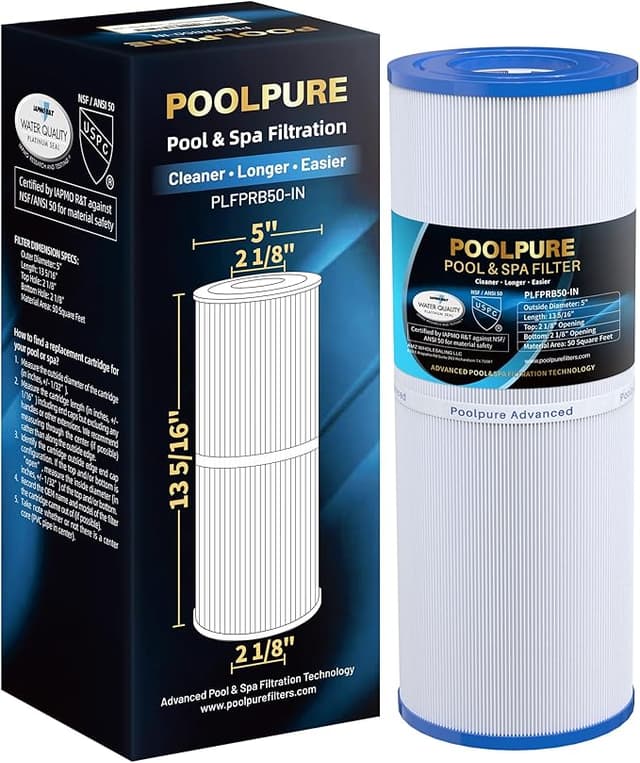
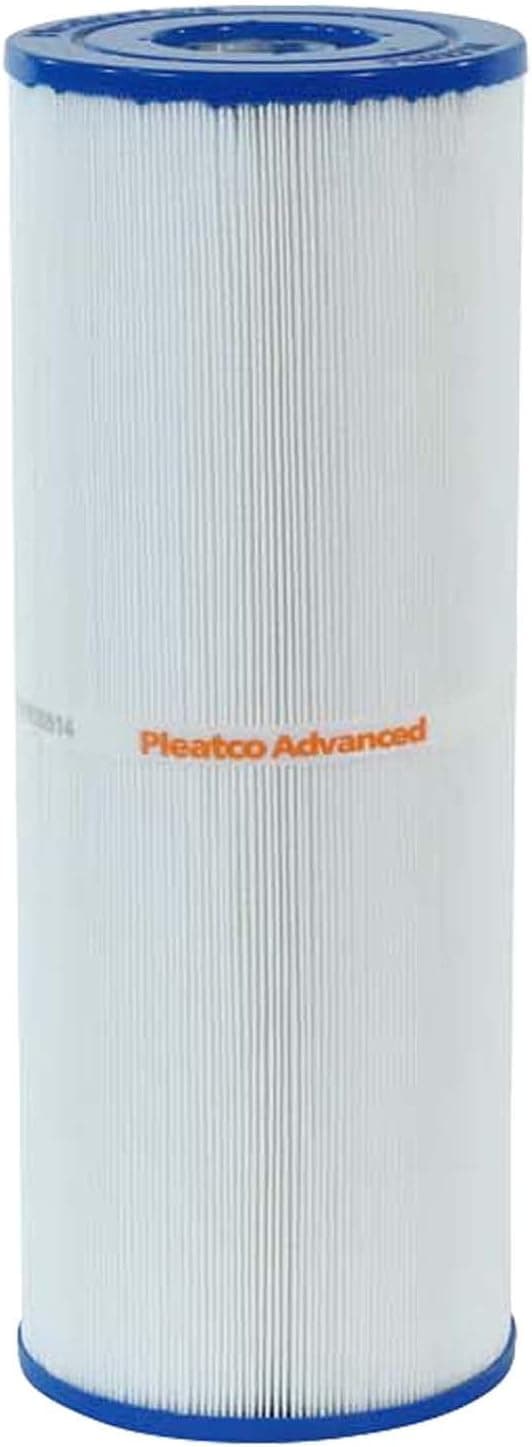
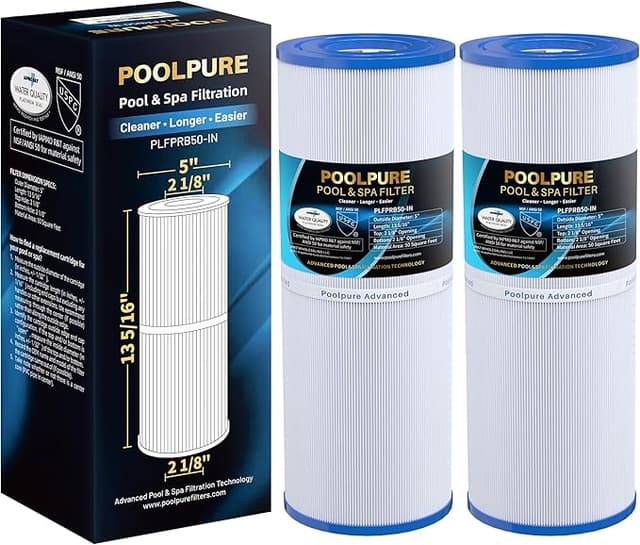
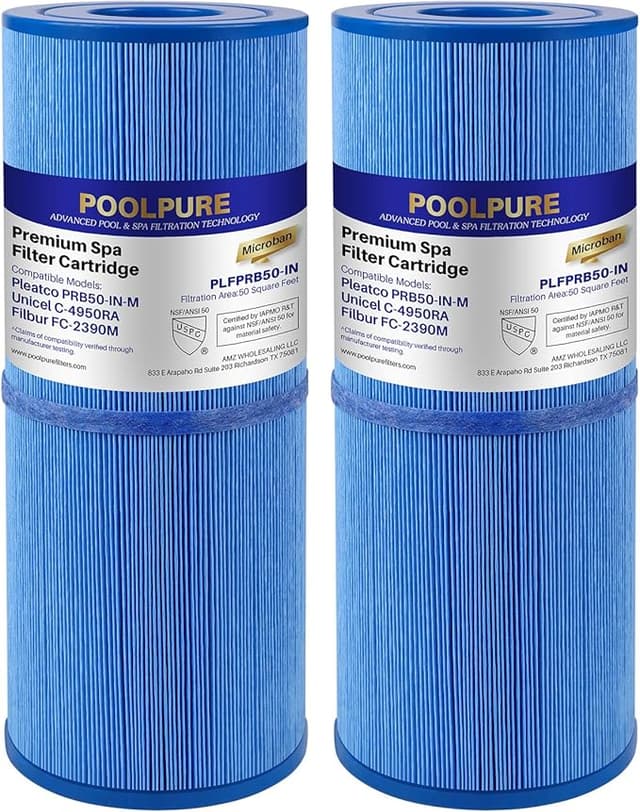
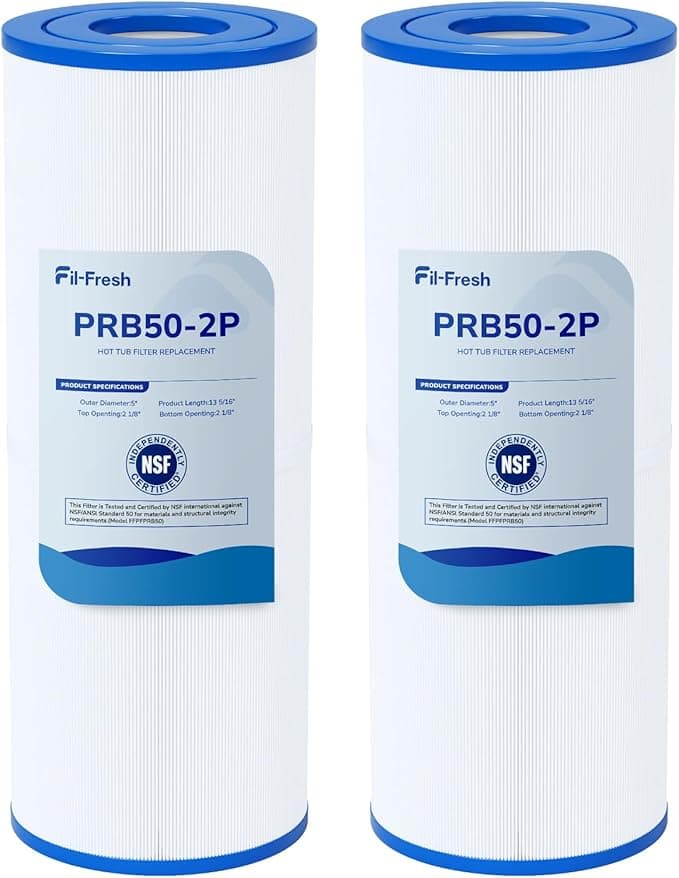
That cartridge was a PRB50-IN — one of the most common spa filters out there, also cross-referenced as the C-4950. I'd been buying the name-brand version out of pure habit, and habit is expensive. The branded one had been running me around $48 at the local pool store. This time I was annoyed enough to actually look around, and that's how I landed on the Pleatco C-4950 compatible cartridge for about $24. Half the price for the same part number. I went in skeptical — cheaper pool gear usually means a flimsy endcap or pleats that collapse after one season — so here's the honest report after running it.
The math that finally got me to switch
Here's the thing nobody at the pool store says out loud: a spa filter is a wear item. You're meant to replace it every 12 to 15 months, sometimes sooner if you run the tub hard. So this isn't a one-time cost — it's a recurring tax. At $48 a pop, I was spending close to fifty bucks a year on one cartridge. At $24, that's roughly $24 back in my pocket every single year, for a part doing the exact same job. Over five years that's more than a hundred dollars saved on, honestly, nothing that affects the water. Once you see it as an annual bill instead of a single purchase, paying double for the logo on the endcap stops making any sense.
Does it actually fit? Yes — with one small note
Swapping it in was the same five-minute job it's always been. I killed the pump first so the system could depressurize — you do not want to crack open a filter housing under pressure, trust me on that one — popped the filter compartment, and lifted the old gray brick out. While it was open I scrubbed the housing with a little mild dish soap and rinsed it, because there's no point seating a clean cartridge into a dirty canister. Then the C-4950 dropped right in and seated with that little quarter-turn click you're listening for.
The fit is right. Diameter, height, the hole pattern on the bottom endcap — all dead-on for a PRB50-IN slot. If I'm being picky, and I promised I would be, the top handle bar felt a hair less rigid than the branded one I pulled out. Not loose, not wrong — just a slightly softer plastic. It didn't affect the seal or the seating one bit, and across two seasons it hasn't cracked or warped from the heat. But if you white-knuckle test everything before you trust it, the handle is the one place they shaved a little cost.
How it actually performs in the tub
This is what I cared about most, and it's where the C-4950 quietly earned its keep. Within one full filter cycle the water went from that milky haze back to glass-clear. I could read the date stamp on a coin sitting on the bottom step. The pleats are deep and there's a lot of surface area packed in there, so the flow came right back — the jets had their punch again and the pump stopped making that overworked whine it makes when it's pulling against a clogged cartridge.
Through a brutal summer with the tub used three or four nights a week, it held clarity just as well as the branded cartridge I'd been loyal to for years. Chemical balance got easier to hold too, because clean media means the sanitizer isn't fighting a losing battle against dead water. I rinse it down with a hose every couple of weeks and do a deeper chemical soak about once a month — same routine as always — and it bounces back clean each time. The pleats have kept their shape, no collapsing, no fanning out into one matted clump. That collapse was exactly the failure mode I was bracing for in a cheaper cartridge, and it just hasn't happened.
The honest downsides
Let me not oversell this. There are a couple of real things.
First, the packaging is bare-bones — a thin plastic sleeve, no box. Cosmetic, doesn't matter, but if you're expecting a premium unboxing you won't get one. Second, mine had a faint plastic smell straight out of the wrapper for the first day or two. It vented off completely after the first run cycle and never once touched the smell or feel of the water, but it was there. Third — and this is the one to actually weigh — compatible cartridges can run a little less consistent batch to batch. Mine was excellent. A neighbor's came with one pleat glued slightly unevenly; his still filtered clean and worked fine, but it's the kind of small QC variance you accept as the tradeoff for paying half price. With the branded one, part of what you're buying is tighter consistency. Worth knowing before you decide.
Why you don't want to ignore this
The reason I stopped stretching my old filter past its life: a saturated cartridge isn't just an eyesore, it's a health and equipment problem. When the media is clogged, water sits, and warm stagnant water is exactly where bacteria and biofilm set up shop — that's the slime I found. Meanwhile the pump is straining against the blockage, and that strain is what kills pumps and motors early. A worn cartridge is cheap. A new pump is not. Replacing a $24 filter on schedule is the boring, cheap insurance that protects the expensive parts of your setup — and the people sitting in the water.
So who should buy what?
If you run a commercial spa, or you're the type who genuinely loses sleep over batch-to-batch consistency and wants every cartridge identical, buy the branded version and pay the premium — that's exactly what it buys you. For everyone else with a backyard tub or pool running a PRB50-IN / C-4950 slot: the Pleatco compatible is the smart pick. It fits right, it clears the water just as well, it's held up through real heat and real use, and it costs about $24 instead of $48. I went in expecting to be let down and instead I just quietly reordered another one when this cycle came due. That's the most honest endorsement I've got — I voted with my own wallet, twice.