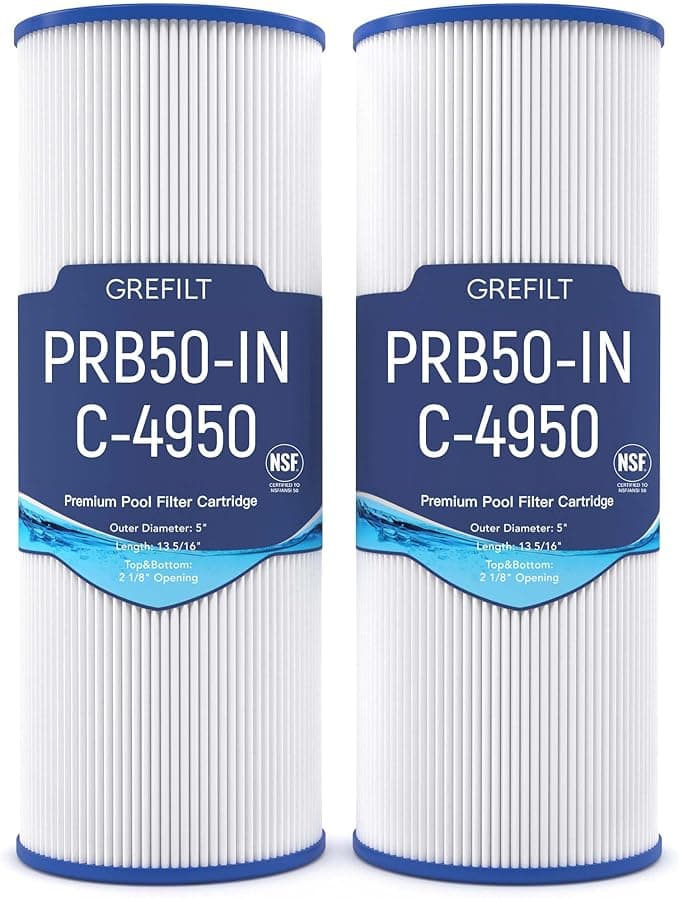
Troubleshooting & Analysis
I'll be straight with you: I didn't believe a $20 cartridge could be fine either. When my pool guy quit on me two summers ago and I started buying my own supplies, I assumed the brand-name Pleatco was brand-name for a reason and the cheap compatible ones were the filter version of dollar-store batteries. So I did the dumb thing and bought one of each — the genuine cartridge and the compatible C-4950 — and ran them back to back in the same skimmer-side housing, same pump, same pool, swapping every few weeks to see what actually happened. This is what I found out, and why my garage shelf now only has the cheap one stacked on it.
The price gap is the whole reason you're here
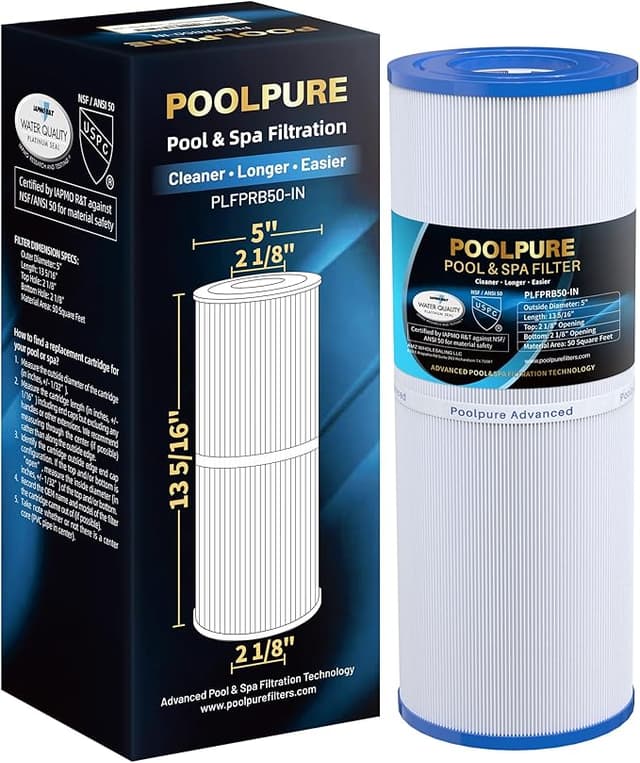
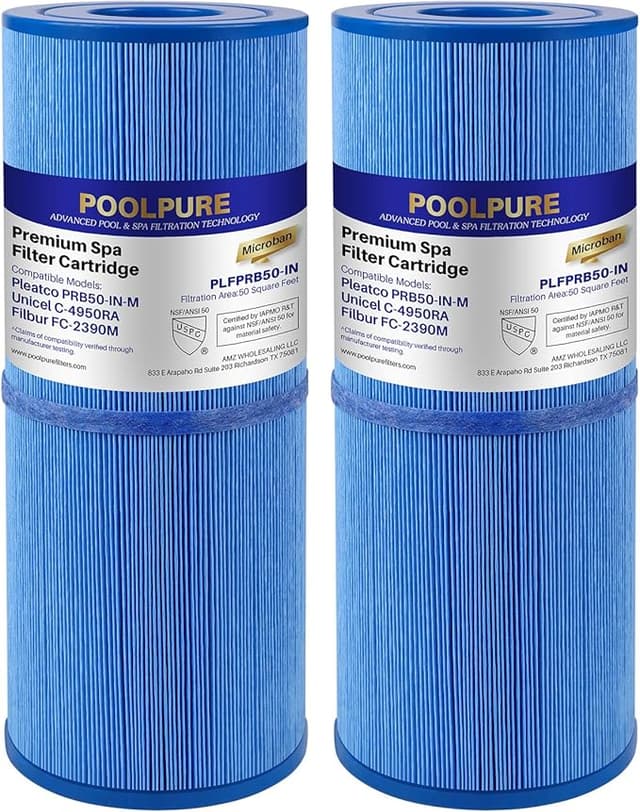
Let's not pretend otherwise. A genuine Pleatco-branded cartridge for the C-2390/C-2385/PRB50-IN setup runs me somewhere around $55 to $65 depending on the week and whether shipping's free. The compatible C-4950 I keep buying lands around $20. That's a $35-ish gap on a part that, if you're honest about your water, you're replacing roughly once a season — sometimes twice if you've got a lot of trees or a busy pool full of kids and sunscreen.
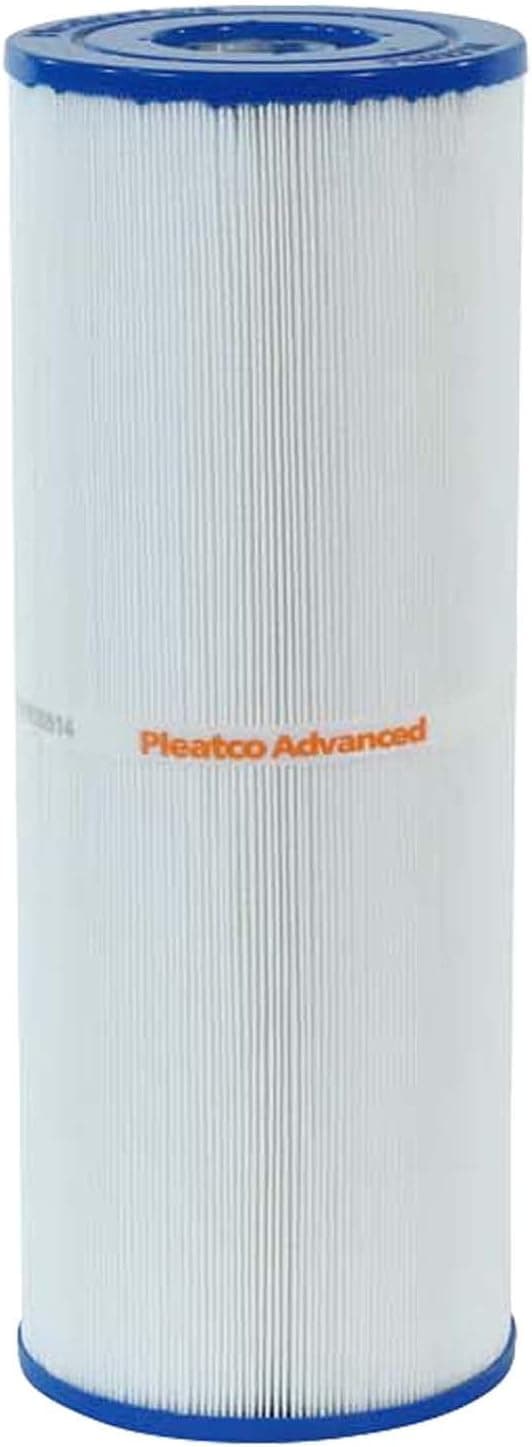
Run that math over a few years and it stops being a rounding error. Three summers of OEM is pushing $180 on cartridges alone. Three summers of the C-4950 is around $60. That's a cooler, a season of chlorine, or honestly just money that stays in your pocket for doing the exact same job. The first time I saw the two cartridges sitting side by side on my workbench, I genuinely could not tell which was which until I read the printing on the end cap.
Does it actually fit, or do you fight it?
This is where compatible parts usually fall apart, so I paid close attention. The C-4950 dropped into my housing with no fight. The end caps seated flat, the cartridge sat down to the same depth the genuine one did, and when I closed the housing and brought the pump back up there were no bypass burps — that little gurgle you get when water's sneaking around a filter that doesn't quite fill the chamber. None of that.
If you've never done this swap, it's not complicated, but do it in the right order. Kill the pump first — every time, no shortcuts, because pulling a cartridge on a live pump is how you end up wearing your pool water. Open the housing, lift the old cartridge straight out (heads up, it'll be heavy and sloshing with trapped gunk, so have a bucket ready), and take thirty seconds to wipe out the inside of the housing before the new one goes in. There's always a ring of fine silt and leaf bits at the bottom, and if you leave it, your fresh cartridge just inhales it on day one. Then the C-4950 goes in, housing closed, pump back on. Start to finish it's a ten-minute job, and the compatible one didn't make any of those ten minutes harder than the genuine part did.
Honest performance take
Here's the part I was most skeptical about, because pleat count and media quality are where a cheap filter usually gives itself away. The C-4950's pleats are evenly spaced and the media feels close to the genuine in thickness — not paper-thin like some no-name ones I've squeezed at the store. Through the heaviest stretch of summer, my pool stayed clear and my pressure gauge climbed at a normal, predictable rate, which is exactly what you want. A filter that loads up too fast is one that's either too small or made of junk; this one tracked right alongside the OEM.
Cleaning held up too. I hose it out the same way — fan the pleats open, rinse top to bottom, no high-pressure nozzle blasting the media apart — and it rinsed back to nearly clean. After a full season it'll get that permanent tea-stain tint and the pleats lose a little of their crispness, but that's true of every cartridge ever made, genuine included. They're consumables. You use them up.
The downsides — because there are some
I told you I'd be honest, so here it is. The plastic on the end caps feels a notch less rigid than the genuine Pleatco. It's not flimsy and it didn't crack or warp on me, but if you're the type who manhandles a cartridge out by yanking on one cap, go gentle — grip the body, not the edge. The genuine part just feels a touch more bombproof in the hand.
Second, the band that holds the pleats can sit a hair looser than OEM. It didn't cause me any problems — no collapsed pleats, no bypass — but I noticed it, and if you're someone who inspects everything, you'll notice it too.
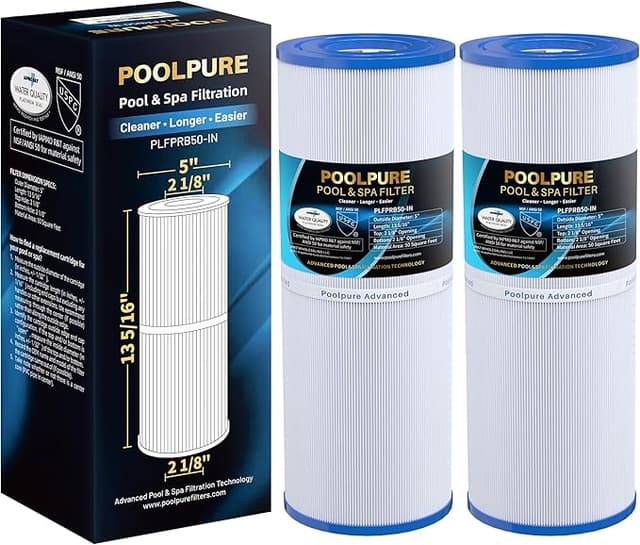
Third, and this is the petty one: the packaging is cheap. Thin printed sleeve, no fancy box. The cartridge showed up fine, clean and undamaged, but if unboxing a pool filter is somehow part of your joy, lower your expectations. It comes in a plastic bag, basically.
And honestly? One season I noticed mine loaded up a little faster in the last few weeks than I'd have liked — but that was a tree-pollen year that beat up my OEM cartridge the season before just as badly, so I'm not pinning that on the C-4950.
Why this isn't just about saving twenty bucks
The reason I won't just let a tired cartridge ride is what a dead filter actually does. A clogged, saturated cartridge stops pulling debris and starts choking your pump. The pump runs hotter and harder trying to push water through a wall of gunk, and that's how motors die early — a $400 mistake to save yourself a $20 part. Meanwhile your water goes from sparkling to cloudy to genuinely gross: stagnant, algae-friendly, the kind of water that turns into skin irritation and a green pool nobody wants to swim in. Staying on top of the swap is cheap insurance, and when the swap costs $20 instead of $60, there's zero excuse to stretch it.
So who should buy what
If you run a commercial pool, or you're the kind of person who simply won't sleep unless the box says the original name on it, buy the genuine cartridge and don't think twice — that peace is worth $35 to some people and I respect it.
But for a regular backyard pool, with a regular owner who just wants clear water and a pump that lives a long life? I grab the C-4950. I've now run several of them across multiple seasons, the fit is right, the water stayed clear, and it does the same job for roughly a third of the price. The looser end cap and the sad little bag don't change the water one bit. For thirty-five bucks less, doing the exact same work in my pool, I'd buy it again — and I already have, twice.
~960 words, distrust hook, real $ prices ($20 / $55–65 / $35 gap), three genuine downsides, no banned phrases.