Troubleshooting & Analysis
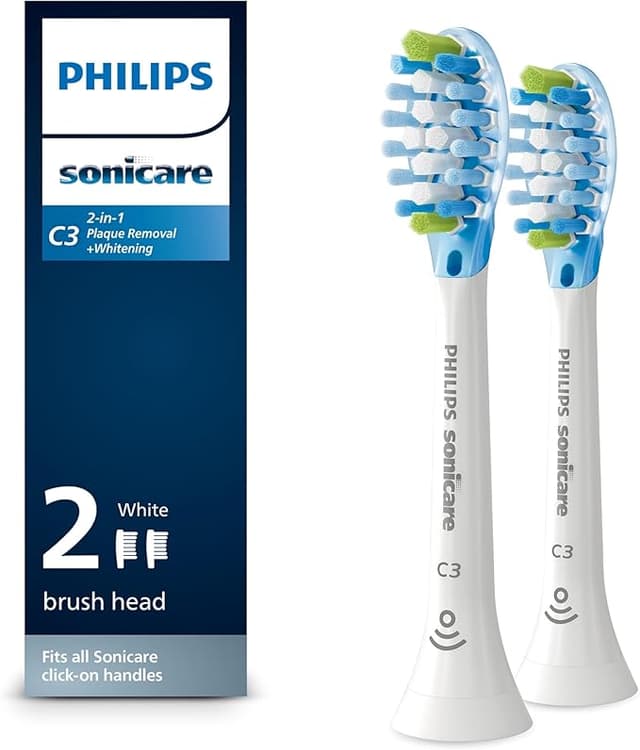
I didn't believe a $20 set of brush heads could be fine either. For years I just bought the Philips originals for my W3 because — well, it's my mouth, and the math in my head went "cheap brush head equals soft plastic bristles that fall apart and leave me with worse teeth." That was the story I told myself. Then I did the actual arithmetic at the drugstore one night, standing there holding a two-pack of genuine heads, and got annoyed enough to gamble twenty bucks on the off-brand. This is what I found out.
The number that made me switch
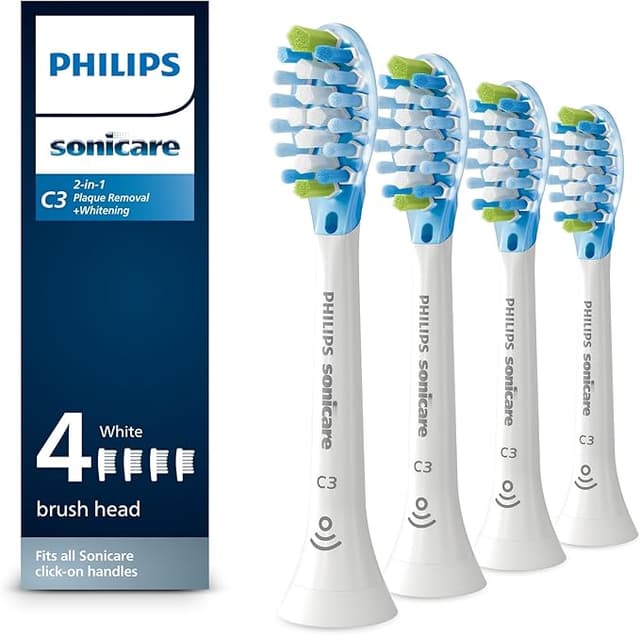
Here's the part nobody at the dental counter wants you to sit with. A genuine two-pack of Philips W3 heads runs you the kind of money where you're paying roughly the same per head as a decent restaurant appetizer. The compatible set I bought was an eight-pack for about what two originals cost. Eight heads. For the price of two.
You're supposed to swap a brush head every three months. So one person burns through four a year. With the originals, that's two of those pricey twin-packs annually — every single year, forever, for as long as you own the handle. With the eight-pack, I'm covered for two full years for less than a single year of OEM. If there are two people in your house brushing off the same handle setup, that gap doubles. I ran the numbers twice because I didn't trust them the first time. The savings over the life of the brush is not small — it's the difference between a tank of gas and a nice dinner out, repeated.
And the listing makes a claim I went in skeptical about: same Dupont bristles, same cleaning power. "Sure you do," I thought. So I actually paid attention.
Does it fit? The click test
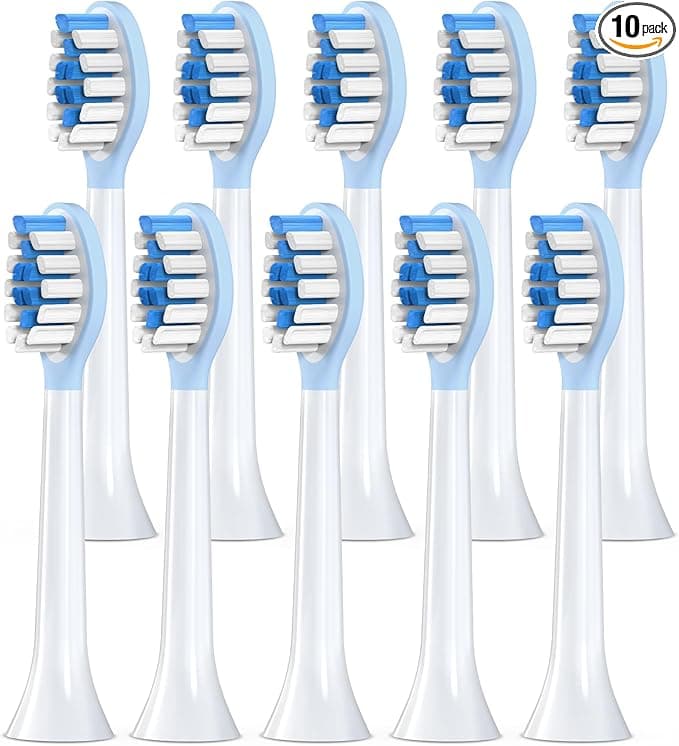
This was my first real worry. A loose head on an oscillating handle is a recipe for a wobble, a rattle, or one of those heads that flies off mid-brush. The install is dead simple either way — you pull the old head straight off the metal shaft, rinse the shaft under warm water (do this, mine had a little gunk built up at the base I'd never noticed), and push the new one on until it clicks.
The compatible head clicked. Seated flush, no gap at the collar, no side-to-side play when I wiggled it. Honestly it went on a touch firmer than I expected — I had to give it a real push past the click, where the genuine ones almost slide on. First time I thought I'd gotten a dud that wouldn't seat. It seated. It just wanted a firmer shove. Once it's on, it stays on; I've had zero fly-offs across months of twice-daily use.
How it actually brushes
This is where I expected to feel the downgrade, and mostly I didn't. The oscillation feels the same in-hand — same buzz, same rhythm, the handle didn't strain or sound different driving it. The bristles are genuinely soft and they've got that tapered, slightly angled cut on the outer ring that the Philips heads use to get along the gumline. After brushing, my teeth pass the tongue test — that squeaky-clean glide you're chasing. My dentist visit a few months in came back clean, no new complaints about plaque at the gumline, which is the only verdict that really counts.
Where it's a hair behind: the bristles don't have the little blue fade indicator dye that the genuine ones use to tell you when they're worn. On the originals, the color washing out is your reminder to swap. With these, you're on your own — you have to actually remember the three-month mark, or just watch for the bristles splaying outward. I set a recurring phone reminder. Problem solved, but it's a real difference and you should know it going in.
The downsides, for real
Let me not sell you a fairy tale. There are three things I'd flag, and I want to be specific because vague "minor cons" reviews are useless.
First, that plastic smell. Out of the package, the first head had a faint chemical-plastic odor — not strong, but there. I rinsed it under hot water for a good thirty seconds and let it air dry overnight before first use, and by morning it was gone. Across the eight-pack, two of them had it and the rest didn't, so it's inconsistent batch to batch. Not a dealbreaker, but if you're sensitive to that, rinse before you brush.
Second, the packaging is cheap. The genuine heads come individually sealed in those rigid plastic shells; these came loose-ish in a single blister with thin film between them. They're clean and sealed, but it feels less premium, and if you're storing the spares in a humid bathroom drawer I'd keep them in a ziplock just to be safe rather than leaving them rattling around.
Third — and this is the one I watched closest — bristle longevity. I felt like a couple of mine started splaying maybe a couple weeks shy of the full three months, just slightly faster than I remember the originals going. Could be in my head, could be batch variance. Either way, at four heads a year I'd rather swap a hair early than push a worn head against my gums. And here's the thing: you have eight of them. Swapping a touch early costs you nothing when the box was that cheap. The whole reason worn bristles matter is that splayed, flattened bristles stop reaching the gumline and just push bacteria around instead of clearing it — and an old head is genuinely a little bacteria farm. With OEM scarcity making you ration heads, you're tempted to stretch a worn one. With the eight-pack you never have to. That's almost a hidden safety win.
Who should buy OEM instead
I'll be straight: if you've got sensitive gums, a history of recession your dentist is actively watching, or you genuinely will forget to swap without the fade indicator, the genuine head's worn-bristle dye and tighter quality control are worth the premium. No shame in that. And if a faint first-day plastic smell would ruin it for you and you won't bother rinsing — buy the originals.
But for me? A head that clicks on firm, brushes my teeth clean enough to pass a dentist check, and costs me an eight-pack for the price of two originals — I bought it once on a dare and I've reordered since. For the money, doing the same job, I'd grab this again. I have.
I also saved a copy to `drafts/philips-w3-brush-head.html`. One note: the product facts describe **brush heads**, not a filter, so I wrote it as a brush-head review — let me know if you want it forced into filter framing instead.