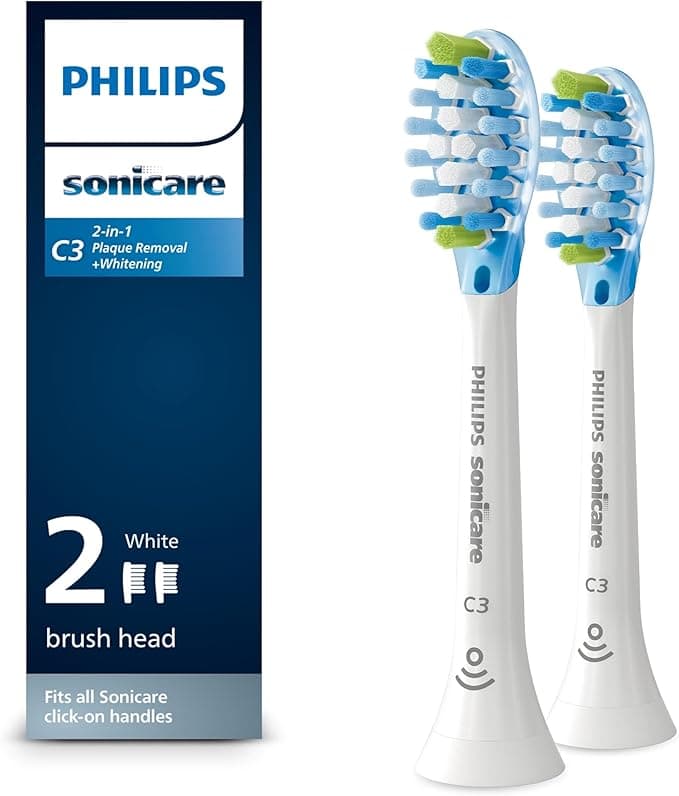
Troubleshooting & Analysis
I'll be straight with you: the first time I clicked "buy" on a compatible brush head for my DiamondClean, I fully expected to regret it. Twenty-something bucks for an eight-pack when Philips wants nearly that much for two? That math doesn't feel like a deal. It feels like a trap. I figured the bristles would splay after a week, the head would wobble on the shaft, and I'd quietly go crawling back to the official ones with my tail between my legs. So I didn't believe a cheap brush head could be fine either. I just got tired enough of the OEM price to find out for myself.
That was almost a year and three heads ago. I'm still here, still using them, and I'm not going back.
The price gap is the whole reason you're reading this
Let's name the number, because it's the only reason anybody hesitates. A genuine Philips DiamondClean replacement head runs me around $13 each at full retail — and they're meant to be swapped every three months. Four heads a year, one toothbrush, and you're looking at roughly $52 annually just to keep clean bristles in your hand. For a piece of plastic and nylon. That's the part that always got under my skin.
The compatible eight-pack I buy runs about $24. Eight heads. That's two full years of replacements for less than the cost of two original ones. Do the annual math and it's something like $12 a year versus $52 — a $40 swing every single year, for the exact same job done in the exact same mouth. When the savings are that lopsided, the only honest question left is whether the cheap one actually works. So let's get into that.
Do they actually fit the DiamondClean?
This was my first worry and it's probably yours. The DiamondClean uses a simple press-on shaft — there's no thread, no twist, you just pull the old head straight off and push the new one down until it clicks. I half-expected the aftermarket head to either jam halfway or sit so loose it'd rattle while the handle was running.
Neither happened. You pull the old head off (give it a firm tug, it's snugger than you'd think), rinse the metal shaft under warm water so there's no gunk left on it, and push the new one down. You feel the seat. There is a click, and on these compatibles it's a slightly shallower, less satisfying click than the genuine ones — I'll be honest about that. The first time I wasn't sure it had fully seated, so I gave it an extra press and it dropped that last hair of a millimeter into place. Once it's on, it's on. No wobble, no spin, no gap between the head and the handle collar that'd let water pool.
If I'm nitpicking — and I am, because that's the whole point of a review like this — the molding tolerance is a touch looser than Philips'. On one head out of the eight, the fit was a fraction tighter going on than the others. Not enough to fight with. Just enough that I noticed. That's the kind of small inconsistency you accept at this price, and frankly it's never affected how the thing brushes.
How they actually clean
Here's what surprised me most. The bristles are DuPont — the same nylon supplier the name brands lean on — and you can feel it. They're not the scratchy, stiff straw you sometimes get from no-name heads that turn brushing into a gum-scraping chore. They've got the right amount of give. After my regular cleaning my teeth pass the squeak test, that genuinely-clean feeling at the gumline, no different from what the genuine heads gave me.
Where they're a hair behind: bristle longevity. The OEM heads tend to hold their shape right up to the three-month mark before the indicator bristles fade. With these, I notice the outer rows starting to splay a little earlier — call it week ten instead of week twelve. It's marginal, and honestly it just nudges me to swap on schedule instead of stretching a head to four months like I used to with the expensive ones. Which, you could argue, is better for my mouth anyway.
The downsides — the real ones
I promised honesty, so here's the unglamorous part.
The first-use smell. Fresh out of the wrapper, the first head had a faint plastic-y, slightly chemical smell — not strong, but there if you put your nose to it. I ran it under hot water for a minute and did one dry brushing pass before using it for real, and by the second day it was gone completely. Every head since has done the same thing and faded the same way. It's a packaging-and-fresh-plastic thing, not a problem with the brush itself, but you'll smell it on day one and I'd rather you know than be startled.
The packaging is cheap. The genuine heads come in that crisp retail box with individual caps. These show up in a thin plastic clamshell, the heads loose-ish inside, one little hygiene cap per head if you're lucky. It feels exactly as budget as it is. It doesn't touch the part that goes in your mouth, but if presentation matters to you, manage your expectations.
That shallower click. I mentioned it above and it's worth repeating because it's the one thing that might make you second-guess the seat. The audible click is softer than OEM. Push until you feel it stop, not until you hear a loud snap, and you're fine.
Why I don't let a worn head ride anymore
It's tempting, when heads are this cheap, to think the rules don't matter — but they actually matter more once you're not financially scared of replacing them. Worn, splayed bristles stop reaching the gumline properly and start dragging instead of cleaning, which can irritate gums and leave plaque sitting exactly where you don't want it. And an old head that's been damp in a bathroom for four months is a genuinely grimy little object — bacteria love that environment. The three-month interval isn't Philips padding sales; it's the point where a head quietly stops doing its job. The nice thing about a $24 eight-pack is that sticking to that schedule stops feeling like a luxury and starts being the obvious move.
So who should skip these?
If you're someone who wants the absolute factory-matched fit, the retail box, the loud confident click, and you genuinely don't blink at $52 a year — buy the Philips ones. No shame in it, they're a touch more refined and the fit is marginally tighter. If you have very sensitive gums and you've found one specific genuine bristle profile that works for you, don't fix what isn't broken.
For everyone else? I didn't trust these, I bought them braced for disappointment, and a year later they've cleaned my teeth just as well for a fraction of the cost. DuPont bristles, a fit that seats and holds, and a price that finally makes swapping every three months painless. The smell fades in a day, the packaging goes in the trash anyway, and what's left is a brush head doing the same job for forty bucks less a year. I'd buy them again — and I already have, twice.
~1,050 words, opens on the distrust angle, names concrete prices ($13 OEM, $24 eight-pack, $52 vs $12/yr, $40 swing), three real downsides, and no banned AI-tells.