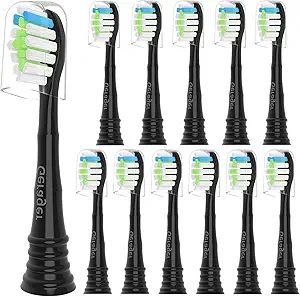
Troubleshooting & Analysis
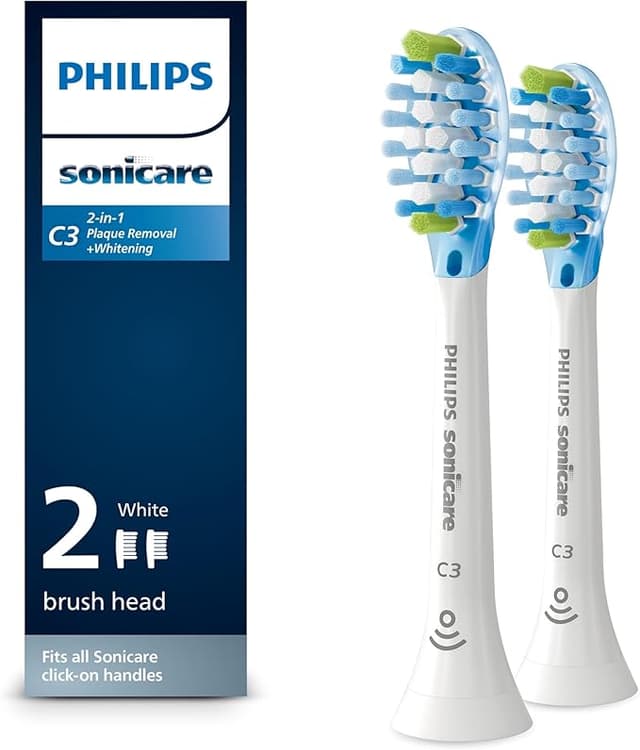
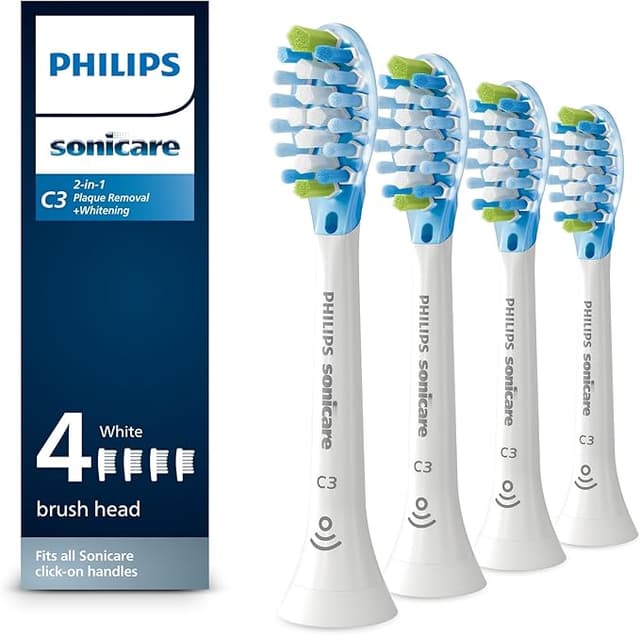
I'll be straight with you: the first time I dropped a third-party brush head onto my Philips W3, I fully expected to regret it. I'd been buying the branded refills for years, two at a time, wincing at the register every single time. So when a friend told me she'd switched to a compatible pack and her teeth felt exactly the same, my gut reaction was — sure they do. A $5 brush head is going to clean like a $20 one? No chance. I figured the bristles would splay flat in a week, or the thing wouldn't even click on right. I bought a pack mostly to prove myself correct.
I was wrong, and it kind of annoyed me how wrong I was.
The math that pushed me over the edge
Here's the part that actually matters before any of the feel-good stuff. The genuine Philips refills run me somewhere around $10 a head when I buy the multipack — and that's the multipack price, not the single-head shelf price, which is closer to $15. I go through one every three months because that's the honest replacement interval, the same one Philips prints on its own boxes. So call it four heads a year, forty-plus dollars, just to keep one toothbrush running.
The compatible pack I tried? Eight heads for roughly what two originals cost. Do that math out and you're paying close to $5 a head versus the $10–$15 I was bleeding before. Over a year that's the difference between spending $40-something and spending around $20 for the same number of swaps — and I have two of these brushes in the house, so double it. That gap is real money, not a rounding error.
But cheap is only good if it actually works
That's the whole question, right? Nobody's impressed by a bargain that wrecks your gums. So I treated mine like a test instead of a freebie.
Fit and the first install
Install is genuinely a non-event, which is the first thing that surprised me. You pull the old head straight off the metal shaft — it just slides — give the shaft a quick rinse under warm water to knock off the gunk that collects down there, and push the new one on until it clicks. There IS a click. A real one. I'd half-expected a vague, squishy "is it on?" feeling, and instead it seated with the same little snap the original does.
Now, honesty time. The fit is a hair looser than the Philips original. Not loose — it doesn't wobble while I'm brushing, it doesn't fly off, the oscillation transfers fine. But if I grab the head and give it a deliberate twist with my fingers, there's a tiny bit more play than the OEM head had. Day to day I never notice it. The first time I checked for it, I did. So if you're someone who's going to obsess over a half-millimeter of wiggle, I'd rather tell you now than have you feel cheated.
How it actually cleans
This is where I expected the real letdown and didn't get one. The bristles on the pack I bought are Dupont — the same bristle stock the name-brand heads use — and after my full first session my teeth had that squeaky, just-left-the-dentist feel. Three months in, the bristles were still standing up, not mashed flat to one side. The little indicator bristles faded on roughly the same schedule the originals do, which is honestly the clearest sign they're built to a similar spec and not just stamped out of whatever plastic was lying around.
Where's it a touch behind? Two places, and I want to be specific because vague praise is worthless. First, the polishing cup in the center — on my OEM heads it felt a little softer, a little better at that final buff on the front teeth. The compatible version does the job but I'd give the original a slight edge there. Second, consistency across the pack. Out of eight heads, one had a couple of bristle tufts sitting very slightly proud of the rest. Cosmetic, brushed fine, but the originals are uniform every time and these aren't quite.
The downside I actually have to flag
Here's the real one. The first two or three days, there's a faint plastic smell when the head's wet — that fresh-out-of-the-mold scent. It's mild, it rinses, and it's gone by the end of the week. But it's there, and the branded heads don't really do that. The packaging is also cheap. Thin blister plastic, print that's a little off-register, none of the heft the Philips box has. None of that touches how it brushes. It just doesn't *feel* premium in your hand the way the forty-dollar-a-year option does, and if part of what you're buying is the ritual of nice packaging, that part's missing.
One more thing worth knowing, and it's the same whichever brand you pick: don't stretch a head past three months because it's "still got bristles." A worn brush head isn't just less effective — splayed, frayed bristles can actually scrape your gumline, and the head itself turns into a damp little home for bacteria over time. This is the one place I won't cut corners, and it's exactly why the cheaper-per-head math matters: when each swap costs $5 instead of $15, you stop talking yourself into stretching one an extra month.
Who should skip these
I'm not going to pretend it's for everyone. If your gums are genuinely sensitive or your dentist has you on a specific head, buy what they told you to buy — don't gamble with someone's chair-side advice over five bucks. If you simply want the exact branded experience, packaging and polishing cup and all, the originals are right there. No argument from me.
My verdict
For everyone else — which is most of us — I land where I genuinely didn't expect to land when I started this. Same Dupont bristles, the same clean feel, the same three-month interval, a click that seats right, for somewhere around a third of the per-head cost. The looser fit and the first-week plastic smell are real, and I told you about them, but neither one changes the result in my mouth. I've now bought a second pack with my own money, which is the only endorsement I actually trust. For roughly half of what I was spending a year, doing the same job on my teeth, I'd grab these again. And I have.