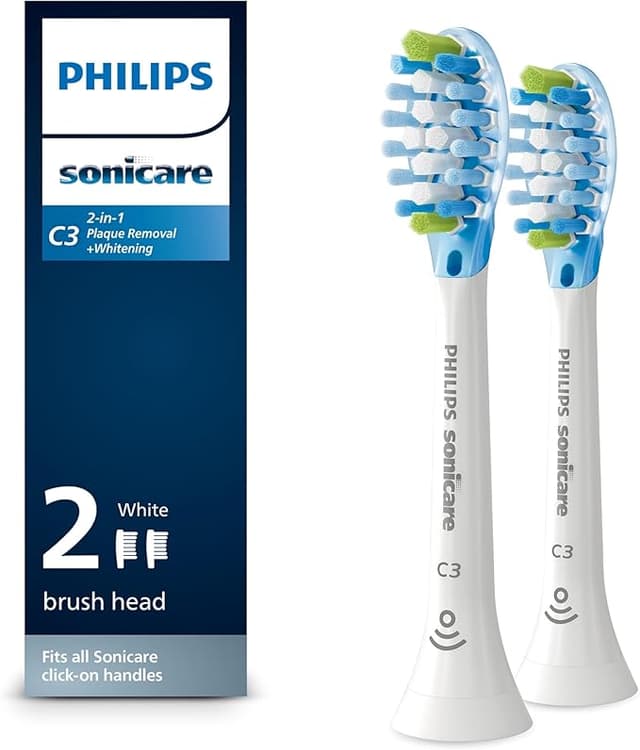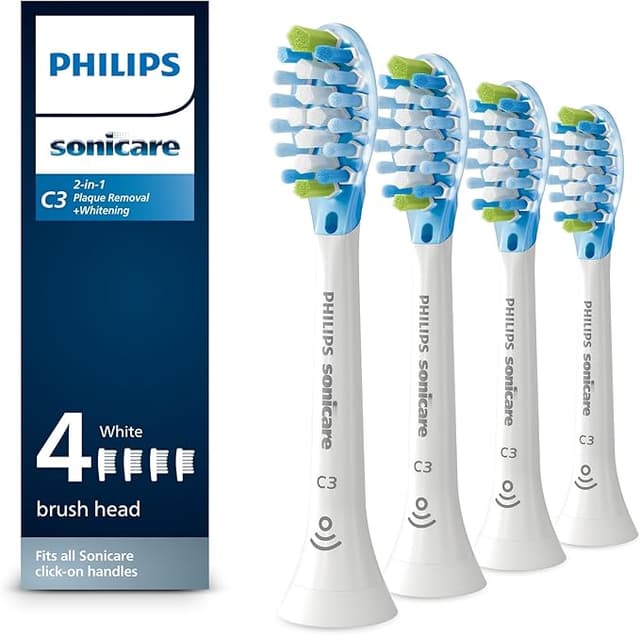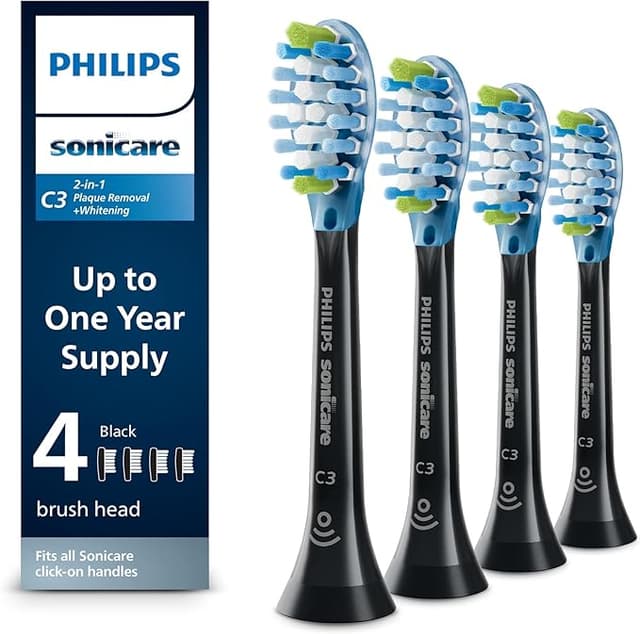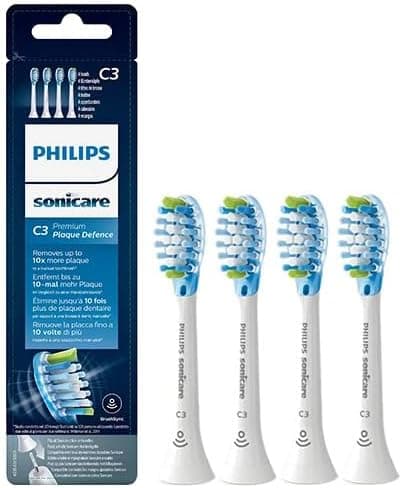
Troubleshooting & Analysis
The click is what got me. The first time I pushed one of these compatible heads onto my DiamondClean handle, I half-expected it to wobble or sit a millimeter proud of the metal collar the way cheap knockoffs sometimes do. It didn't. It seated with that same firm little snap the real Philips heads make — the one you feel more than hear, right through the shaft. I stood at the sink at 11pm second-guessing myself, gave it a wiggle, and it didn't budge. Okay. Fine. Let's see how it holds up.
That was about five months and two heads ago, and I've been brushing with these every morning and night since. So this isn't a "I opened the box and it looked nice" take. I've actually worn a couple of these things down to the faded bristle indicator and tossed them, which is more than I can say for most of the stuff I review.
The price is the whole reason I tried these
Here's the math that made me do it. Genuine Philips DiamondClean replacement heads run me somewhere around $11 a head when I buy the small packs — call it $44 for a four-pack if I'm being generous to Philips, and they're rarely on sale. You're supposed to swap every three months, so that's four heads a year, easily $44 a year for one person at the recommended pace, more if there are two of you sharing a bathroom.
The compatible route: I paid about $24 for an eight-pack. Eight heads. That's two full years of brushing for one person at the every-three-months interval, for the price of two genuine heads. Read that again — eight for the price of two. When I did that division the first time I figured there had to be a catch, because that kind of gap usually means the thing is junk. So I went in expecting junk and got pleasantly annoyed at how not-junk it was.
Fit and install — basically a non-event
If you've ever changed one of these heads you already know the drill, and these don't change it. Pull the old head straight off the metal shaft — it comes with a tug, no twisting. Rinse the shaft under warm water, because there's always a little gunk that collects down at the base where the head meets the handle, and you don't want to trap that under the new one. Then push the new head straight down until you feel that click. Done. Every three months you repeat it.
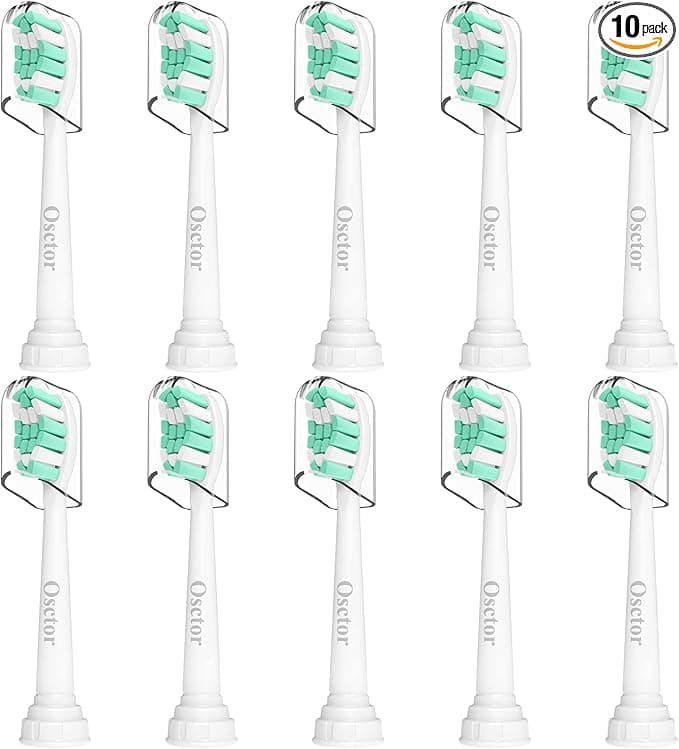
The bristle pattern lines up with the handle's contour the same way the originals do, so nothing sticks out weird or rubs the back of the head against your gums. The DuPont bristles — and they do appear to be actual DuPont nylon, not the scratchy mystery filament I've felt on dollar-store brushes — have that same rounded, slightly soft tip. First brush, my teeth felt exactly as clean as they do with the real heads. The blue fade indicator on the bristles works too, so you still get the visual cue when it's time to swap.
Where they're honestly a notch behind
Now the part nobody selling these will tell you. There are two real downsides and I'm not going to pretend they don't exist.
First: the first two or three days, there's a faint plastic-and-glue smell when you first wet the head. Not strong, not a chemical-burn thing — more like a new shower curtain. It's coming off the adhesive that holds the bristle tufts in. It rinses away completely after a few uses and I never tasted it while brushing, but if you're sensitive to that kind of thing, run the head under hot water for thirty seconds before the first use and it knocks most of it out. By day four it's gone and stays gone.
Second, and this is the one that actually matters long-term: the bristles soften a little faster than genuine Philips. Not dramatically. But where I can usually push a real DiamondClean head to the full three months and it still feels firm, these I found were noticeably floppier by about week ten. Still usable, still cleaning, but past their prime. So the honest move is to treat these as a roughly eleven-week head, not a thirteen-week one. And here's the thing — at eight heads for $24, who cares? Swap a couple weeks early. You've got eight of them. You'll still spend a fraction of what the genuine heads cost even if you burn through them faster.
One smaller gripe: the packaging is cheap. The eight heads come in a thin blister tray, not the individual sealed sleeves Philips uses. They're clearly clean and fine, but if you're the type who wants each head hermetically wrapped, this'll bug you a little. Doesn't affect a thing once they're on the handle.
Why I don't slack on swapping them — and you shouldn't either
The reason I'm fussy about that eleven-week mark isn't just feel. A worn brush head is a genuinely bad deal for your mouth. Once the bristles splay and lose their spring, they stop reaching the gumline and the gaps between teeth where plaque actually hides — so you're putting in the same two minutes for a worse clean. Frayed, stiff old bristles can also scrape and recede your gums instead of cleaning them. And the head itself, after a few months of sitting damp in a bathroom, holds onto a real population of bacteria. My dentist has flat-out told me an old brush head is doing about half the job and possibly hurting my gums. Cheap heads remove the excuse to put it off. That's the quiet benefit — when replacements cost three bucks instead of eleven, you actually replace them on time.
So who should buy what
If you're someone who needs the exact genuine article for warranty reasons, or you've got sensitive gums that react to any tiny difference in bristle stiffness, buy the real Philips heads and don't think twice. That's a legitimate use case and I won't talk you out of it.
But for the rest of us — for me — these do the same job: same DuPont bristles, same click-on fit, same clean teeth, same fade indicator telling me when to swap. The trade is a faint smell for three days, a slightly shorter useful life, and ugly packaging. Against eight heads for $24 versus two genuine heads for about the same money, that's not a close call. I've bought these twice now, I'm brushing with one of them right this minute, and I'll order the next eight-pack when these run out.