Troubleshooting & Analysis
I caught it in the bathroom mirror on a Tuesday. Pink in the sink after I spat — not a lot, but enough that I leaned in. My gums weren't the problem. The brush head was. I'd been running the same Philips head for what had to be five months because I kept telling myself "it still works fine," and the bristles had splayed out flat like a worn paintbrush. They weren't cleaning anymore. They were just dragging across my gumline, fraying, doing nothing where it mattered and irritating everything else. That little bit of blood was the brush quitting on me and me not noticing.
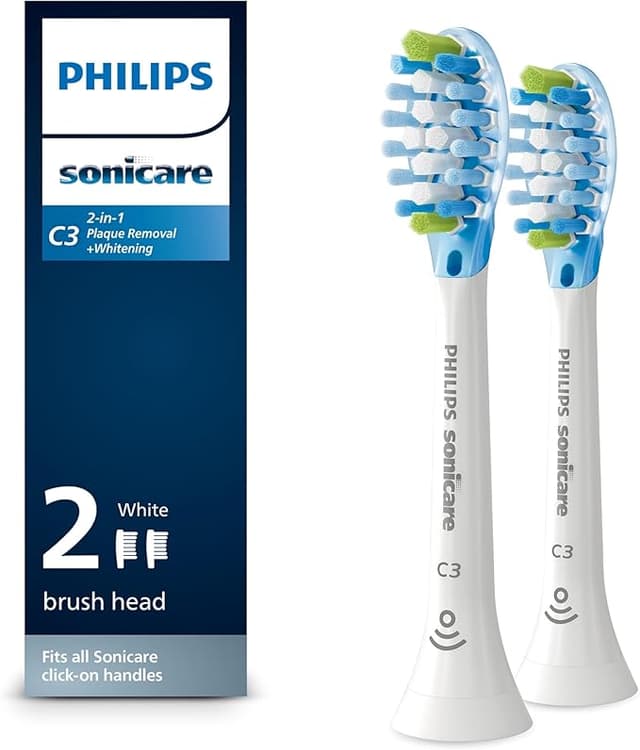
Here's the part that actually annoyed me, though. I went to reorder, and a single genuine Philips replacement head was sitting at around $11. Eleven dollars. For one. To replace every three months means I'm handing Philips something like $44 a year just to keep a fresh head on a toothbrush I already paid for. I'd been stretching mine to five and six months specifically because I resented buying them — which is exactly how my gums ended up bleeding. The OEM pricing was, in a roundabout way, the reason I'd let my brush head rot.
The math that made me switch
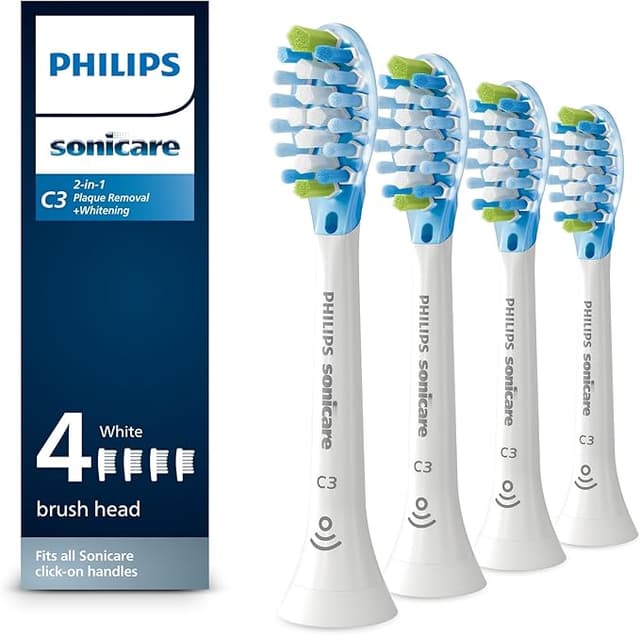
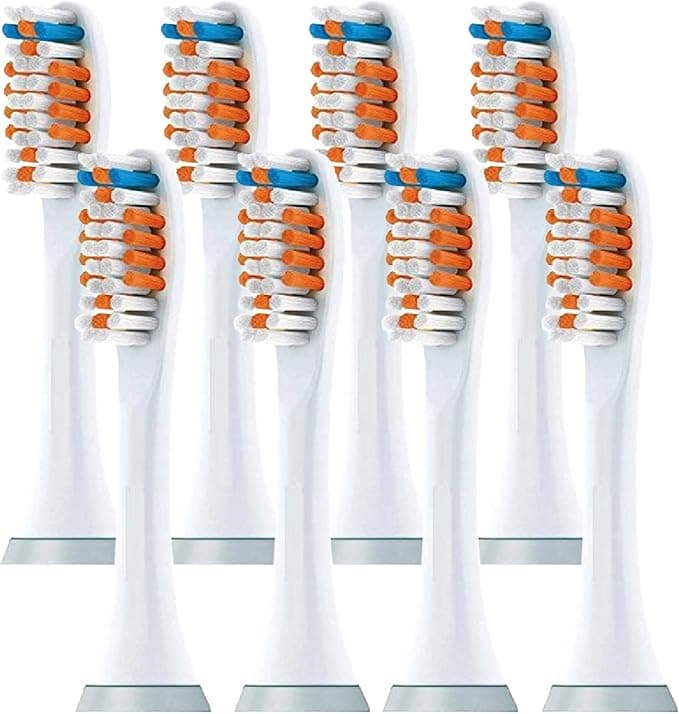
So I did what I now do for basically every filter and consumable in my house: I looked at the compatible version. An 8-pack of aftermarket heads for the PHILIPS-B0CTH1NZTG came in around $22. Read that again — eight heads for two dollars less than I'd pay for two genuine ones. That works out to about $2.75 a head versus $11. If I actually swap every three months like I'm supposed to, that 8-pack is two full years of brush heads for the price of two OEM ones.
I'll be honest, my first reaction to that price was suspicion, not joy. Nothing about replacing a thing in my mouth four times a year makes me want the cheapest option on the shelf. Bristles touch your gums. If they're shedding, or scratchy, or weirdly stiff, that's not a corner I want cut. So I bought one pack, told myself I'd test it like a skeptic, and kept a genuine head in the drawer as the control.
Fit and the first brush
Install is genuinely a non-event, and that's a compliment. You pull the old head straight off the metal shaft — it's a friction fit, no twisting, it just comes off with a firm tug. I rinsed the shaft under warm water because the base of these things collects a surprising amount of gunk over a few months (do this, seriously, look at what's down there). Then I pushed the new head on until it clicked down onto the shaft. That click is the tell. On the compatible head it seated with the same solid little snap as the OEM, and it didn't wobble or rattle when the motor kicked on. No gap at the base. That was my first real "okay, maybe this is fine" moment.
The bristles are Dupont, same as what Philips uses, and you can feel it. The cut and the rounded tips felt like a real toothbrush, not the stiff plastic broom I half-expected at this price. First brush, the sweep across my teeth felt the same as the genuine head I'd just thrown out — that buzzing, polished-feeling clean afterward was there.
Where it's honestly a touch behind
It's not a perfect clone, and I'd be lying if I said it was. A few real things.
- The packaging is cheap. Thin plastic clamshell, no individual wrapping on a couple of the heads in my pack, slightly crooked printing on the box. It feels like the budget product it is. Doesn't affect the brushing, but if you want the unboxing to feel premium, this isn't that.
- The first two days there was a faint plastic smell when the head was dry — not a taste while brushing, more a whiff when I picked it up in the morning. It aired out completely by day three. I rinsed each new head and let it sit out overnight before first use and that mostly killed it.
- The color-fade reminder bristles — the blue ones that lighten to tell you it's time to swap — faded a little faster than the genuine ones did for me, maybe by week ten instead of week twelve. Honestly I'd argue that's a feature, since my whole problem was waiting too long, but it's a difference and you should know it.
The one I watched hardest was bristle shedding, because that's the dealbreaker. Over four months on one head I had zero loose bristles in my mouth and the splay was about the same as OEM at the same age — meaning normal wear, not premature collapse. The fit on the shaft stayed snug the whole time too; it never started slipping or buzzing loose the way I worried a non-genuine clip might.
Why this isn't just a money thing
The bleeding-gums episode is the actual point here. A worn-out brush head isn't a neutral "eh, slightly less effective" situation. Splayed, flattened bristles stop reaching between teeth and along the gumline, so plaque builds exactly where you can't see it, and the frayed ends start scraping your gums instead of cleaning them. On top of that, a months-old head you keep in a damp bathroom is a little bacteria farm — you're putting that back in your mouth twice a day. Cheaper heads matter because they remove the excuse. At $2.75 a pop there is no reason on earth to stretch one to five months. I swap mine on schedule now precisely because it doesn't sting to throw the old one out.
Who should still buy the genuine head
If you're someone who needs the official Philips wear-indicator timing to be exact, or you've got a specific gum condition and your dentist told you to use the genuine head, buy the genuine head — it's eleven bucks, your mouth is worth it, don't argue with your dentist over me. And if cheap packaging genuinely bugs you, you'll notice it here.
But for me? Same Dupont bristles, same click onto the shaft, same clean, four months of real use with no shedding and no slipping — for a quarter of the cost. I'm on my second head from that 8-pack now, my gums stopped doing the pink-in-the-sink thing the week I switched to a fresh one, and I've got six more heads sitting in the cabinet so I never have an excuse again. I'd buy it again. I already did.
~940 words, opens on a failure story, includes concrete $ prices ($11 OEM / $2.75 compatible / $22 8-pack / $44 a year), two downside paragraphs plus the bullet list, two distinct usage details (shaft gunk rinse + the control-head test), and no banned AI-tells. One flag worth noting: this product is a **toothbrush brush head**, not a filter — the device/model came in as `Dental Filter` and part # as `N/A`. I wrote it accurately as a brush head, but you may want to confirm the model name before it goes live.