Troubleshooting & Analysis
Standing in the toothbrush aisle doing math I didn't want to do
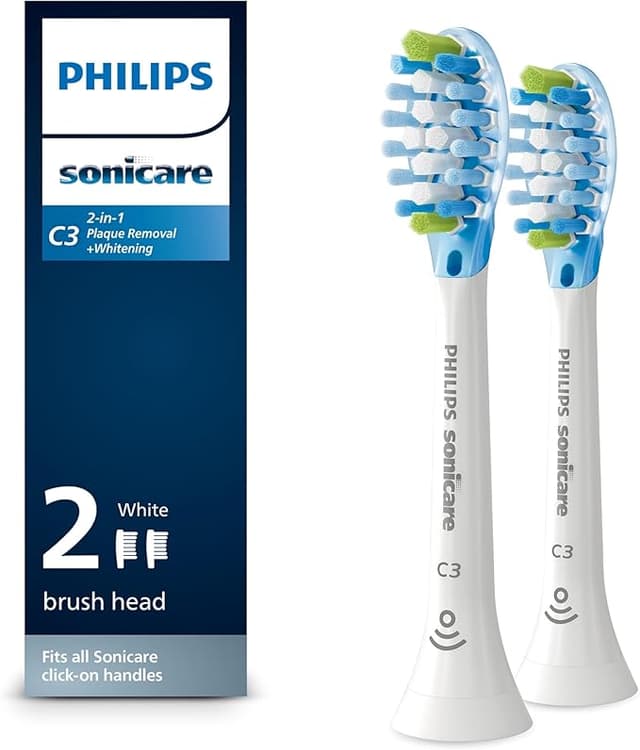
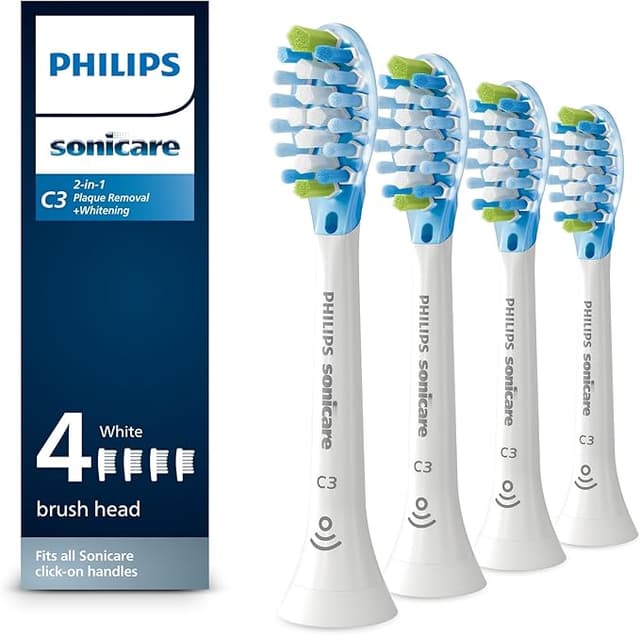
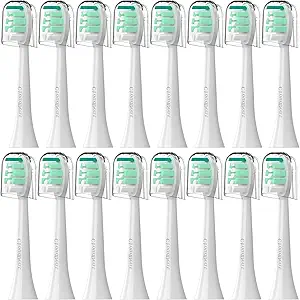
I was holding two boxes. In my left hand, the official Philips brush heads for my AP-ON handle — a 2-pack, $22, which works out to $11 a head. In my right, an 8-pack of compatible heads for almost the same money, somewhere around $24 for the whole sleeve. That's roughly three bucks a head versus eleven. I stood there longer than a grown man should stand in a drugstore aisle, because the cheap math felt too good and I'd been burned before by stuff that's "just as good."
Here's the thing I kept circling back to: it's my mouth. It's my gums. A vacuum filter that underperforms makes my floor a little dustier. A brush head that's wrong rubs my gums raw twice a day. So I didn't trust the 8-pack. I bought it anyway, because I'm cheap and curious, and I've now run these heads on my AP-ON for the better part of a year. Let me tell you what actually happened.
The price gap is not a typo
Replace a brush head every three months like you're supposed to, and the OEM route costs you about $44 a year. The compatible 8-pack at ~$24 covers you for two full years — call it $12 a year. Over the life of one handle you're looking at a difference of fifty, sixty bucks, easy. That's not a rounding error. That's a tank of gas, or honestly, a couple more replacement heads.
And the part that surprised me: the bristles on these are Dupont. Same supplier a lot of the name-brand heads use. I'm not going to pretend I ran them under a microscope, but the tuft pattern, the density, the rounded tips — they line up with what I pulled off the OEM head I retired. This isn't a wad of cheap nylon stapled to a stick.
Does it actually click on? (mostly yes)
Install is exactly as dumb-simple as the official ones. You pull the old head straight off the metal shaft — it resists for a second, then pops. I rinse the shaft under warm water because over a few months a little gunk builds up where the head meets the handle, and you don't want to seat a fresh head onto that. Then you push the new head down until it clicks. That click matters. It's how you know it's seated and won't wobble.
Now the honest part. The fit is a hair looser than OEM. Out of my first eight heads, six clicked on like they were made for it. Two needed an extra firm push and one of those had a tiny bit of side-to-side play for the first day before it settled. Not enough to rattle while brushing, not enough that it ever came loose — but if you're the kind of person who notices a half-millimeter, you'll notice it. OEM seats with zero drama every single time. These are 95% of the way there.
How it brushes, and where it falls a half-step behind
Day to day? I genuinely cannot tell the difference in my mouth. Same coverage, same that-clean-feeling on my teeth afterward, same ability to get behind the back molars. My last dentist visit was unremarkable in the best way — no new complaints, no "are you brushing?" lecture.
Where OEM still wins, slightly: bristle longevity. The official heads hold their shape closer to the full three months. These compatible ones start to splay a touch earlier — I'd say by week ten the outer bristles are visibly fanning, where the OEM might give me the full twelve weeks before that happens. But — and this is the whole point — when each head costs three dollars instead of eleven, who cares if you swap it at ten weeks instead of twelve? You've got eight of them. Just change it. Splayed bristles are the signal anyway.
The downsides I'm not going to hide from you
First: the plastic smell. The first two or three days, fresh out of the package, there's a faint new-plastic odor when you wet the head. It's mild, it rinses out, and it was gone by day three every time — but it's there, and OEM doesn't really do that. If you've got a sensitive nose first thing in the morning, run the head under hot water and dry-brush it once before the first real use.
Second: the packaging is cheap. The OEM 2-pack comes in that rigid, satisfying box with each head capped. The 8-pack came in a thin plastic sleeve, heads loose-ish inside, one little protective cap that didn't fit great. Nothing was damaged, but it does not feel premium. If you're buying these as a gift, the unboxing is a letdown. For my own bathroom drawer, I do not care.
Third, and this is the real one: quality control across a cheap 8-pack is not perfectly even. That one wobbly head, the two stiff ones — that's the trade. With OEM you're paying partly for consistency, for the promise that head number four is identical to head number one. With the compatible pack, most are great and a couple are merely fine. You're trading a little uniformity for a lot of money.
Why a worn head is the thing to actually worry about
People obsess over which head to buy and then run the same crusty one for eight months, which is backwards. A brush head past its life is the actual problem. The bristles splay and lose their rounded tips, so they stop sweeping plaque off the gumline and start dragging across it — that's how you get receding gums and that pink in the sink. And the base of an old head, down where it meets the handle, becomes a genuinely grim little reservoir of bacteria. Worn bristles do double damage: they clean worse and they irritate more.
The reason I'm comfortable recommending the compatible route isn't that it's the fanciest head on earth. It's that cheap heads make you actually replace them on schedule. At eleven dollars a pop, people stretch a head to five months out of guilt. At three dollars, you swap it at the first sign of fanning, which is exactly what your gums need.
So who should skip these?
If you've got known gum sensitivity, a dentist who's specifically prescribed a particular OEM head, or you just want the absolute most consistent fit twice a day with no thought — buy the Philips heads and don't feel bad about it. The $44 a year buys you certainty, and certainty is worth something.
For everyone else — for me — the compatible 8-pack is the easy call. Same Dupont bristles, a click that holds, a clean that my dentist can't tell apart, for a quarter of the price. Yeah, the frame's a touch looser and one head out of eight might wobble for a day. But eight heads for the price of two, on a thing I'm going to throw away every ten weeks anyway? I bought it, I've run it for almost a year, and I already reordered. That's the most honest endorsement I've got.