Troubleshooting & Analysis
The smell hit me before I even saw it
My cat stopped drinking from her fountain on a Tuesday. I didn't notice for maybe two days — she's not exactly a dramatic animal — until I caught her crouched over the toilet bowl instead, lapping away like the fountain didn't exist. So I went and looked. Lifted the top off the PetSafe Drinkwell, and there it was: a filter so loaded with hair and gray slime that it had basically turned into a sponge. The water underneath had this faint sour edge to it. The pump was straining, making that low grinding hum it makes when the foam's clogged and it can't pull water through cleanly.
That's the moment that got me into compatible filters, honestly. Because I did the math standing right there at the counter. I'd been buying the brand-name carbon replacements, and a 3-pack was running me about $14 — which doesn't sound like much until you remember you're supposed to swap these every two to four weeks. Mine had clearly gone way past four. Multiply that out across a year and you're spending real money to keep a $40 fountain running, and the filter is the part nobody warns you about when you buy the thing.
What I actually switched to
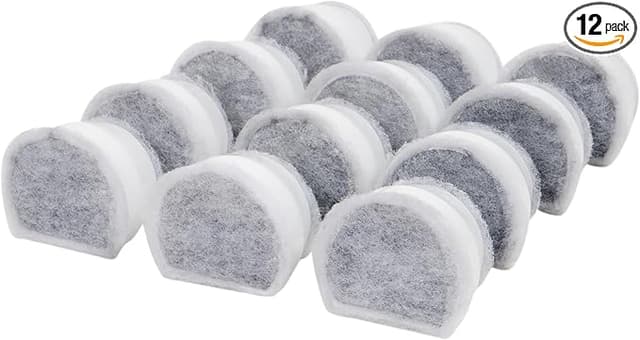
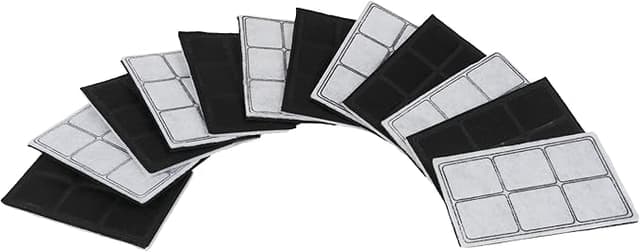
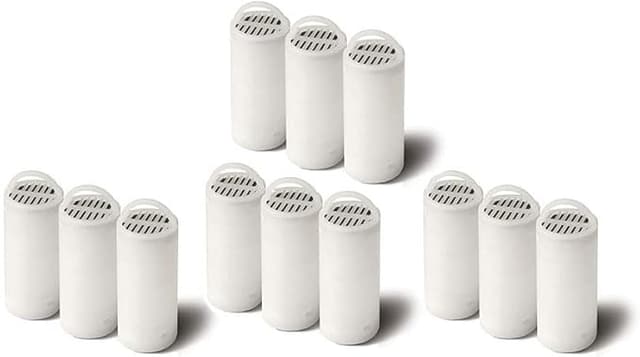
I picked up a generic compatible pack — the triple-action style cut for the Stainless Steel and Drinkwell models. An 8-pack ran me around $20, which works out to roughly $2.50 a filter versus the close-to $4.60 each I was paying for the name-brand 3-pack. Over a year of swapping on schedule, that's the difference between spending maybe $55 and spending closer to $30. Not life-changing money. But it's the kind of recurring cost that quietly adds up, and I'd rather that money stay in my pocket if the cheaper one does the same job.
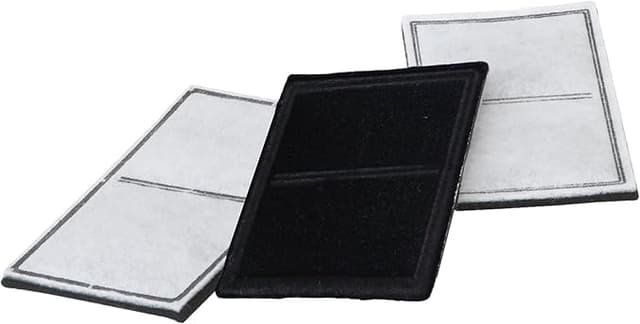
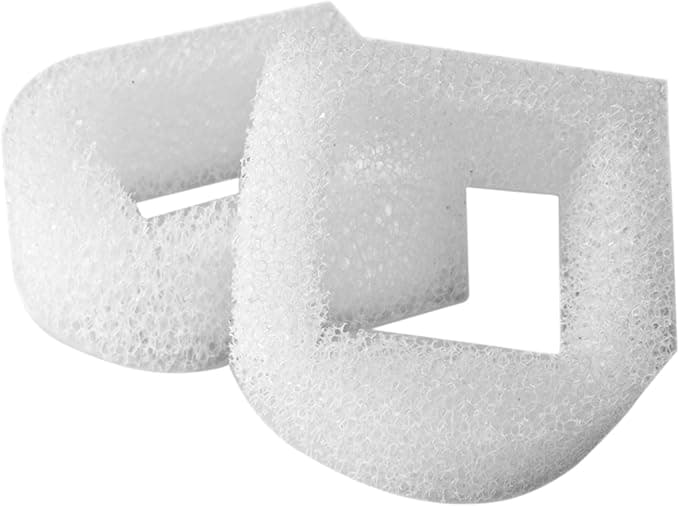
And it does do the same job. These are the same setup as OEM: a carbon core for taste and odor, a foam layer to catch hair and the gunk that floats off a cat's chin, and the dense pad that polishes the water. Triple-action, same as the original. The first thing I check on any replacement filter is whether it actually pulls the hair, because that slimy buildup is the whole reason a fountain goes bad — stagnant, hair-fouled water breeds bacteria fast, and a cat's nose knows before you do. Two weeks into the compatible one, the foam was doing exactly what it should. Catching the fur, keeping the water clear, no sour smell.
The install — soak it first, seriously
Here's the one step people skip and then complain online: you have to soak the new filter in water for about ten minutes before it goes in. Dry carbon floats and sheds black dust, and if you drop it in straight from the bag you'll get little carbon specks swirling in the bowl and your cat side-eyeing it. So I soak it in a mug, rinse it thoroughly under the tap until the water runs clear, then seat it in the compartment. On my Drinkwell it presses down into the foam slot and you feel it settle — there's a slight give when it's in right.
The compatible one seats fine. I want to be straight about the fit though, because this is where the cheaper stuff usually shows its seams. The frame on these is cut a hair looser than the brand filter. On my unit it sits flush and the pump runs quiet, but I did have one out of the eight that needed a little nudge to sit dead-flat — the foam was very slightly oversized and it wanted to bow up at one corner. Pressed it down, rinsed it again, and it was fine. If yours bows, that's the fix. It's not a defect so much as the looser tolerance you're trading for the lower price.
The honest downsides
Two things you should know going in. First, the packaging is cheap — a thin plastic sleeve, no individual wrapping, the filters just stacked together. The brand ones come in a tidier box. Doesn't affect the water at all, but if you're the type who notices that stuff, you'll notice. Second, and this is the real one: the foam on the compatible filters is a touch less dense than OEM. In practice that means I lean toward swapping them on the shorter end of the window — every two weeks rather than stretching to four. With the brand filter I could sometimes push to three weeks before the foam looked tired. With these, by week three the foam was visibly grayer and starting to mat. So part of that price savings gets eaten if you have a heavy-shedding cat or two animals on one fountain. For my single short-hair, two-to-three weeks is realistic and the math still comes out ahead.
One more thing I'll add from living with it: keep an eye on the pump, not just the filter. The reason my original went so bad was that a clogged filter makes the pump work harder, and a strained pump is a pump that dies early. Since switching to a schedule I actually stick to — cheaper filters made me less precious about swapping them, which is its own small benefit — the pump's been quieter and the water's been clear. A fountain is only as healthy as the foam you let sit in it.
So who should buy what?
If you've got multiple pets hammering one fountain, or a long-haired cat that sheds like it's a full-time job, I'd actually point you back to the denser OEM foam — you'll get a little more life per filter and the slightly tighter fit matters more when the thing's working hard. That's a real recommendation, not a hedge.
But for most people — one cat, normal shedding, a Drinkwell or Stainless Steel unit on the counter — I grab the compatible pack every time now. Same triple-action job, water stays fresh, my cat went right back to drinking from it instead of the toilet. For roughly half the per-filter cost, swapping a hair more often, I'd buy it again. And I have — I'm on my second 8-pack.