Troubleshooting & Analysis
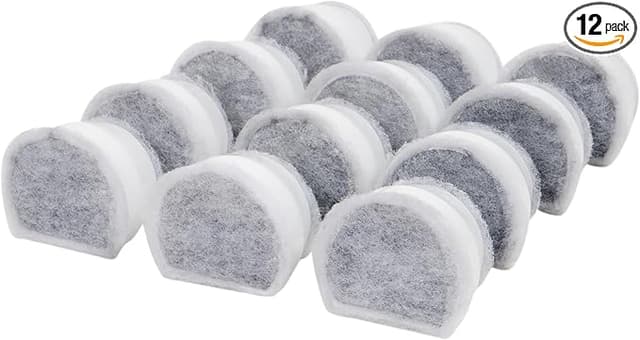
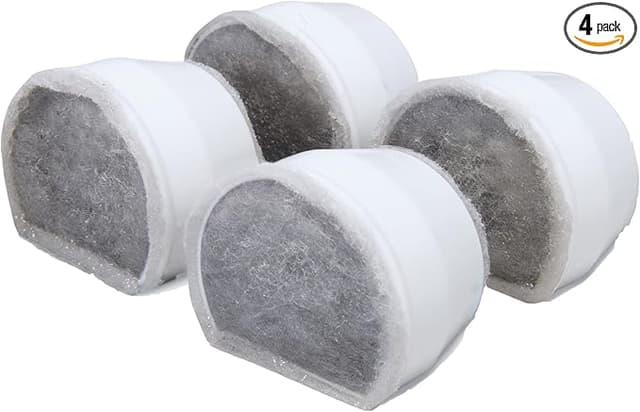
The first thing I noticed wasn't the fit or the flow — it was the smell. Or rather, the lack of one. I'd soaked this compatible carbon filter for the Drinkwell fountain in a bowl of tap water for ten minutes like the instructions say, and when I lifted it out I did the thing every cautious pet owner does: I sniffed it. Nothing. No chemical tang, no weird factory plastic note. Just wet carbon, which is exactly what you want. The OEM ones smell the same way after a rinse, and that was my first quiet little sign that maybe the cheaper box wasn't going to poison my cat.
Let me back up. I have a Drinkwell fountain that's been running in my kitchen for about three years. My cat, Biscuit, is one of those animals who will dramatically refuse to drink from a bowl but will happily lap at moving water for ten minutes straight. The fountain works. The problem is the filters — they're a consumable, you're supposed to swap them every two to four weeks, and PetSafe's branded replacements add up fast. Once you do the math on a year of OEM cartridges versus a year of compatible ones, the gap is real money. I was looking at something close to a $30 difference annually just on these little carbon pads, and that's the whole reason I started buying the third-party version in the first place.
The seat, the click, the fit
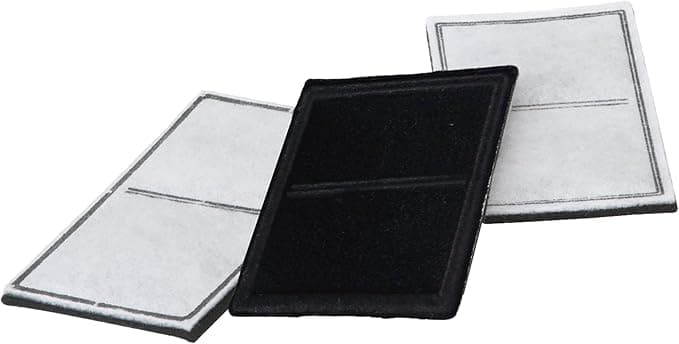
Here's where compatible filters usually fall apart, and where this one surprised me. After the soak, you rinse it thoroughly under running water — and you do want to rinse it well, because there's loose carbon dust that'll cloud the bowl for a day if you skip it. Then it drops into the filter compartment of the fountain. On Biscuit's unit, the OEM filter seats with a barely-there snugness; you feel it settle into the slot. This compatible one settled the same way. Not loose, not forced. It sat flush against the housing the way it's supposed to, and the pump cover clicked back down without me having to wiggle anything.
I'll be honest, I half-expected to be shaving a corner off with scissors. I've bought aftermarket filters for other things — my HVAC, my fridge — where the dimensions were "close enough" and I ended up fighting the frame. Not here. The cut and the shape matched the original well enough that water flowed through it instead of finding a gap around the edge and bypassing the carbon entirely. That bypass problem is the silent killer with cheap fountain filters, and it's the thing I was watching for hardest.
What it actually does over a few weeks
The triple-action claim — hair, debris, taste — is the part that matters day to day, and after running several of these through full replacement cycles I can tell you it holds up for most of it. The mechanical filtering of fur and gunk is genuinely good. Biscuit sheds like a malfunctioning pillow, and the foam-plus-carbon setup catches the floating hair before it gets into the pump and clogs it. The water stayed clear, the pump stayed quiet, and there was no slimy film building up on the reservoir walls the way there is when a filter is overdue or doing a bad job.
Taste and freshness — the carbon's job — is where I want to be precise instead of gushing. Fresh out of the box, after soaking, the carbon pulls that flat, sitting-water taste out just as well as the OEM cartridge does. I tasted the water myself (yes, really) on day two and it was clean. Where I'd put OEM a hair ahead is at the tail end of the cycle. By week three on the compatible filter, I felt like the carbon was a touch more spent than the branded one would be at the same point. Not bad — the water never went funky — but if you're the type who stretches a filter to week four, the OEM has a little more in the tank for that final stretch.
The downsides, said plainly
So here's the real one: the carbon capacity feels slightly shorter-lived than OEM. I started swapping these closer to every two and a half weeks instead of pushing to four, just because I'd rather not gamble on Biscuit's water. If you're replacing on the early end of that 2-4 week window anyway, you'll never notice. If you were counting on milking each filter for a full month, you're going to be buying a few more per year, which eats into the savings a bit. Still ahead on cost — but it's not the slam dunk the price tag alone suggests.
Second gripe, smaller: the packaging is cheap. The OEM filters come individually sealed in those neat little pouches. These came in a plain bulk bag, several jammed together, and one of them had a slightly crushed corner from shipping. It still soaked, rinsed, and seated fine — the carbon doesn't care if the foam edge is dented — but it doesn't give you that "premium" feeling when you open the box. If unboxing matters to you, this'll annoy you. For me it's a non-issue; I'm putting it in a cat fountain, not framing it.
Third thing, and this is more a heads-up than a complaint: that loose carbon dust on the first rinse is real. The first time, I didn't rinse long enough and the reservoir had a faint gray haze for half a day. Run it under the tap until the water coming off it is fully clear, then run it a little longer. Sixty seconds, not ten. Do that and you'll never see the dust again.
Why a dead filter is the actual emergency
It's easy to treat fountain filters as optional. They're not. A saturated, overdue filter is how you get the slimy biofilm creeping up the walls of the reservoir, and stagnant water in that pump breeds bacteria fast. The whole point of the fountain — moving, filtered water your cat actually wants to drink — collapses the moment the filter stops pulling its weight. A cat that suddenly snubs the fountain is often telling you the water's gone off, and dehydration in cats is a genuine health problem, not a minor one. Whatever filter you run, the cheap one or the branded one, the version that's actually in the machine and recently changed beats the expensive one you keep forgetting to swap.
Who should buy what
If you're a four-week-stretcher, or you simply want the maximum margin of safety on every single cartridge and the extra annual cost doesn't faze you, buy the OEM PetSafe filters. No shame in it — they do edge out the compatibles on late-cycle carbon life, and that's a fair thing to pay for.
But for me? I'm changing on the early side of the window anyway, the fit is genuinely correct, the water runs clean, and my cat drinks happily and has the whole time. For the savings — and we're talking real annual money, not pennies — doing the same job, I grab the compatible one. I have, repeatedly, for over a year now. Soak it ten minutes, rinse it well, drop it in, listen for the click. That's the whole ritual, and it's been worth every dollar I didn't spend.