Troubleshooting & Analysis
Forty dollars a year to filter cat water. Let that sink in.
I did the math one night standing at the kitchen counter with the PetSafe box in one hand and my phone in the other. The official Drinkwell carbon filters — the ones with the little leaping-cat logo — run me about $13 for a 3-pack. You're supposed to swap them every two to four weeks. So call it a fresh filter once a month, conservatively. That's roughly $52 a year just to keep one fountain from going funky. I have two fountains. You can see where this is going.
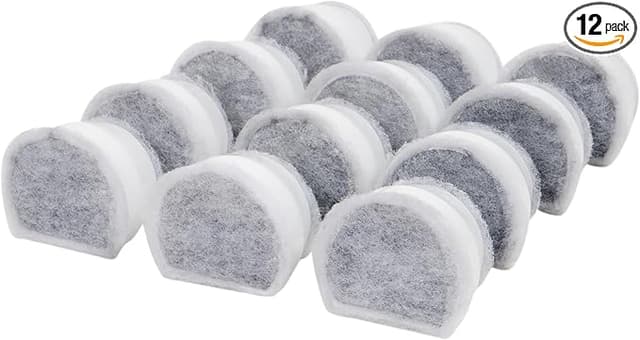
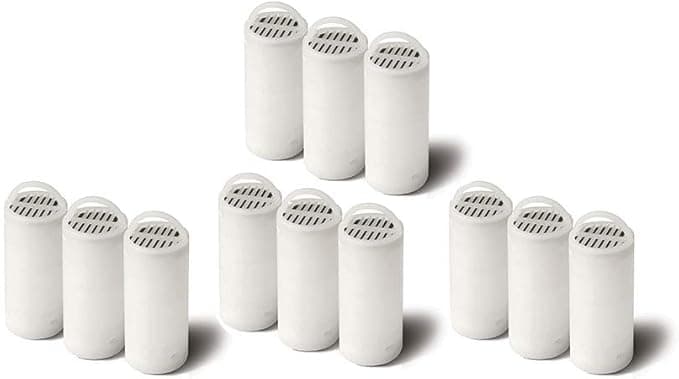
Then I found the compatible carbon filters — same shape, same triple-action setup, same fit for the CARBON FILTER/DRINKWELL/CARBON FILTER fountain — selling at around $18 for a 12-pack. Twelve. That's a full year of filters for less than what four months of OEM cost me. The price gap wasn't a few bucks. It was the difference between $52 and roughly $18 a year. I didn't trust it. Nothing that cheap that goes near my cat's drinking water gets a free pass from me.
So I bought a pack and ran it. Here's the honest report.
Do they actually fit?
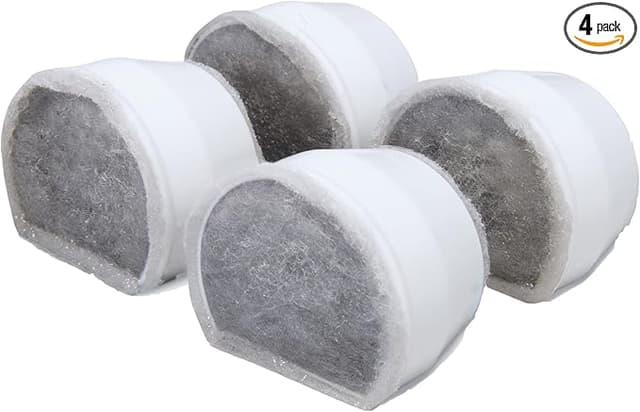
Yes — and I went in expecting them not to. My biggest fear with compatible fountain filters is the dreaded "almost." A filter that's a couple millimeters off sits crooked, water sneaks around the edge instead of through the carbon, and you've basically bought a decorative sponge. These dropped into the filter compartment and seated flush. No trimming, no jamming, no folding a corner under to make it cooperate.
One thing the box won't stress enough, so I will: soak them first. The instructions say ten minutes in water before use, and I almost skipped it the first time because I was impatient. Don't. A dry carbon filter floats and channels water around itself, and you'll swear the thing is broken when it's just full of air. I give mine a full ten-minute soak, then rinse under the tap until the water running off it goes clear — the first rinse always carries a little loose carbon dust, which is normal but you don't want it in the bowl. Then it drops in and the pump pulls water through it the way it should.
How well do they actually clean the water?
For the part that matters — hair, debris, and that flat stale taste that makes a picky cat walk away from the bowl — they pull their weight. My older cat is the canary here. She's the kind of fussy that she'll snub water that's even slightly off, and she drinks from the fountain just as readily on the compatible filters as she did on the OEM. The mesh catches floating fur and the gunk that drifts in, and the carbon keeps the water from developing that swampy edge between cleanings. Two cats, a busy fountain, and I genuinely could not tell you which filter was in there by looking at the water or watching them drink.
Is the carbon layer identical to OEM? Probably not to the gram. But the job here isn't reverse-osmosis purity — it's catching debris and keeping water fresh and appealing so your pet keeps drinking. On that job, these do what the expensive ones do.
The downsides — and there are real ones
I'm not going to pretend these are flawless, because they're not.
First, the carbon dust on that initial rinse is noticeably heavier than with the OEM filters. Where a name-brand one might run mostly clear after a quick rinse, a couple of these took a good fifteen, twenty seconds of rinsing before the runoff stopped looking gray. It's harmless activated carbon, but if you're the type to do a lazy two-second rinse and drop it in, you'll get a faint dusting in the bowl on day one. Take the extra thirty seconds.
Second, the consistency across the pack isn't perfectly uniform. In my 12-pack, most filters were cut clean and even, but one or two had a slightly rougher edge on the frame — nothing that affected the fit or the seal, but you can tell these weren't held to the same finished-product standard as the OEM. The packaging is also bare-bones. They come stacked in a plain plastic sleeve, no individual wrapping, no fancy box. Doesn't bother me — it's a thing I'm going to soak and throw away in three weeks — but if presentation matters to you, fair warning.
Third, and this is the one to actually weigh: I'd treat the replacement interval as a hard rule with these, not a suggestion. With OEM I sometimes pushed a filter to four-plus weeks if the water still looked fine. With the compatibles I stick closer to the two-to-three-week mark and swap on schedule. At eighteen bucks for twelve, there's zero reason to stretch them, and I'd rather change early than gamble.
Why this isn't just a money thing
The reason I won't skip a change is the same reason the fountain exists in the first place. A saturated filter stops catching debris and the standing water in the bowl starts breeding bacteria fast — you get that slimy film on the basin, the water turns, and a sensitive cat will quietly stop drinking from it. A cat that drinks less is a cat headed for urinary and kidney trouble, and that vet bill makes a year of filters look like pocket change. The whole point of cheaper filters is that the low price removes every excuse not to change them on time. When a filter costs a dollar fifty instead of four-something, you swap it the moment the schedule says to, no flinching.
So who should buy what?
If you've got a single fountain, you change filters religiously on the OEM schedule anyway, and the brand-name peace of it lets you sleep — stick with PetSafe's own filters. There's nothing wrong with them and the difference per year on one fountain isn't life-changing.
But if you're running more than one fountain, or you've ever caught yourself stretching a filter an extra week because you didn't want to "waste" a $4 one — get the compatibles. For the price of about four months of OEM, I get a full year of filters, my cats can't tell the difference, and I never hesitate to change one on time. I've bought them three times now. I'll buy them again. For a fountain filter doing exactly the job a fountain filter needs to do, paying triple for the leaping-cat logo stopped making sense to me a long time ago.