Troubleshooting & Analysis
The first thing I noticed was the smell — or rather, the lack of one
I'd soaked the new carbon filter for its ten minutes, rinsed it under the tap, and when I leaned in to seat it I caught that faint wet-charcoal smell. Not chemical. Not plasticky. Just clean carbon, the way a fresh filter is supposed to smell. That mattered to me because the compatible filter I'd tried two brands ago had a sharp factory odor that took three water changes to fade, and my cat flat-out refused the fountain until it did. This one she drank from within the hour.
So let me back up. If you've got the PetSafe Drinkwell — the stainless steel model, the one that takes the carbon filter — you already know the dance. The OEM replacement packs aren't outrageous, but they add up. A genuine PetSafe carbon filter runs you about $20 for a three-pack, and you're swapping every two to four weeks. Do that math across a year and you're looking at roughly $80 to $100 just keeping water moving through a $40 fountain. The compatible packs I've been buying land closer to $14 for the same three filters. Same shape, same slot, same job. That's a $6 gap per pack, and over a year it's the difference between feeding the fountain $90 and feeding it maybe $55.
Does it actually seat right?
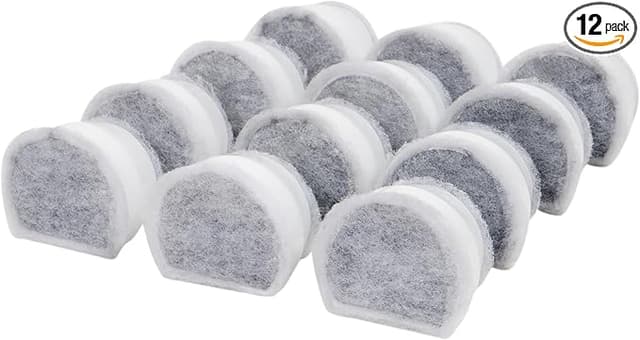
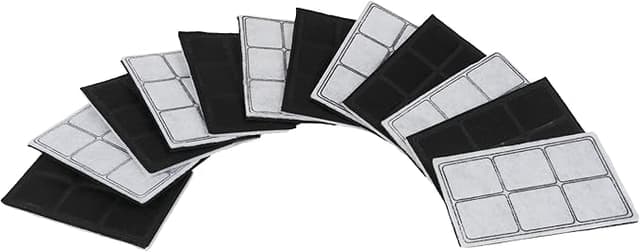
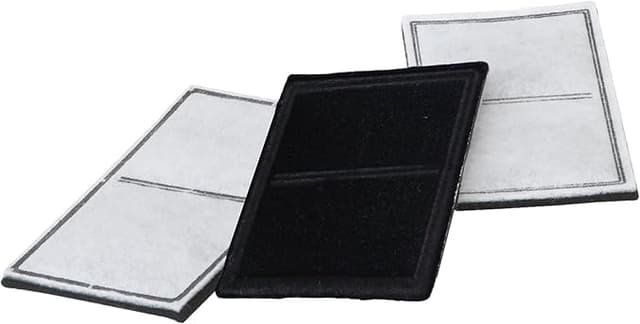
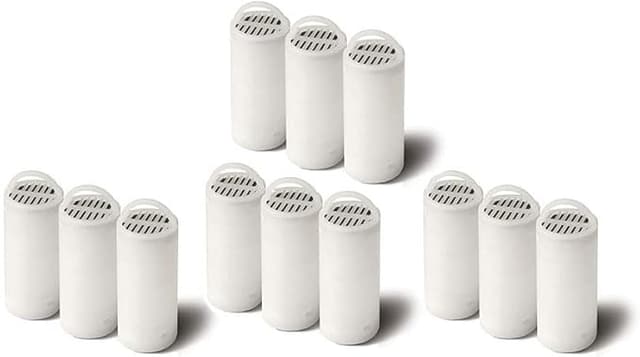
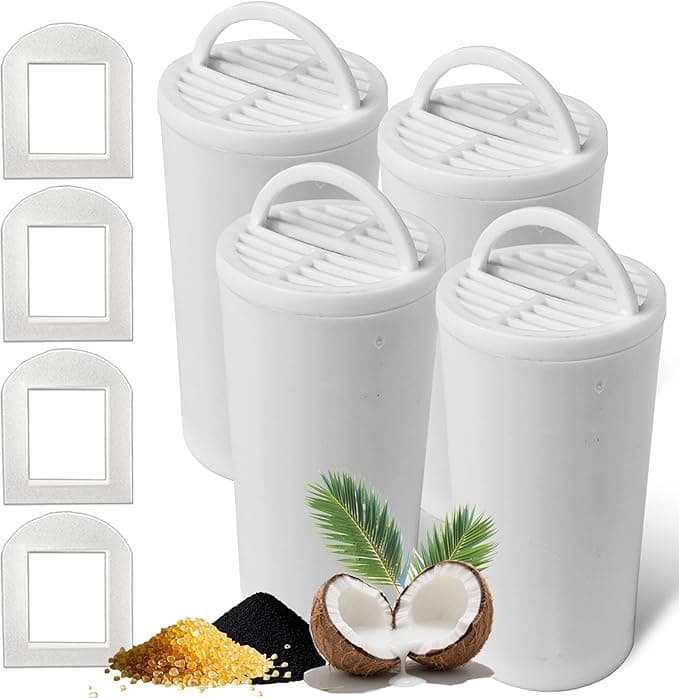
This is where compatible filters usually trip, so I went in skeptical. The Drinkwell filter compartment is a snug little rectangular bay, and a filter that's even a millimeter off will sit proud and let water sneak around the edges instead of through the carbon. I held the compatible one up against my last OEM filter before installing — edge to edge, the foam-and-carbon body matched. The frame on the compatible is a hair softer, a touch less rigid than PetSafe's, and the first time I pressed it in I gave it a little wiggle because I expected resistance that wasn't there. It dropped in clean. No trimming, no folding a corner under, no swearing. When I ran the pump the water pulled through the filter face, not around it, which is the whole point.
One thing the box won't tell you and I will: do the soak. Ten minutes, fully submerged, then a real rinse under running water until it stops shedding that fine black carbon dust. Skip it and you'll get gray water and a film on the surface for the first day. I rushed it once on a different filter out of laziness and spent the evening wiping black grit off the stainless basin. Lesson learned. The instructions say soak and rinse for a reason — it's not filler.
How it performs once it's running
Here's the honest performance read after running these for months in a two-cat house. The carbon does what carbon does: it pulls the off-tastes and that slightly stale, sat-in-a-bowl flavor out of the water, and it catches the worst of the cat hair and gunk before it recirculates. Within a couple days of a fresh filter the water genuinely tastes like nothing, which is what you want. My pickier cat — the one who used to paw at the water and walk away — drinks straight from the stream now.
Where's it a touch behind OEM? Longevity, marginally. The genuine PetSafe filters feel like they hold their carbon punch right up to the four-week mark. With the compatible ones, I find the taste-scrubbing starts fading closer to week three. If your water's hard or you've got multiple pets churning through it, you'll notice the fountain getting a faint slickness sooner. My fix is dead simple: I just swap on a tighter cycle — every two and a half to three weeks instead of stretching to four. Even doing that, I'm still spending less than I would on OEM run to its full interval, because the per-filter cost is so much lower.
The real downsides — and there are a couple
I promised honest, so here it is. First, the packaging is cheap. The OEM filters come sealed individually; these compatible ones came loose in a single bag, three of them rubbing together, and one had shed a little carbon dust into the bag corner. It rinsed off fine, but it's not confidence-inspiring when you open it. Second — and this is the one that actually matters — quality control is slightly less consistent. Out of the dozen or so I've run, one filter had a frame edge that wasn't cut perfectly square. It still worked once seated, but I had to press it in more deliberately to get a flush fit. With OEM I never think about it; with these I give each one a quick look before it goes in. Thirty seconds of attention, not a dealbreaker, but it's real.
Third, smaller gripe: the foam pre-filter layer feels a touch thinner than PetSafe's. In a heavy-shedding house that means a bit more hair making it through to the carbon, which is part of why I shortened my replacement cycle. None of this is hidden — you can feel it the moment you handle the thing next to a genuine one.
Why none of this is something to shrug at
The reason I'm fussy about filter timing isn't snobbery. A saturated fountain filter is genuinely a problem. Once the carbon's spent and the foam's clogged, the pump is just recirculating warm, still-ish water, and that's exactly the environment where slime film starts creeping up the basin walls and bacteria multiply fast. You'll see it as a slick coating when you go to clean it — and your pet sees it too, which is often the real reason a cat suddenly snubs a fountain it loved last week. Fresh filter, moving water, no biofilm. That's the entire job. A cheaper filter that you actually replace on time beats an expensive one you stretch to six weeks because you didn't want to "waste" it.
Who should buy OEM — and who should grab this
If you want zero-thought consistency, every filter identical, sealed individually, and you don't mind paying the premium for that — buy the genuine PetSafe. There's no shame in it and the QC is a notch tighter. Same goes if you're chronically forgetful about swaps and want every last day of life out of each filter.
But for me? I run the compatible. It seats right, it scrubs the water clean, my cats drink from it without a second glance, and it costs me roughly $35 less a year to keep the same fountain running. I give each filter a five-second look before it goes in and I swap a little sooner than the box says — and honestly, that's it. That's the whole catch. For the money it saves doing the exact same job, I'd buy it again. And I have, three packs running.