Troubleshooting & Analysis
The smell hits you first, and it's not what you'd expect
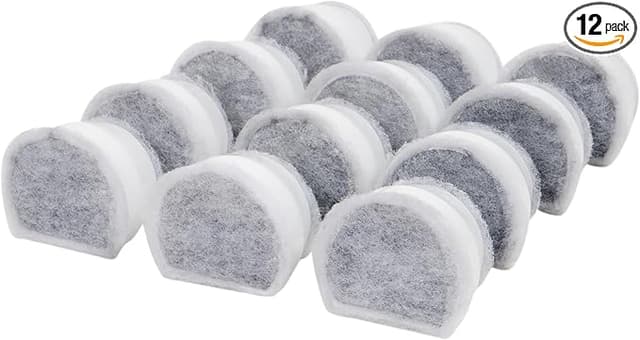
Crack open the PetSafe Drinkwell carbon filter for the first time and there's this faint, dry charcoal smell — like the inside of a brand-new Brita pitcher, or a campfire that went out an hour ago. Not chemical. Not plastic. Just carbon. I remember holding the first one over the sink, half-expecting it to reek of something manufactured, and instead it smelled like, well, exactly what it is. That was the moment I stopped being nervous about the cheap ones.
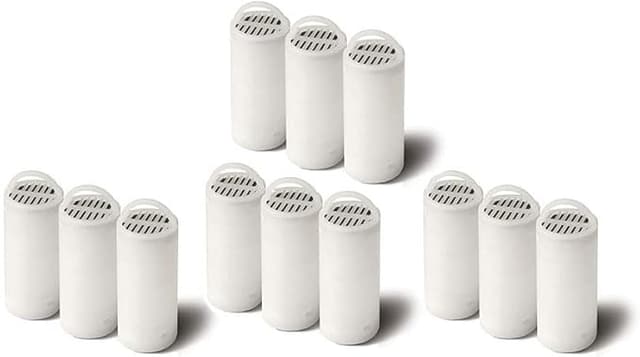
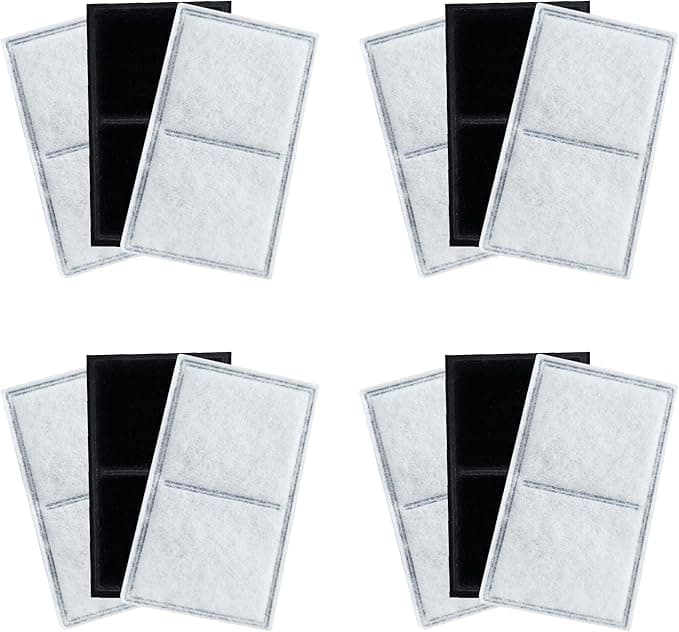
Here's where I was coming from. I've got a Drinkwell fountain running in my kitchen for two cats who, I swear, treat their water bowl like it's optional and the fountain like it's holy. The OEM PetSafe carbon filters were costing me around $18 for a three-pack, and at a change every two to three weeks, that math gets old fast. So I did the thing you're probably about to do — I searched for a compatible carbon filter and found packs running closer to $11 for six. Roughly half the per-filter cost. And I sat there thinking, okay, but is the cheap one going to leave gunk in my cats' water?
The cost gap is real, and so is the annual sting
Let me put actual numbers on it, because that's the whole reason you're here. OEM at $18 for three is six bucks a filter. Swapping every two to three weeks, call it eighteen to twenty filters a year for one fountain. That's somewhere north of $100 annually just on filters — for water. The compatible packs I've been buying land around $11 for six, so under two dollars a filter, and my yearly spend dropped to roughly $40. That's a $60-plus difference every year, doing the identical job, for water my cats were going to drink either way.
I want to be straight: a sixty-dollar gap on a fountain accessory isn't going to change your life. But it's the principle of it. I was paying triple for what is, functionally, foam and activated carbon in a plastic frame.
Fit and install — the part I was actually worried about
This is where compatible filters usually fall apart, so I paid close attention. The routine is simple and you should follow it: soak the filter in water for about ten minutes before it goes in. I skipped this once early on, in a hurry, and the dry carbon floated and the filter didn't sit flush — water channeled around it instead of through. Soak it. Then rinse it thoroughly under the tap until the water running off goes clear instead of that grayish carbon-dust color. Drop it into the fountain's filter compartment.
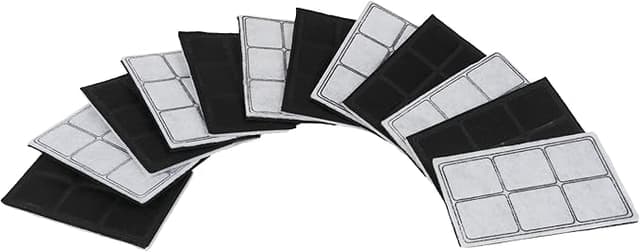
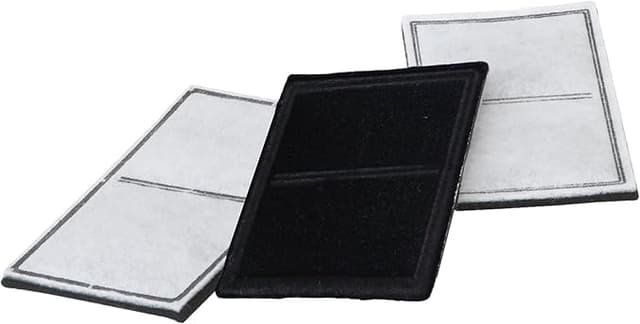
The fit? Honestly, a touch looser than OEM. The frame on the compatible ones I've used is a hair less rigid, and there's a tiny bit of play when you seat it — it doesn't give you that confident, snug click the genuine PetSafe filter does. The first time I noticed it I went back and reseated it twice, convinced I'd done something wrong. But once the pump's running and there's water weight on it, it stays put. No bypass, no rattle. After a dozen changes I've stopped thinking about it. It works — it just doesn't feel as premium going in.
How it actually performs over a few weeks
The triple-action claim — pulling hair, debris, and bad tastes — held up for me on the parts I can verify. Cat hair is the real enemy in a pet fountain, and these catch it the same as OEM did. By week two there's a visible fuzz mat on the intake side of the filter, which is exactly what you want; that's hair that isn't recirculating into the water. The carbon does its job on taste too. My pickier cat, the one who used to sniff and walk away from week-old fountain water, drinks from it without the drama. That's about as good as a taste test gets in a house with no humans drinking it.
Where it's a touch behind: longevity. I get a solid honest two to three weeks out of these before I start seeing the early signs of a tired filter — slower flow, the first hint of slick on the foam if I run my finger across it. The genuine ones maybe stretched closer to the full four weeks for me. So you're trading a little filter lifespan for the lower price. Given how much cheaper they are per unit, I'll change them a few days sooner and still come out way ahead.
The downside I won't gloss over
Quality control across the pack isn't perfectly even. In one six-pack, two of the filters had frames that were ever so slightly warped — not enough to fail, but enough that I had to press a corner down to get them flat in the compartment. The OEM filters were uniform every single time. With these, there's a little lottery to it. None have been bad enough to throw away, but if you're someone who wants every unit identical, that inconsistency will bug you. And the packaging is flimsy — a thin plastic sleeve, no individual wrapping, so the filters jostle against each other in the bag. Cosmetic, but it tells you where the savings come from.
There's also a real reason none of this is just nitpicking. A dead or saturated fountain filter is genuinely a problem — not a marketing scare. When the carbon's spent and the foam's clogged, the fountain stops pulling debris and the water starts going stagnant, and stagnant water in a warm kitchen grows bacteria fast. That slimy film you find when you've gone too long between changes? That's the thing that makes a cat quit drinking, and a cat that's not drinking enough is a cat headed for urinary trouble. So the filter mattering isn't about the brand on the box — it's about actually changing the thing on schedule, whichever one you buy.
Who should buy OEM — and why I grab these
If your fountain is fussy about fit, or you've had a knockoff bypass water on you before and you just want zero variables, buy the genuine PetSafe filters and don't think about it. The peace — sorry, the certainty — of a guaranteed snug seat is worth the premium to some people, and that's fine.
But me? I've run these compatible carbon filters through more changes than I can count now, across the same fountain my cats actually use every day. Slightly looser frame, occasional warped unit, a few days shorter lifespan — all true, all real, and all of it adds up to a filter that does the same job for roughly half the cost. For a $60 yearly savings on something I'm tossing in the trash every couple weeks anyway, I'd buy them again. I have. The box is sitting under my sink right now.