Troubleshooting & Analysis
I bought the $20 pack fully expecting to throw it out
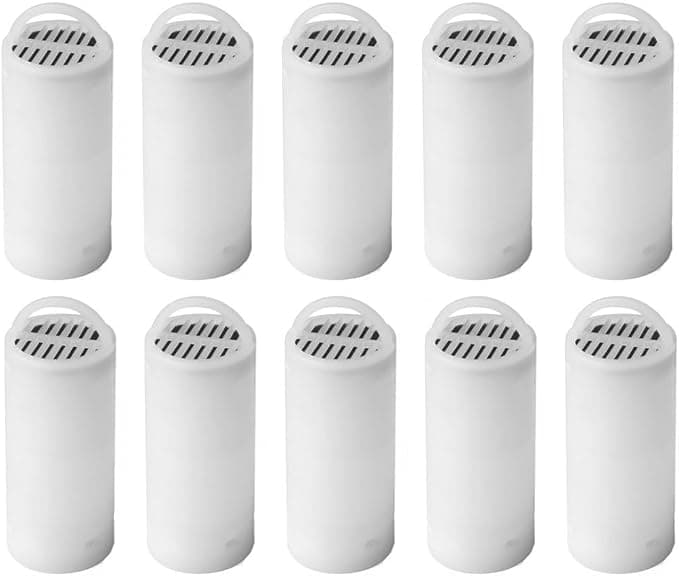
Here's where my head was at. I'd been buying PetSafe's own Drinkwell carbon filters for almost two years — the genuine ones, the blue boxes — and every time I reordered I'd wince a little. A pack that lasts my cat maybe two months, gone again. So when I saw a generic triple-action pack for around $20, three or four filters deep, I assumed it was junk. Felt-paper junk that'd turn to mush in a week and dump charcoal grit into my cat's water. I genuinely bought it as a test I expected to fail, just so I could write "told you so" and go back to the OEM.
That was four months ago. I'm still using them. Let me walk you through why, including the parts that annoyed me, because there are a couple.
The money, plainly
The reason any of us are even looking at the generic is the math, so let's not be coy about it. A genuine Drinkwell filter, when you buy the small packs, works out to somewhere in the $7–9 range per filter depending on where and when you buy. The generic triple-action packs I've been running land closer to $4–5 a filter, sometimes less in the bigger counts. On a single swap that's nothing. But Drinkwell wants you replacing every two to four weeks, and a cat fountain runs 365 days a year. Do that honestly and you're changing the filter roughly 15 to 24 times a year.
At OEM pricing that's real money — call it $40 to $50 a year, sometimes more if you've got two fountains like I do. The generics knocked that close to half. I'm not saving a fortune, but I'm saving enough that over the life of the fountain it more than covers what I paid for the fountain itself. For water filtration that, near as I can tell, does the same job, that gap stopped feeling like a gamble and started feeling like I'd been overpaying out of habit.
Do they actually fit?
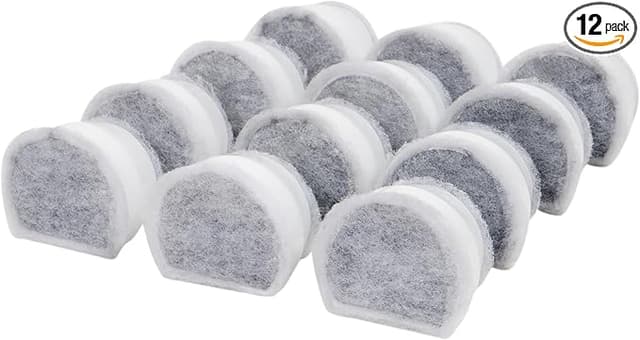
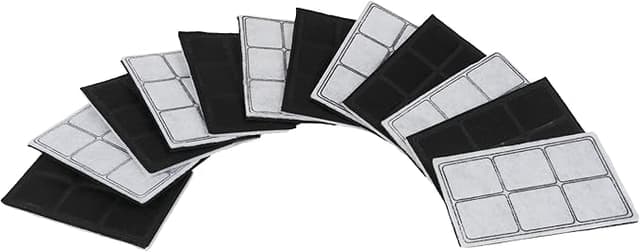
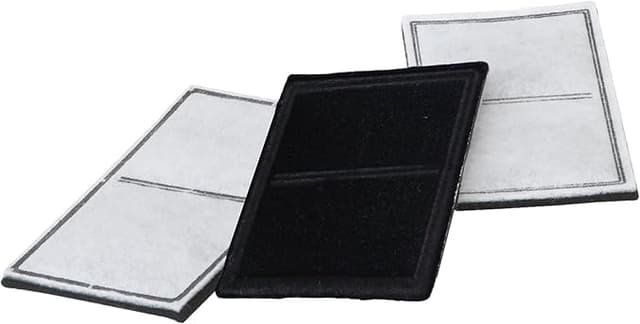
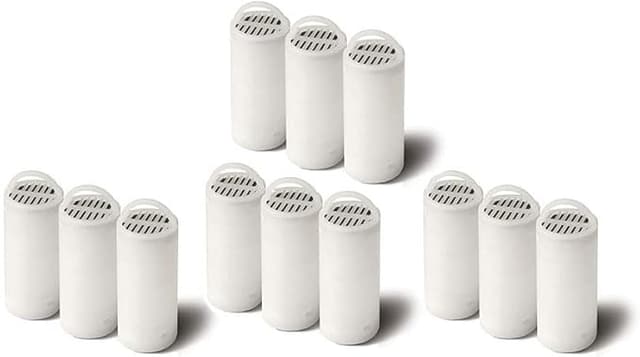
This was my first worry — aftermarket stuff loves to be "compatible" right up until it doesn't sit flush. These dropped into the filter compartment of my Drinkwell with no fuss. Same footprint, same little notch, seats down where it should and the housing clips back over it without me having to push or shim anything.
One thing the cheap pack does NOT tell you clearly, and the OEM box does: soak it first. You drop the filter in a bowl of water for about ten minutes before it goes in. I skipped this the very first time — impatient — and got a slow trickle of fine black carbon dust into the bowl for the first day. Looked alarming. Turns out that's just the dry carbon shedding because I didn't pre-wet it. Soak it the full ten minutes, then rinse it under the tap until the water runs clear, and that whole problem disappears. My fault, not the filter's, but I'd rather you learn it from me than from a cloudy bowl.
How it actually performs
The job here is three things: catch hair and debris before it clogs the pump, pull bad tastes and smell out of the water, and keep the water moving so it doesn't go stagnant. On the first two, honestly, I can't tell the generic from the OEM. The water stays clear. My cat — who is a picky, suspicious animal and the real judge here — drinks from it the same as she ever did. No hesitation, no walking away from the bowl, which is the tell I watch for. A cat refusing the fountain is the whole reason a dead filter matters; stale, slimy water is exactly what they avoid, and it's where bacteria breed fast. None of that crept in.
Where the OEM has a slight edge: the genuine filter feels a touch denser, and I think it holds up marginally longer at the back end of its life. Which brings me to the real downside.
The honest downsides
Two of them, and I want to be straight about both.
First — these generics start shedding a little sooner than the OEM if you stretch them. The genuine Drinkwell filter I could push to the full four weeks and it'd still look intact. The generic, I've found, is happiest replaced closer to every two to three weeks. By week four it starts looking tired and I'd see the faintest haze building. So part of that price saving gets eaten back if you, like me, were quietly stretching your OEM filters to six weeks to save cash. Run these on the honest two-to-three-week schedule and they're great; treat them like they'll last forever and you'll be disappointed.
Second — the packaging is cheap and a bit careless. Thin plastic sleeve, filters loose inside, and in one pack a single filter had a slightly crushed corner from shipping. It still worked fine once soaked, the carbon was all there, but it doesn't inspire the same confidence as the OEM's molded tray. If you're someone who needs the unboxing to feel premium, this'll bug you.
And yes — there's the faintest fresh-carbon smell on the first day out of the wrapper. Soak, rinse, done. Gone by day two.
So who should skip these?
If your cat is genuinely fussy about the tiniest change, or you've had a fountain go slimy on you before and you've lost trust, buy the OEM and sleep easy — the few extra dollars buys you one less variable. Same if you tend to forget swaps and lean on a filter way past its date; the OEM is more forgiving of neglect.
But me? I went in expecting to write these off, and instead I reordered them. Four months in, two fountains, a picky cat still drinking happily, and I'm spending close to half what I was. The frame's the same, the fit's the same, the water's clean. For that kind of saving on something I have to rebuy two dozen times a year, I'll take the slightly cheaper packaging and the slightly shorter run time. I'd buy them again — and I already have.