Troubleshooting & Analysis
The smell tipped me off before the air-quality light did. I walked into my home office one Tuesday and it smelled like a basement that hadn't been opened in a year — damp, a little sour, that mushroom-on-the-back-of-your-throat thing. My Levoit CORE 300 was sitting right there humming away, fan light blue, telling me everything was fine. It was not fine. I'd blown past the filter change by a good two months because life happened, and when I finally popped the bottom off and pulled the cylinder out, the white pleats had gone gray-brown and there were these faint dark freckles near the base. Mold. The thing I'd bought to clean my air had quietly turned into a little spore factory blowing it back at me.
That's the part nobody really tells you about these units. A saturated HEPA filter doesn't just stop working — it gets actively worse than no filter at all, because all the gunk it caught is now sitting in the airstream, damp from your room's humidity, and the fan keeps pushing across it. So yeah, I changed it that day. And that's the change that finally made me stop buying Levoit's own replacements.
The number that made me switch
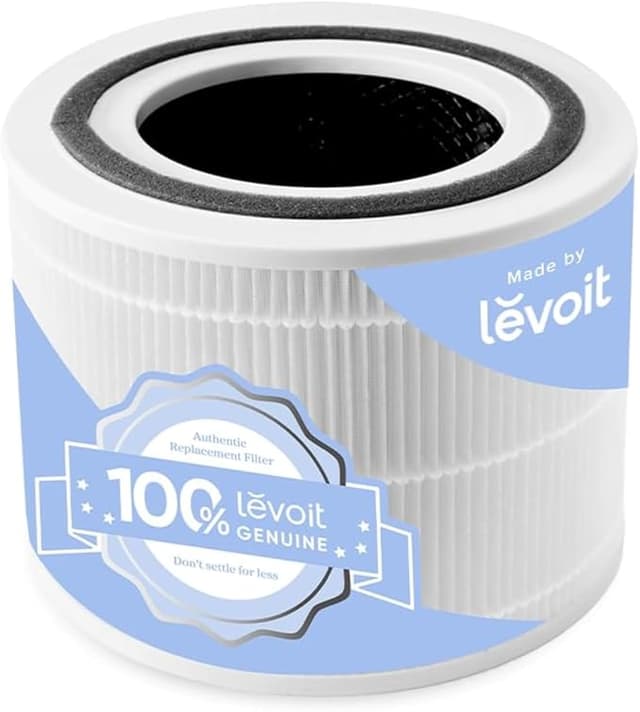
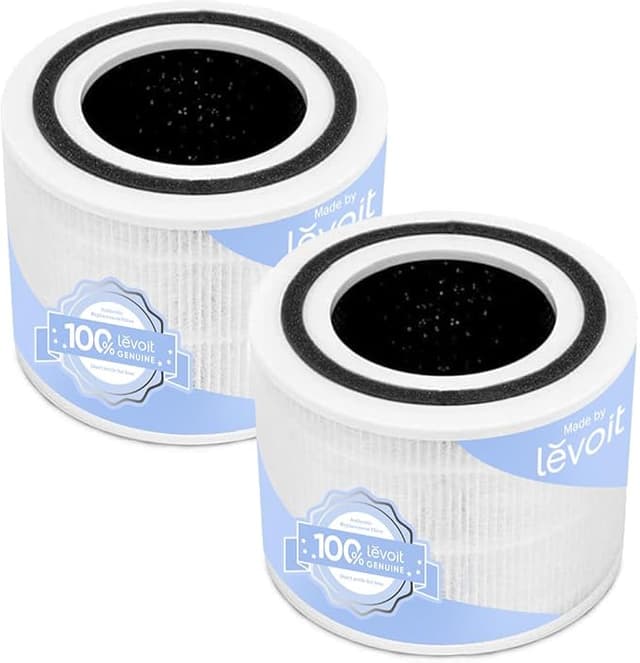
Here's the math that bugged me. The CORE 300 wants a fresh filter roughly every 6 to 8 months — call it twice a year if you run it like I do, basically always on. Levoit's genuine 3-in-1 filter runs around $35 a pop when it's not on sale. Two a year, that's about $70 annually to keep a $100 air purifier breathing. Over the four years I've owned mine, the filters have cost more than the machine did. That stings.
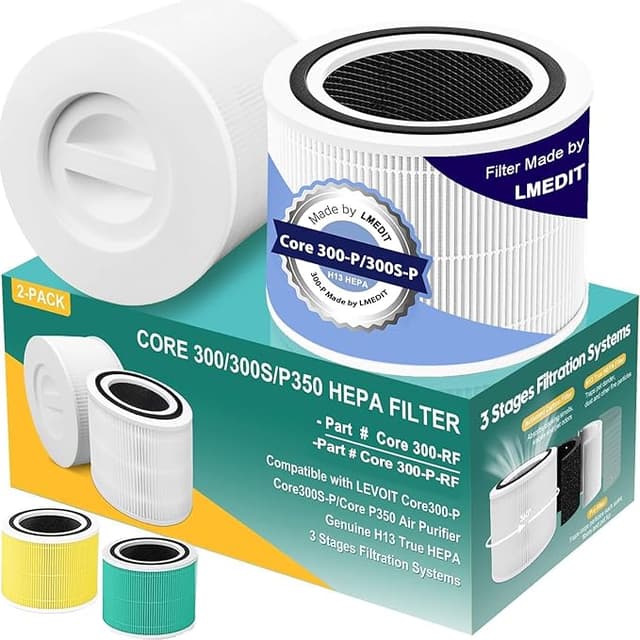
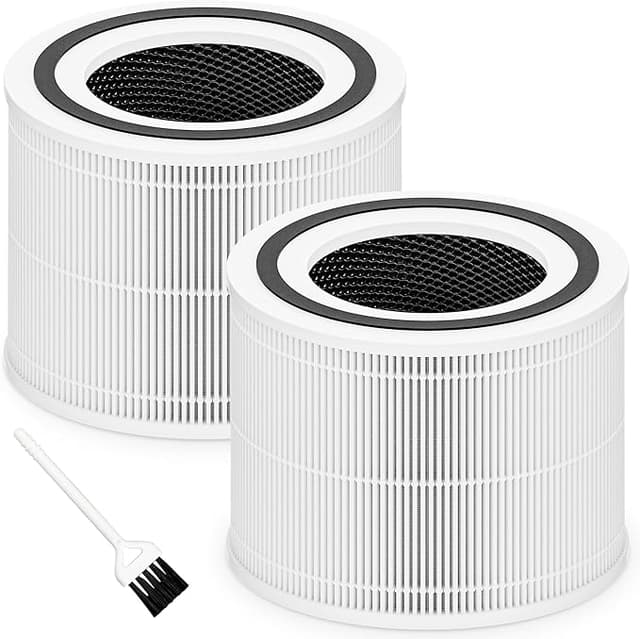
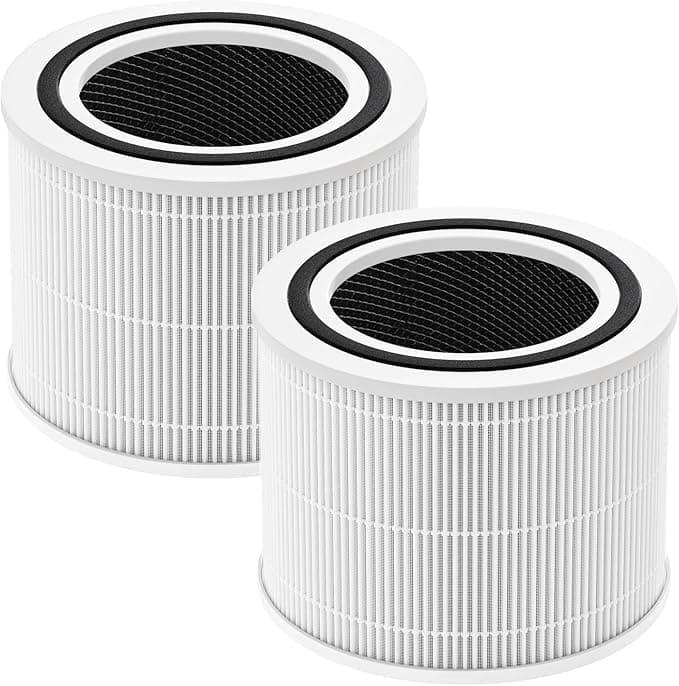
The compatible True HEPA H13 filter I switched to runs about half that — somewhere in the $17-20 range, and the multi-packs drop it lower per unit. Same job. Same activated-carbon layer for the cooking-and-pet-smell stuff. The H13 rating is actually a notch tighter than the H11-ish spec a lot of stock filters ship at, which I didn't expect from the cheaper option. So I'm paying roughly $35-40 a year instead of $70, and arguably filtering a hair finer. That was an easy sell once I did it on paper.
Does it actually fit?
This was my worry too — third-party means tolerances drift, and a filter that doesn't seat flush is a filter that lets air sneak around the edges unfiltered. Install on the 300 is genuinely four steps and I'm not exaggerating to make it sound easy. Unplug it (do this — you're reaching into a fan). Twist off the bottom cap, pull the old cylinder straight down, slide the new one up into the housing, click the cap back on. Then hold the reset button to clear the filter-life light. Thirty seconds.
The compatible one I've been buying seats right. There's a satisfying little resistance as the foam gasket at the top meets the housing, and that's the tell — you feel it grab. I gave it the wiggle test after install and there was no play, no rattle when the fan spun up. Honestly the fit was indistinguishable from OEM. If anything the cardboard end-caps on the compatible felt a touch stiffer.
Where it's a little behind
I'll be straight with you, because a review that's all good news is a review you shouldn't trust. Two things. First — the break-in. For the first two, maybe three days there's a faint new-plastic-and-glue smell off the carbon layer. Not chemical-harsh, but you notice it in a small bedroom at night. Run the unit on high for an afternoon with a window cracked and it bakes off. OEM does this too, just a touch less.
Second, the packaging is cheap. Thin plastic sleeve, a sticker, done. No fancy box, and on one order the carbon layer had a little loose black dust on the outside wrap that I had to brush off before installing. Cosmetically it feels less premium in the hand. Does that affect the air it cleans? Not that I can measure — my cheap particulate meter reads the same drop in PM2.5 after 20 minutes as it did with the genuine filter. But if you want the unboxing to feel nice, OEM wins that one.
So who should still buy Levoit's own?
A couple of people. If your unit's still under warranty and you're the type who worries a third-party part could give Levoit an excuse to deny a claim — buy OEM and sleep easy, the $35 is cheap insurance. And if you've got a genuine chemical sensitivity where even a two-day break-in smell is a real problem, the genuine filter's break-in is milder, so pay up.
For everyone else? I've now run compatible H13 filters in my CORE 300 for going on two years, swapping them on schedule the way you're supposed to, and the air in my office is clean, the meter agrees, and the mold-basement Tuesday hasn't come back. The only thing that changed is I'm spending half as much, which means I actually change it on time now instead of stretching a tired filter to save thirty bucks — and that's the whole point of owning the thing.
For fifty-ish dollars a year less, doing the same job, in the same housing, with a tighter rating? I'd buy it again. I have, four times now. The cheap one's fine — just don't be like me and let any filter, OEM or not, sit past its date.