Troubleshooting & Analysis
The smell tipped me off before the app did
My bedroom unit started pushing out this faint sour-basement odor about six months in. Not strong. Just enough that I'd walk in at night and think, did something die in the wall? I'd been ignoring the filter light for weeks — you know how it is, the orange ring nags at you and you keep saying "this weekend." Turns out a HEPA filter that's past its prime doesn't just stop working. It becomes the problem. All that gunk it caught — dust, pollen, whatever was floating around, and apparently some mold spores that had set up shop in the damp folds — it was getting blown right back into the room I sleep in eight hours a night.
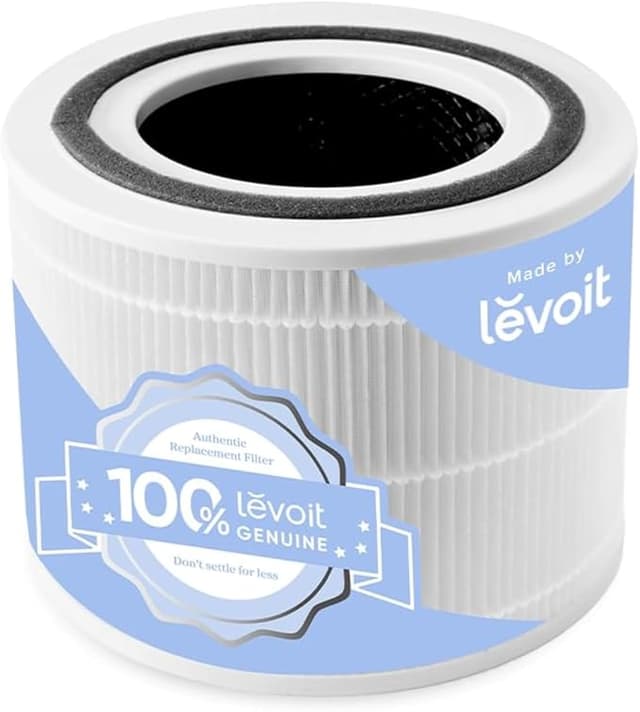
So I pulled it. The old Levoit OEM filter, the gray pleated cylinder, was darker than I expected and smelled exactly like the room. That was my wake-up call to stop being lazy about replacements. And it's also when I finally did the math on what Levoit wanted me to pay to keep doing this.
The OEM price is the actual insult
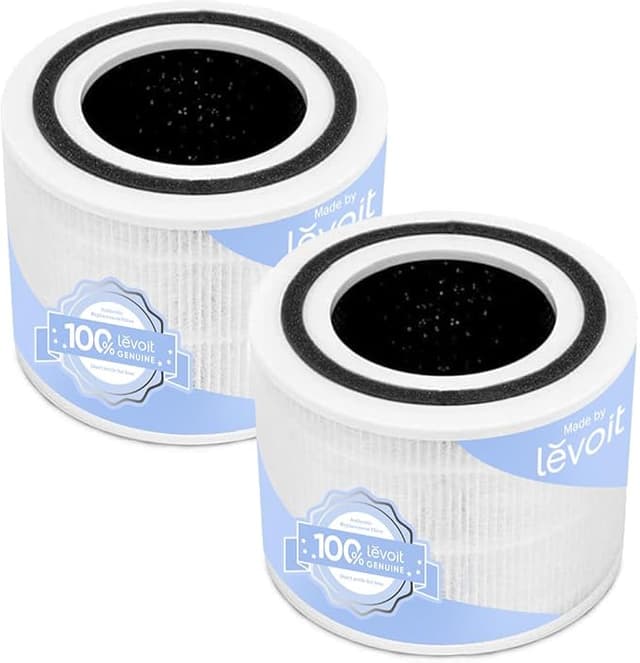
The genuine Core 300-RF replacement runs about $35 when it's not on some sale, and I've seen it at $40 on a bad day. For a single filter. The Core 300 is a $100 machine — you're paying a third of the unit's price every six to eight months just to keep it breathing. Levoit's own guidance is roughly every six months, but if you run it on high in a dusty apartment like mine, you're closer to four or five before the light comes on.
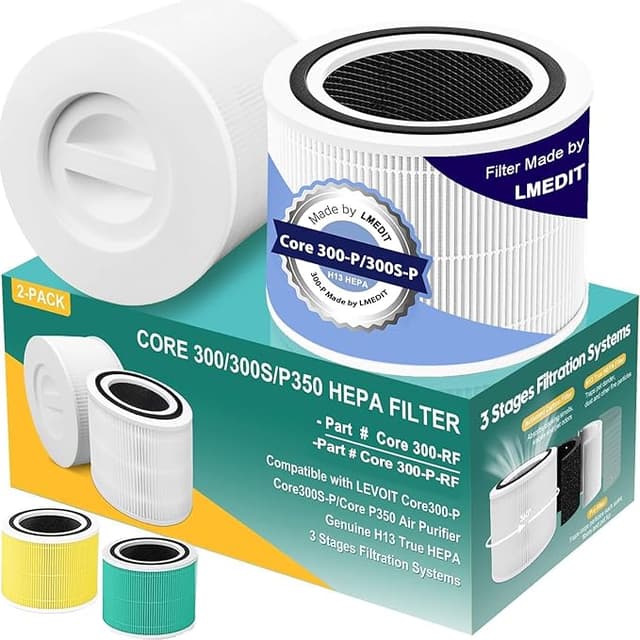
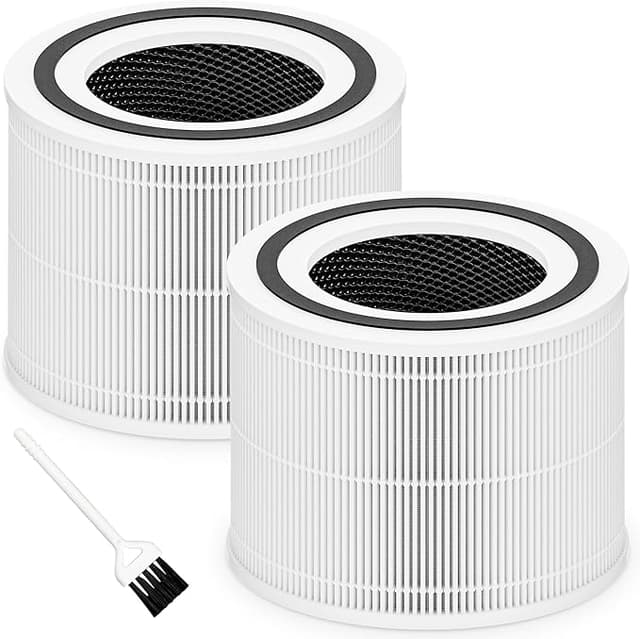
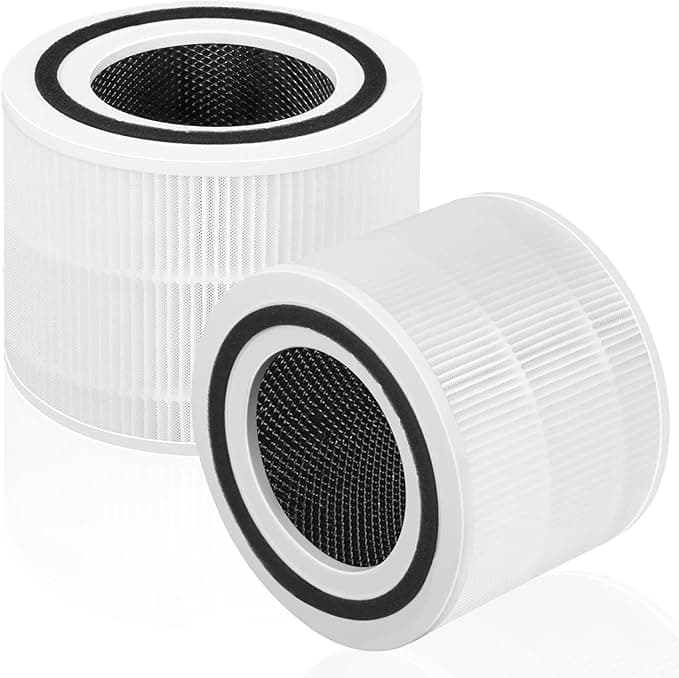
The compatible True HEPA H13 I switched to was $18. I bought a two-pack, so call it about $17 each. Same job — actually a slightly tighter rating on paper, H13 versus the standard H11-ish media in some of the older OEM stock — for half the money. Run the year out and that's the difference between spending around $70 and around $35 annually. Not life-changing money. But it's money I was handing over for no reason other than the word "Levoit" stamped on the plastic ring.
Putting it in: easier than the manual makes it sound
This part is genuinely a non-event, which is why the OEM markup bugs me so much. You unplug the unit — do actually unplug it, the fan can spin down slow and it's a dumb way to nick a finger. Twist off the bottom cap, the whole base comes off with a quarter-turn. The old filter lifts straight out. New one drops in, only goes one way, the cap clicks back on. Then you hold the reset button until the filter light quits glowing. Whole thing took me under a minute, and I am not handy.
The compatible one seated right the first time. No shimming, no forcing. The pull-tab handle on top lined up with the cap exactly like the original did. I've heard horror stories about off-brand filters that are a millimeter too fat and won't let the base close — this wasn't that. It sat flush and the cap locked with the same reassuring click.
Where it's honestly a little behind
Two things, and I'm not going to pretend otherwise.
First — the break-in smell. For the first three days there was a faint new-plastic-and-carbon odor when the fan kicked to high. The activated carbon layer off-gasses a bit at the start. It faded completely by day four, but if you're sensitive to that, run it on low with a window cracked for the first night. The OEM does this too, just less.
Second, and this is the real one: the cardboard end-caps on the compatible filter feel cheaper. The OEM uses a slightly sturdier ring where the media meets the plastic. On mine, one of the glued seams on the carbon wrap was a hair loose out of the box — not enough to leak air around the media, I checked by feeling for bypass at the seams with the unit running, but enough that I noticed and frowned. It's a cost-cut you can see. Three filters in now and none have actually failed, but the fit-and-finish is a notch below the genuine article. If that kind of thing drives you up a wall, that's a real reason to think twice.
So does the cheap one actually clean the air?
Yeah. The thing I cared about most — does the room feel and smell clean again — got fixed the second I swapped the dead filter for a fresh compatible one. The sour smell was gone by morning. My allergy mornings, the puffy-eyes-sneezing routine I get in spring, dropped back down to where they were when the machine was new. The fan noise at each speed is identical, which tells me the airflow resistance is in the same ballpark as OEM; a too-dense knockoff filter would make the motor work harder and you'd hear it. I didn't.
I keep a cheap particle meter on the nightstand out of nerdy curiosity, and the overnight readings with the compatible filter land in the same low range the OEM gave me. Not a lab test. But it's the same number I was paying double for.
Who should skip it — and why I keep buying it
If you've got the unit under active warranty and you're the type who worries a non-Levoit part could give them an excuse to deny a claim, buy the OEM and sleep easy. Same if cosmetic cheapness genuinely bothers you, or if someone in the house has a serious respiratory condition where you want zero variables — pay for the name, it's fine, it's not a rip-off, it's just expensive.
For everyone else — me included — the compatible H13 does the exact job for roughly half the price, seats correctly, and clears the air the same way. After letting my last filter rot into a pollution source because I was too cheap to spend $35, the smartest move turned out to be spending $18 and just doing it on schedule. I've bought three now. I'll buy the fourth without thinking twice.