Troubleshooting & Analysis
The click is the first thing I check now. On my Levoit CORE 300, a filter that's seated right gives you this small, flush snap when the bottom cap twists into place — and the first compatible Filter A I dropped in did exactly that, on the first try, no wiggling. I'd braced myself for the usual off-brand routine where you're shoving and re-seating and cursing. Didn't happen. What did happen: a faint plastic-and-new-carbon smell for about two days. Not chemical, not alarming, just that "this came out of a sealed bag yesterday" smell. By day three I'd stopped noticing it.
So let me back up, because the smell is the part nobody warns you about and the part that almost made me yank it.
The reason I went looking for an alternative at all
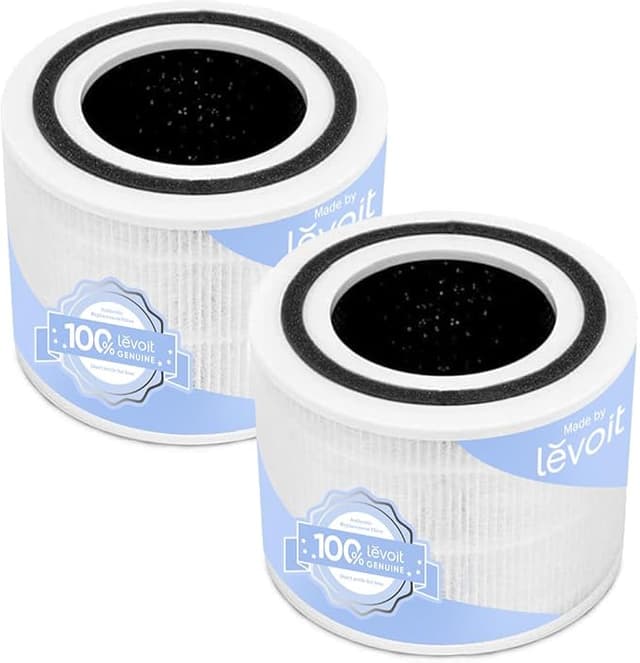
Levoit's own replacement runs me around $40 when I catch it on sale, closer to $50 when I don't. The unit wants a fresh filter roughly every six to eight months depending on how hard you run it — I keep mine on auto in a bedroom, so call it twice a year. That's $80 to $100 a year to keep one small purifier breathing. For a machine I paid maybe $90 for. The math started feeling backwards.
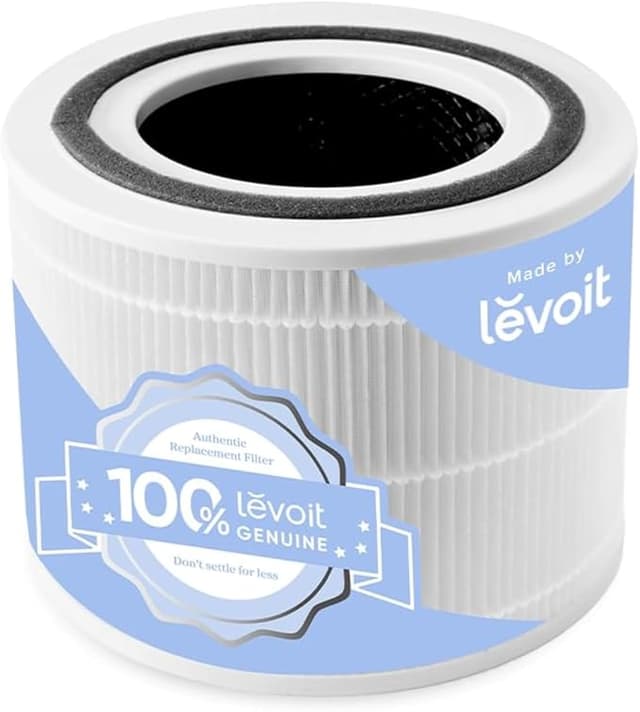
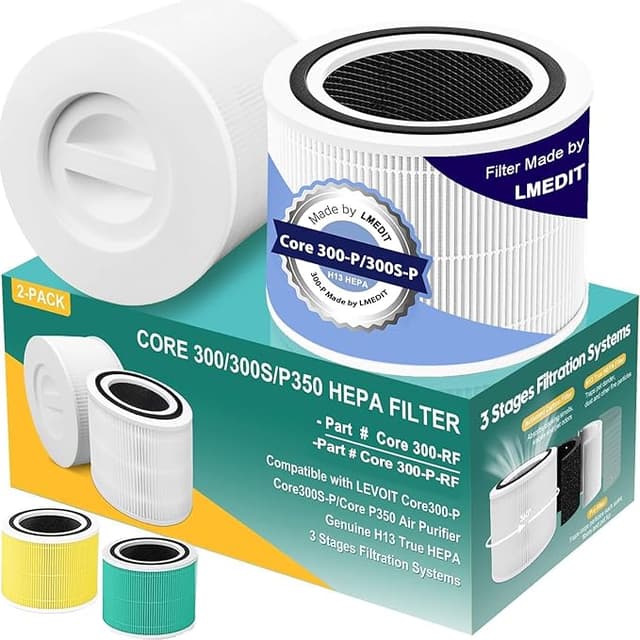
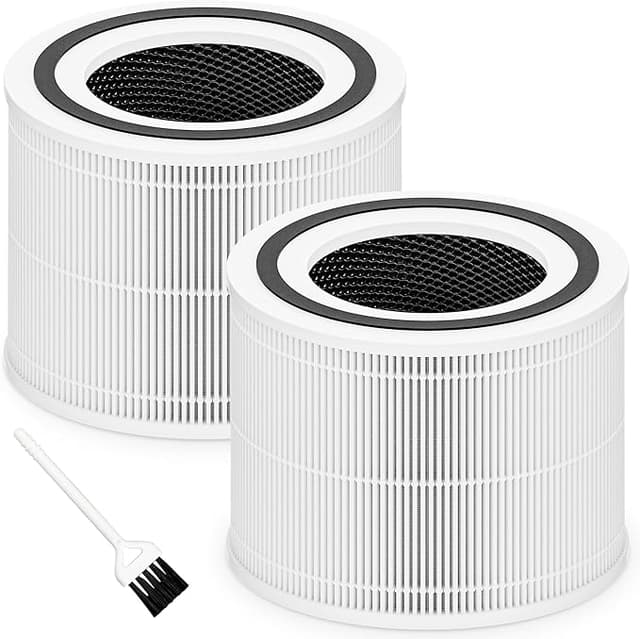
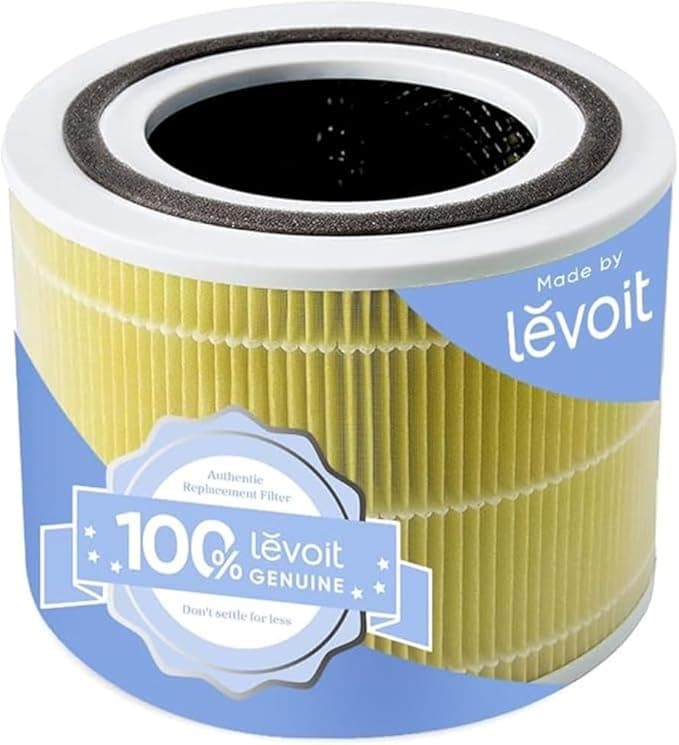
The Filter A compatible I've been running lands around $20. Same True HEPA H13 rating Levoit advertises, three-stage build — pre-filter, the H13 pleat, activated carbon. Two of these a year is $40. So I'm keeping somewhere near $50 to $60 in my pocket annually and doing the identical job. That gap is the whole reason this review exists.
Does it actually fit, or is "compatible" doing a lot of work?
Install on the CORE 300 is genuinely four steps and I'm not padding that. Unplug it — do this, the fan spinning down while you've got the base open is unsettling and pointless to risk. Twist the bottom cover off counterclockwise, lift the spent filter straight out (it'll be grayer than you expect; mine looked like a dryer trap), drop the new one in with the pull-tab facing out, twist the cover back. Then hold the filter-reset button for a few seconds until that little light stops nagging you.
The Filter A seats the same way the OEM does. Here's the one honest fit note: the foam gasket around the top rim is a hair thinner than Levoit's. Not loose, not rattling — it locks in fine — but side by side you can feel the OEM has a slightly plusher seal. Has it caused leakage or whistling in four-plus months? No. Air still pulls through the pleats, not around them. But I'm not going to pretend the build quality is matched. It isn't, quite.
Four months in — how it actually performs
I run a cheap particle meter as a hobby, nothing lab-grade. Cooking smoke from searing a steak used to spike my bedroom reading and the CORE 300 with this filter knocked it back down in about the same window as the genuine one did — call it eight, nine minutes to get from "ugh" back to baseline. Pollen season hit in spring and my mornings stopped starting with a sneeze, which is the only metric my body actually cares about.
Where it's a touch behind: the carbon layer. Levoit's filter held odors a little longer into its life. With Filter A, I noticed that around month four it stopped killing cooking smells as fast as it did in month one — the HEPA side was clearly still grabbing particles, but the carbon tapped out earlier. For pure particle work it kept pace. For smell, the OEM has a slight edge over the full lifespan. Worth knowing if you bought your purifier specifically for odor.
The downside I'd actually flag
The packaging is cheap. Mine arrived in a thin bag inside a plain box, no rigid insert, and one of the two I ordered had a slightly crushed corner on the pleats. It puffed back out and worked fine — HEPA media is more forgiving than it looks — but if you're the kind of person that bothers, order from a seller with decent return handling and check the pleats before you install. That's the real-world tradeoff for the lower price: you're not paying for the premium box.
Why I don't let mine go past the interval
One thing I won't cut corners on, OEM or compatible: don't ride a dead filter. A saturated HEPA pleat doesn't just stop helping — it becomes the problem. Trapped organic gunk and moisture can let mold set up shop, and now your "air cleaner" is quietly pushing spores into the room every time the fan kicks on. The filter light on the CORE 300 is conservative; when it nags, I swap. At $20 a pop there's zero excuse to push it.
So who should buy what?
If you run your CORE 300 in a kitchen, or you bought it mainly to fight cooking and pet odor, and you want that last bit of carbon longevity — buy the genuine Levoit and don't think about it. That's a real use case where the extra $20 earns its keep.
For everyone else — bedrooms, offices, allergy season, general dust and dander — I run the Filter A and I've reordered it twice now. It clicks in clean, it pulls particles like it should, it costs less than half, and the two downsides (a couple days of new-filter smell, a slightly thinner gasket) are things I genuinely stopped thinking about by the first week. Fifty-odd bucks a year back in my pocket for the same daily result. I'd buy it again. I have.