Troubleshooting & Analysis
The first thing I noticed was how quiet it went
Not the filter itself — the pump. I'd been running my Intex Easy Set with a cartridge that was, frankly, a gray brick at that point, and the motor had this low strained hum I'd stopped hearing because it was always there. Slid the new Type A cartridge in, heard that soft plastic-on-plastic seat — not a click exactly, more a little thunk when the pleats settle against the housing lip — flipped the pump back on, and the hum dropped half an octave. That's the moment I trust. Water moving freely through clean pleats sounds different than water clawing through a clogged one.
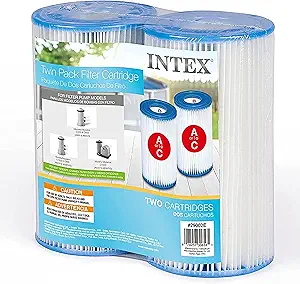
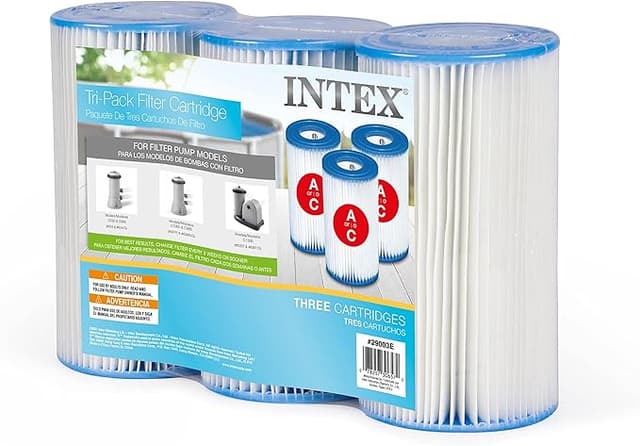
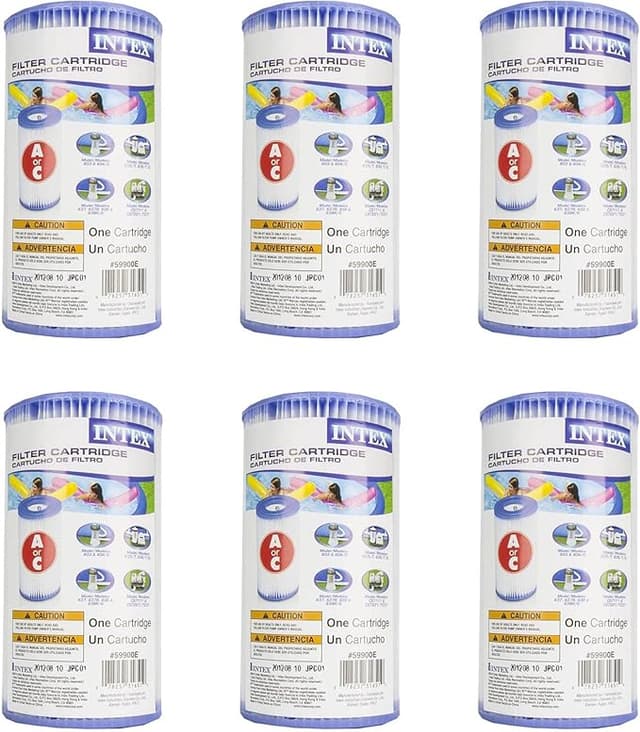
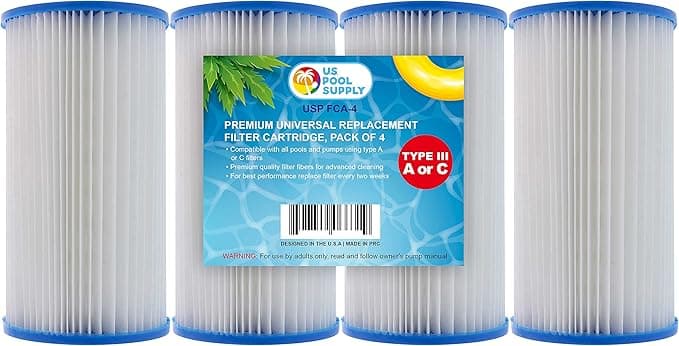
I'd been buying the Intex-branded Type A cartridges for two summers before I switched. Here's the math that finally got me. The genuine Intex Type A runs about $10 a cartridge when you buy the 2-pack, sometimes more like $12 each if you grab a single in a pinch at the hardware store. The compatible Type A I've been running costs me around $6 a cartridge in a 6-pack. Doesn't sound like much per unit. But these things don't last. In a pool that actually gets used — kids, sunscreen, the occasional leaf storm — you're swapping the cartridge every two weeks in peak season, more like weekly if your water's hard. Over a summer that's eight, ten, twelve cartridges. The OEM habit was costing me close to a hundred bucks a season just in filters. The compatibles cut that roughly in half. That's a tank of gas, that's a couple of restaurant meals, for filtering pool water.
Does it actually fit, or is that the catch?
This was my nervousness too. Type A is Type A is Type A in theory, but you hear stories about generics being a few millimeters off and rattling around. I measured mine against the real one before I ever wet it — outer diameter, the height, the inner core opening that slides over the standpipe. Dead on. The pleats sit a touch deeper on the compatible, honestly, which if anything means a hair more media. Install is exactly what the box tells you and exactly what you'd do with the OEM: kill the pump first — and I mean actually turn it off, don't just trust it, because you do not want a surprise gush — pop the filter housing near the pump, lift the old cartridge straight up and out, drop the new one in until it seats over the standpipe, button the cap back on. Ninety seconds. The only fiddle I ever hit is making sure the cartridge sits flat and centered before I screw the cap down; tilt it and you'll feel the cap fight you. That's a me problem, not a filter problem, and it's identical on the genuine ones.
The honest performance read
Water clarity? I can't tell the two apart, and I've looked hard, standing on the steps squinting at the bottom drain. After a full filter cycle the water's the same glassy blue with either cartridge. The compatible pulls the same fine debris — the pollen film, the sunscreen cloudiness after a pool party, the little bits that make water look "off" before it ever looks dirty.
Where it's a touch behind: longevity, maybe. I think the OEM pleats hold up a day or two longer before they pack solid and the flow drops. It's close — I'm not certain it isn't just my hard water being inconsistent week to week — but if I'm being scrupulously honest, the genuine cartridge might give me eleven days where the compatible gives me nine before I'm rinsing or tossing it. At the price gap, I'll take two fewer days. Easily.
The downsides, because there are some
The packaging is cheap. They come shrink-wrapped in a flimsy plastic sleeve, not the printed Intex box, and one of mine in a six-pack had a slightly crushed end cap from shipping. It still seated fine and filtered fine — cosmetic — but it doesn't inspire confidence when you open the bag. If you need a thing to look premium, this'll bug you.
Second, and this is the real one: there's a faint plastic smell off the new cartridge for the first day. Fresh out of the wrap it has that new-molded-plastic odor. It doesn't transfer to the water in any way I've ever smelled or tasted — it's gone after the first pump cycle — but the first time I caught it I paused. If you're sensitive to that, run the pump for an hour before anyone gets in, and it airs right out.
Third, quality control across a big multipack isn't quite OEM-tight. Out of six, five were perfect and one had a slightly uneven pleat fold. I used it anyway and it was fine, but you're rolling with a generic, so buy the multipack expecting one oddball and you won't be annoyed.
Why I don't let a dead one ride
People stretch filters way past where they should, and I get the temptation — they're a recurring cost and swapping feels like throwing money in the pool. But a saturated cartridge stops filtering and starts just blocking flow. Your pump strains, the water goes from clear to that faintly milky green, and once algae gets a toehold in warm standing water you're not buying a $6 cartridge anymore — you're buying shock, brushing the liner, and losing a weekend you wanted to spend in the pool, not scrubbing it. The whole reason the cheap cartridge makes sense is that it makes swapping on schedule painless. When each one costs half as much, you change it when it needs changing instead of guilting yourself into one more week.
So who should skip it?
If you've got a small spa or a low-use pool and you only burn through three or four cartridges a season, the savings are real but small, and the OEM's slightly longer life plus the nicer packaging might be worth the few extra dollars to you. No judgment. And if you're the type who'll be genuinely irritated by a crushed wrapper or a one-day plastic smell, pay up for the branded ones and sleep better.
But me? I've got a pool that gets hammered all summer and a filter schedule I actually keep now because it stopped costing me a fortune. The compatible Type A fits like it should, clears the water like it should, and runs my pump quiet. The downsides are a cheap bag, a one-day smell, and one slightly wonky cartridge per multipack — all of which I'll trade for cutting my filter bill roughly in half. I bought another six-pack last week. That's the most honest endorsement I've got: I keep handing them my money on purpose.