Troubleshooting & Analysis
The first thing I noticed wasn't the price. It was the click. When you push a fresh Intex Type A cartridge down into the pump housing and it seats, there's this soft little snap — the lid pulls flush, the gasket compresses, and you can feel through your fingertips that the thing is actually sitting where it should. I'd had a knockoff brand a season earlier that never gave me that click. It floated a hair high in the canister, water sneaking around the rim instead of through the pleats. So when this one snapped home on the first try, honestly, I exhaled a little. That's the test that matters, and it passed before the pump even turned on.
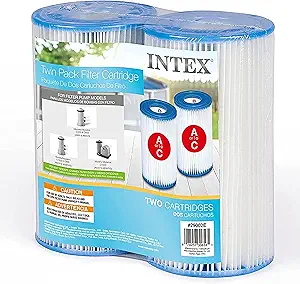
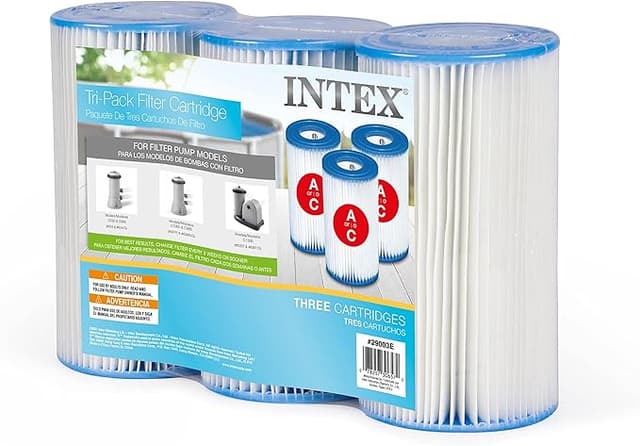
Let me back up. I run a 14-foot above-ground Intex pool and a smaller spa, and for two summers I dutifully bought Intex's own branded Type A cartridges. They run about $14 each when you can find them, and you go through them — a saturated cartridge in mid-July is a two-to-three-week part, not a season-long one. Buy the OEM three-pack and you're staring at $40-plus for what is, structurally, a pleated paper sleeve over a plastic core. The compatible Type A I switched to lands closer to $7 a cartridge in a multipack. Across a summer where I'm swapping roughly every two weeks from June through September, that's the difference between spending around $55 and spending under $30 on filtration. Same pump, same job, same green-water anxiety if you forget. The math stopped being subtle.
Does the cheap one actually fit?
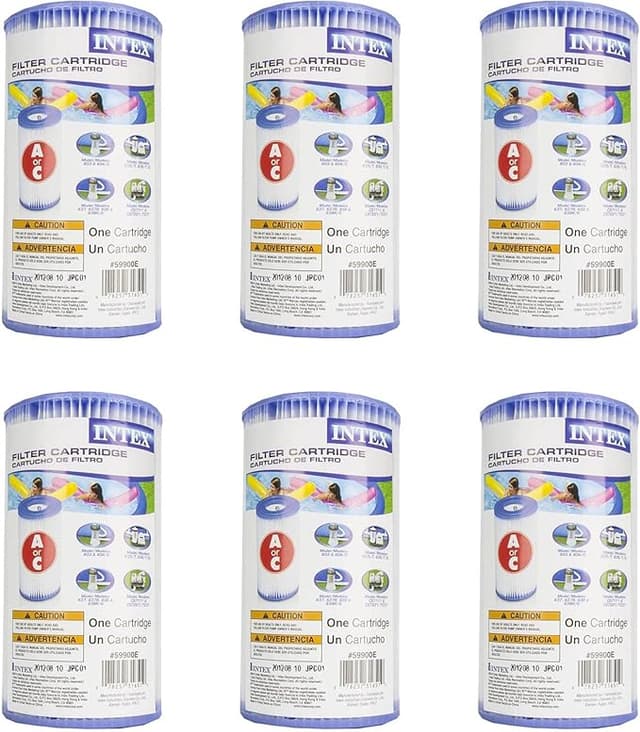
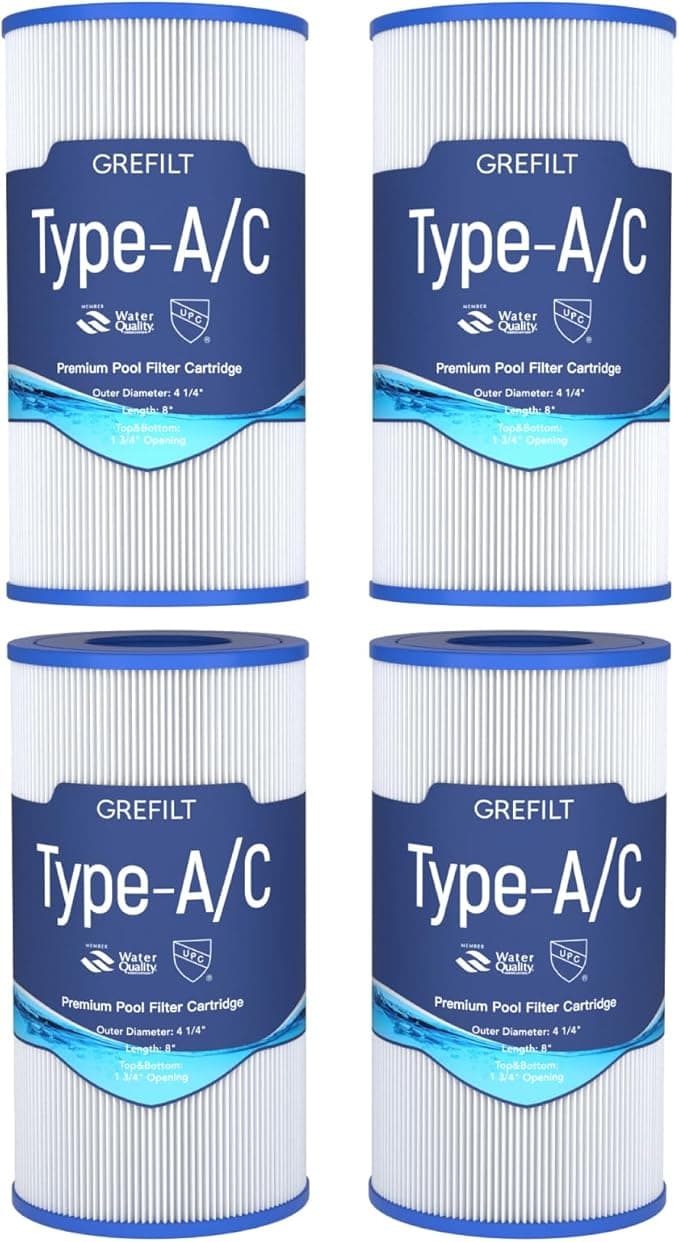
This is the whole ballgame with Type A, because the Type A footprint is weirdly specific — it's that squat cartridge with the wide center hole, and a part that's a few millimeters off in either direction will rattle or bind. The compatible cartridge I've been running matches the OEM diameter close enough that I genuinely can't tell them apart side by side. The pleats are a touch shallower, maybe — I'll get to that — but the end caps and the center bore are dead on. It drops into the housing, the lid screws down without me having to wrestle it, and the seal holds.
The swap itself is nothing once you've done it. Kill the pump first — actually kill it, don't just trust that it's idle, because a pump that kicks on while your hand is in the canister will scare ten years off you and dump water everywhere. Pop the lid off the filter compartment up by the pump, lift the old saturated cartridge out (it'll be heavier than you expect, swollen with grime), and wipe down the inside of the housing before the new one goes in. That last part matters more than the instructions make it sound — there's always a ring of fine silt at the bottom of the canister, and seating a clean cartridge on top of that just feeds it straight back into your water. Thirty seconds with a rag. Then drop the new Type A in, feel for the click, screw the lid back, prime, done.
The honest performance take
Here's where I have to be square with you. Out of the bag, the compatible Type A had a faint plastic-and-paper smell — that new-filter cardboard note, slightly chemical. It's gone after the first day of circulation, and it never affected the water that I could tell, but if you've got your nose right over the canister on install day, you'll catch it. The OEM ones have it too, just a hair less.
On actual filtration, week one through week three, I cannot tell the difference between this and Intex's own. Water stays clear, the skimmer pulls fine debris, the pleats load up with the same tan gunk on the same schedule. Where I think the OEM has a slight edge is the back half of a cartridge's life. The compatible pleats feel a touch thinner, and in the third week — right when any Type A is getting tired — I sense the cheap one tapping out maybe a couple days sooner than the branded one would. Flow stays strong, but my water clarity starts asking for the swap slightly earlier. With a part that costs less than half as much, I just... swap it slightly earlier. That trade is fine by me. If you're the type who pushes a cartridge to its absolute last legs to save money, you'll notice you can't push these quite as far.
The real downside, said plainly
The packaging is cheap. The cartridges come shrink-wrapped in a thin bag, sometimes a little squished from shipping, and once I got one where a couple of outer pleats were slightly creased in transit. It still sealed and filtered fine — the crease was cosmetic, on the outer edge, not the sealing surface — but it doesn't inspire the same confidence as the boxed OEM unit. If a crushed pleat is going to bother you, buy the multipack so a dud doesn't leave you stranded mid-summer with green water creeping in. And inspect each one before it goes in the housing. That's a thirty-second habit, not a dealbreaker, but I won't pretend the quality control is identical to the branded line. It isn't.
The other thing worth saying out loud: don't stretch the interval just because it's cheap. A clogged, saturated Type A doesn't just fail to clean — it chokes the pump, and a pump fighting a dead filter for weeks is how you cook a motor or wake up to algae blooming faster than you can shock it back. The whole point of going compatible is that it's cheap enough to replace on time without flinching. Use that. Replace it on schedule and the low price works for you instead of tempting you into neglect.
So who should buy what
If you run a commercial-grade setup, or you're the person who genuinely cannot tolerate swapping a few days early and wants the absolute longest cartridge life per unit, buy the OEM and pay the premium — it earns its keep at the very tail end of each cartridge's run. For the rest of us, the regular backyard Intex owner who just wants clear water through the summer without bleeding money? I grab the compatible Type A. I've run them across two full seasons now, the fit is right, the water's clear, and at roughly half the per-cartridge cost I can afford to swap them on time instead of squeezing every last day out of an old one. That's the verdict, and it's the one I actually live by — I bought another multipack last month.