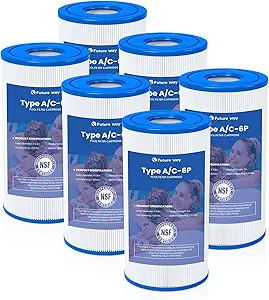
Troubleshooting & Analysis
I didn't believe a twenty-dollar filter could be fine either
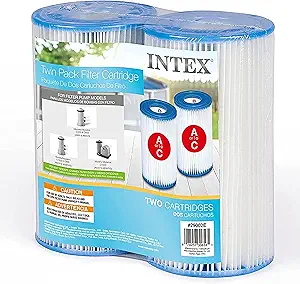
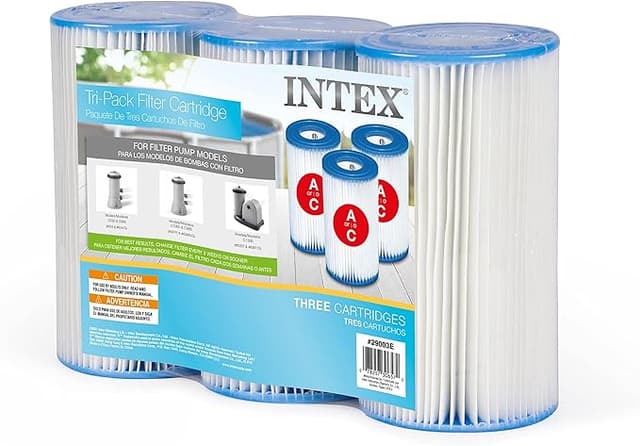
Here's the thing — I'm the guy who assumed the cheap one was a trap. My above-ground Intex pool runs a Type A cartridge, and for two summers I dutifully bought whatever the brand-name box told me to, paying somewhere north of $12 to $15 a cartridge when I could find them, and that's if the big-box store hadn't sold out by July like they always do. Then one weekend the filter looked like a coffee-stained sock, the water was going cloudy, and the only thing in stock was a generic Type A two-pack for about $9. So roughly four-fifty a cartridge versus thirteen. I bought it fully expecting to come back here and warn you off it.
I'm not going to do that. Let me tell you what actually happened instead.
The price math nobody walks you through
A Type A cartridge isn't a once-a-season thing, and that's the part that stings if you're buying name-brand. In peak swim season I'm swapping mine roughly every two weeks — sometimes weekly if the pool's getting heavy use and the pollen's bad. Call it eight to ten cartridges across a summer. At thirteen bucks a pop, that's well over a hundred dollars a year just keeping water moving through a pump that cost less than that. At the generic price I paid, the same summer runs me around forty, maybe forty-five. That's a sixty-dollar gap, every year, for a part that gets rinsed, clogged, and thrown out regardless of whose name is printed on the cardboard.
And it is the same part. Same pleated polyester, same plastic end caps, same outer diameter that has to seat into the same housing. There's no secret filtration sauce in a pleated pool cartridge — it's mechanical. Water pushes through folded media, dirt stays behind. The OEM version isn't doing chemistry the cheap one can't.
Does it actually seat right?
This was my real worry. A water filter that fits loose is worse than no filter, because dirty water just slips around the edges and you're filtering nothing while feeling smug about it. So I paid attention going in.
The swap itself is dead simple, and you do it the same way every time. Pump off first — always, no exceptions, you don't want water moving through the housing while your hand's in there. Pop the filter compartment, pull the old cartridge straight out of its seat, and before you drop the new one in, rinse the housing out. Mine always has a little ring of grit and the start of that green film at the bottom; a quick blast with the hose clears it. Then the new cartridge goes in, seats down into the cup, and you button it back up.
The generic Type A dropped in and sat down with that same firm little seat the brand one does. Honestly, the fit was a non-issue — the molded cap pressed against the housing the way it's supposed to, no rattling, no gap I could wiggle a finger into. Pump back on, and within an hour the water had that pulled-clean look. Two summers in on generics now and I've never had one fit so loose that water bypassed it.
Where it actually performs — and where it's a hair behind
Clarity-wise? I genuinely cannot tell you which cartridge is in the housing by looking at the pool. Both pull the suspended cloudiness out at about the same rate, both catch the bugs and the leaf bits and the sunscreen scum that floats in. For the day-to-day job of keeping the water swimmable, it's a wash.
The honest gap is lifespan. The name-brand cartridge, on average, gives me maybe a few extra days before it loads up and the flow drops off. The generic media is a touch thinner, packs with dirt a little faster, and starts to look tired sooner. So I'm rinsing and swapping it slightly more often. But — and this is the whole point — even buying a couple extra cartridges a season, I'm still way under what the OEM run costs me. Spending forty to save sixty is still saving fifty.
The downsides, said plainly
I told you I'd be straight, so here's the full list of gripes, not a token one.
The cardboard packaging is cheap and a little crushed half the time — one of mine arrived with a dented end cap. It still sealed fine in the housing, but it looked rough out of the box and I get why that'd make you nervous. The pleats on the generic aren't always as crisply uniform as the brand version; you'll see a fold sitting slightly tighter than its neighbor here and there. Cosmetically annoying. Functionally, in my experience, it hasn't mattered — but if you're someone who needs the part to look perfect, you'll notice.
There's also a faint plastic smell on the new ones for the first day or so, the same way the brand ones smell, and it rinses off the moment water runs through. And quality across a two-pack can be a little uneven — occasionally one cartridge in a batch loads up faster than its twin. Not a dealbreaker at this price, but it's real, and I'd rather you hear it from me than feel cheated later.
One thing I won't soften: do not run a dead cartridge to stretch the savings. A clogged, saturated filter is where pool problems actually start. Water stops moving the way it should, the pump strains against the restriction, and a pump fighting a packed cartridge is a pump on its way to an early death — and that's a real repair bill, not a four-dollar one. Worse, when filtration drops off, you get the conditions algae and bacteria love sitting in warm standing water. The filter is cheap insurance against a green, itchy, swim-at-your-own-risk pool. So the savings only count if you actually swap on schedule. Buy the cheap one, but treat it like the working part it is.
So who should skip it?
If your pool is some commercial or heavy-bather situation where you need every last hour of run time out of a cartridge and a thinner media genuinely costs you, pay up for OEM — that extra few days of life might pencil out for you. And if a slightly imperfect pleat or a dinged box is going to live in your head all summer, the brand-name version buys you that calm.
For the rest of us — a backyard Intex pool, a family, a normal season — I grab the generic Type A every time now, and I have for two years running. Same clean water, same easy install, fits the housing right, and it leaves fifty-some dollars a year in my pocket for the part of summer that's actually fun. I came in a skeptic. The cheap one converted me.