Troubleshooting & Analysis
Two filters, one furnace closet, and me doing math in the aisle
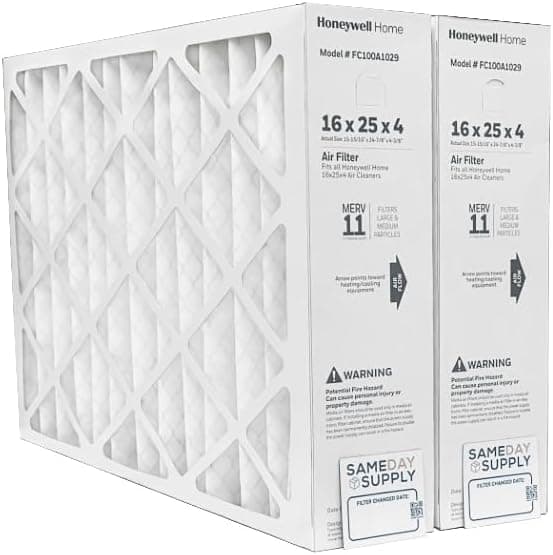
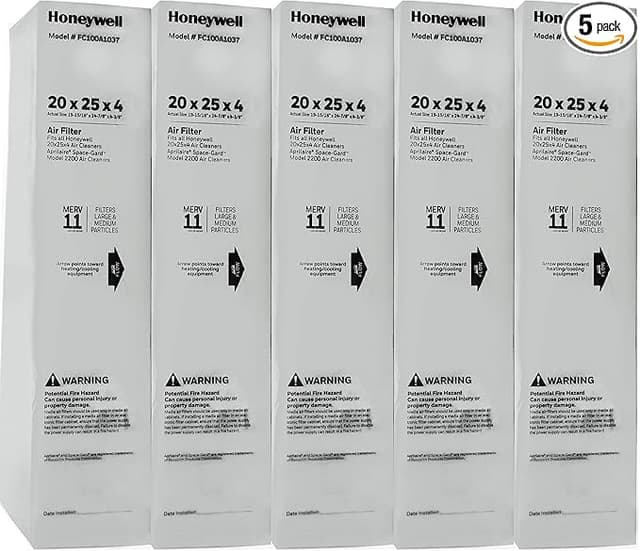
I was standing in the HVAC aisle with a name-brand MERV 11 in one hand — $31.99 for a single 16x25x1 — and a six-pack of the compatible Honeywell-rated MERV 11 in the other, working out to about $12 a filter. Same MERV rating printed right there on both cardboard frames. Same size. One of them cost me almost three times as much per filter. And I stood there for a solid minute doing the thing everybody does: "okay, but is the cheap one actually going to choke my blower motor or let dust through?"
I bought the multipack. I've now run them through a full year on a 3-ton gas furnace that also handles my AC, swapping every 60 days like the sticker on the unit tells me to. Here's the honest rundown, downsides and all, because that's the only kind of review I'd trust before spending money on something my furnace breathes through.
The price gap is the whole story (and the math is brutal)
If you change your filter every two months — which you should on a MERV 11, they load up faster than a cheap MERV 6 — that's six filters a year. At the name-brand $32, you're spending roughly $192 a year on a piece of pleated cardboard and synthetic media. The compatible multipack put me at about $72 for the same six. That's $120 back in my pocket annually, and I genuinely could not tell you which filter was in the slot by looking at the airflow or my energy bill.
And the energy bill thing matters more than people think. A clogged, neglected filter is the quiet budget killer. When the media saturates and airflow drops, the blower works harder and longer to move the same air, and your furnace can short-cycle or overheat on the limit switch. I've seen a friend's furnace throw a fault code purely because he left a filthy filter in for half a year to "save money." Cheaper filters you'll actually swap on schedule beat an expensive one you ration.
Does it fit? Mostly yes — with one honest gripe
Install is dead simple and I'm not going to pretend it's a skill. I cut the system off at the thermostat, slide the old filter out, and drop the new one in with the airflow arrows pointing toward the furnace — toward the motor, where the air is being pulled. Arrows toward the blower, every time. That's it. Thirty seconds.
Now the gripe. The cardboard frame on these compatible ones is a hair thinner and a touch less rigid than the name-brand frame. On my return slot it seats fine and stays put, but the first time I installed one I noticed it flexed a little more than I'd like when I pushed it in. If your filter slot is a loose or slightly oversized one — common in older houses — you may get a tiny gap at one edge where unfiltered air can sneak around. I fixed mine permanently with a one-inch strip of foam weatherstrip along the slot lip. Five-minute job, never thought about it again. But it's real, and a $32 filter with a stiffer frame wouldn't have needed it.
How it actually performs against the OEM-grade one
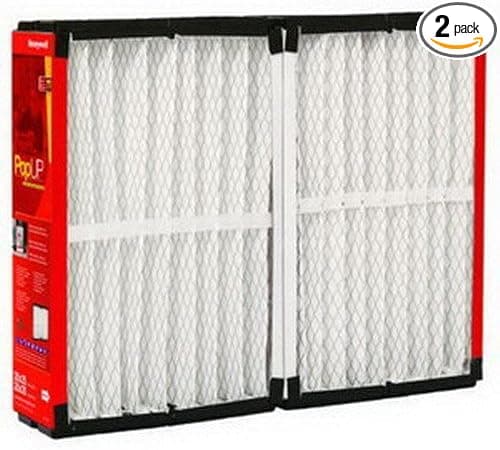
Day to day, I can't separate them. MERV 11 is the sweet spot for a home with no one who has severe respiratory issues — it grabs the pollen, the dust, the pet dander, the stuff that coats your furniture in a week. After 60 days I pull these out gray-brown and loaded, which is exactly what a working filter should look like. The pleat count looked a little less dense than the premium one when I held them side by side under a light, and in theory that means slightly less total surface area before it loads up. In practice, on a 60-day swap, I never got close to a point where airflow felt restricted.
Two small real-world notes. First, there's a faint cardboard-and-glue smell for the first day after install — not chemical, just new-filter — and it's gone by day two once air's been moving through it. Second, the packaging is no-frills. The filters came stacked with a thin slip between them and a couple had slightly dinged corners in transit. Cosmetic. The media and frame were fine; I just pressed a corner back square and moved on.
Where it falls a touch behind
I'll be straight: the premium MERV 11 feels built a little better in the hand. Stiffer frame, denser pleats, cleaner packaging. If you've got a system the installer warned you is picky about static pressure, or a wide-open filter slot with no good way to seal the edges, the sturdier frame earns part of that price difference. And if anyone in the house has real allergy or asthma trouble, you might want to step up to MERV 13 entirely rather than debating brands at 11.
The verdict — who I'd send which way
Buy the name-brand if your filter slot is loose and you won't bother with a foam strip, or if you want the absolute sturdiest frame and don't care about the cost. That's a small group.
For everybody else — which is most of us with a normal, snug filter slot and a calendar reminder to swap every two months — I grab the compatible Honeywell-rated MERV 11 multipack and I have, twice now. It cleans the air as well as I can measure, it costs me about $120 less a year, and the only flaw was a slightly soft frame I solved with a strip of weatherstrip. For that kind of money back, doing the same job in my own furnace for a full year, it's an easy call. The best filter is the one cheap enough that you'll actually change it on time — and this is that filter.