Troubleshooting & Analysis
I didn't believe a $20 filter could be fine either
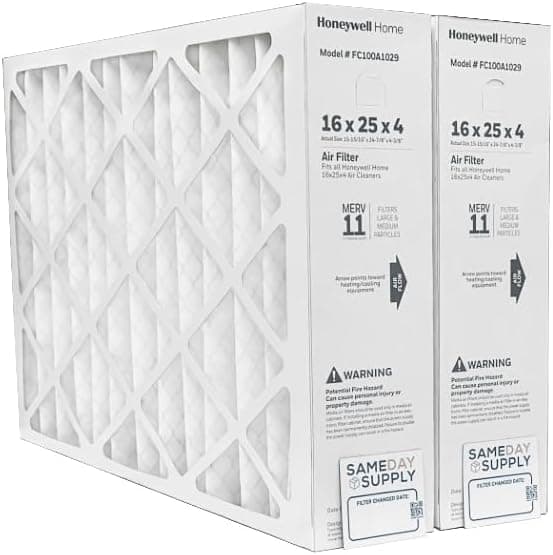
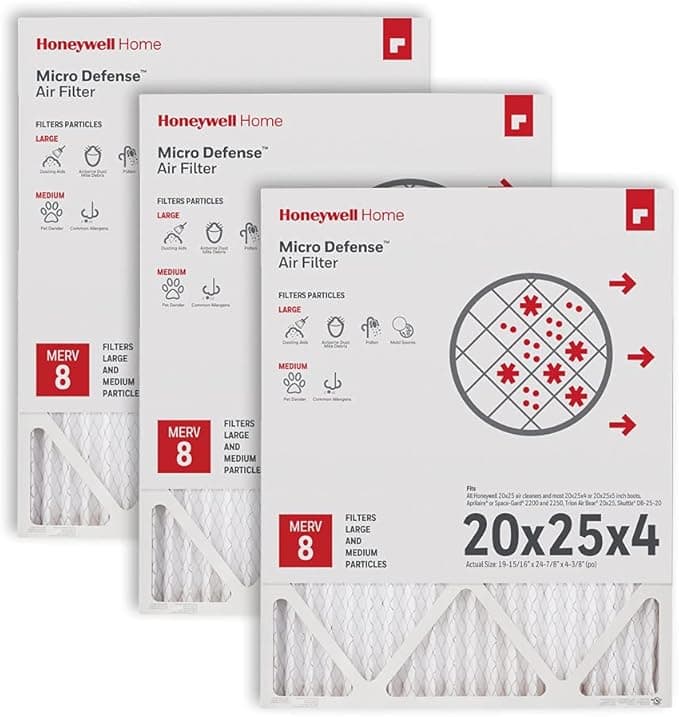
Here's where my head was at two years ago: I'd stood in front of my furnace cabinet, OEM Honeywell media filter in one hand — a 16x25x4, the chunky four-inch kind — and I'd just watched the price ring up at $46 on the brand-name site. Forty-six dollars. For a slab of pleated paper in a cardboard frame. And right next to it, a multipack of compatible 16x25x4s was sitting there at about $22 each. My gut said the same thing yours is probably saying: that's too cheap, there has to be a catch, the cheap one is going to choke my blower or fall apart in the slot.
So I bought one of each and ran them back to back in my own system. A 2,100 sq ft single-story house, gas furnace, central air, two dogs that shed like it's their job. If anything was going to expose a junk filter, my return duct was it.
The money, the real numbers
A four-inch media filter isn't a once-a-month thing like those flimsy one-inch fiberglass panels. You change a 16x25x4 maybe twice a year — every six months in a normal house, more like every four if you've got pets or run the system hard. So the math isn't dramatic per change, but it stacks. Two OEM filters a year is roughly $92. Two compatible ones runs me about $44. Call it $48 a year back in my pocket, and over the seven-or-so years I plan to keep this furnace, that's north of $330 for what is, functionally, the same job.
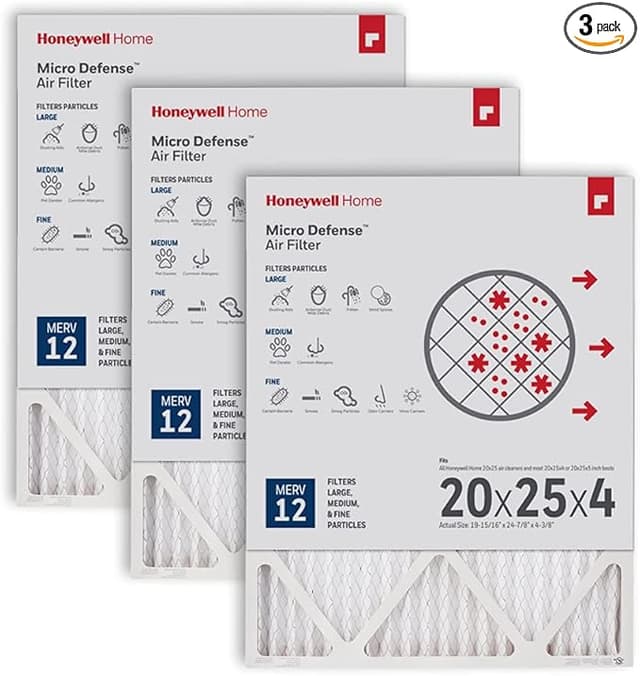
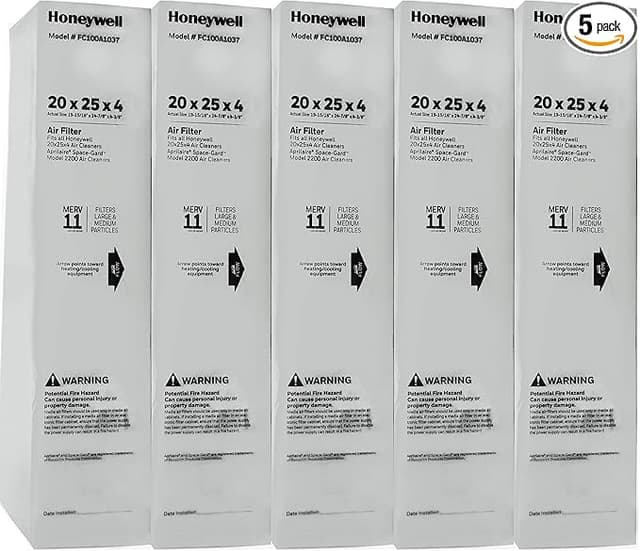
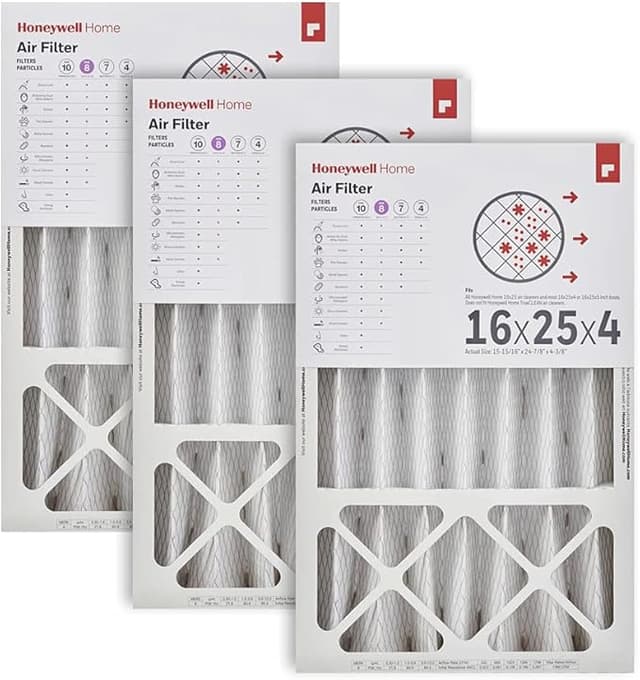
The OEM I was comparing against is a MERV 11. The compatible multipack I landed on is also MERV-rated in that same range, and that matters more than the logo printed on the frame — a filter at the same MERV is pulling the same size particles out of your air whether it cost you $22 or $46.
Does it actually seat right?
This was my biggest worry going in, because a four-inch filter that's even slightly off won't slide into the cabinet track, or worse, it'll go in loose and let air sneak around the edges. Honest answer: the compatible one fit. Slid into the slot, the gasket edge met the rails, and I got that little resistance you want at the end where it's snug instead of rattling.
But I'll give you the real downside here, because there is one. The cardboard frame on the compatible filter is noticeably thinner than the OEM's. The Honeywell frame feels almost like a picture frame — stiff, beveled. The compatible one flexes a bit if you grab it by one corner. It didn't matter once it was installed, because the cabinet holds it square, but if you're the type who pulls the filter halfway out to check it, be a little gentle. I creased the top edge of my first one being careless, and while it still worked, it bugged me.
Install itself is nothing. Kill the system at the thermostat first — you don't want the blower yanking on a half-seated filter. Pull the old one straight out. Then slide the new one in with the airflow arrows pointing toward the furnace, toward the blower motor, not toward the return duct. Get that backwards and the pleats load up on the wrong side and it chokes airflow. Took me longer to write that sentence than it takes to do.
How it actually performed
Four months in the slot during a dusty late summer and fall. When I pulled it, it was loaded — gray, dog-hair fuzz packed into the pleats, exactly what you want to see, because that's dust that's not sitting in my lungs or coating my coil. Side by side with the OEM I'd run the prior season, the dust cake looked basically identical. My static pressure didn't climb in any way I could feel at the registers, and the air coming out of the vents didn't smell stale.
Where's it a touch behind? Two small things. One, the pleats on the compatible filter aren't quite as densely packed — count them and you'll find a few fewer folds than the Honeywell, which in theory means a hair less surface area before it loads up. In practice I didn't notice a shorter usable life, but I'm not going to pretend the engineering is photo-identical. Two, there was a faint cardboard-and-glue smell the first day, gone by the second. Not chemical, not alarming. Just new-filter smell.
Why you don't want to skip this
Quick reminder on why the filter you pick matters at all: a four-inch media filter that you forget about and let load solid doesn't just get dirty, it starves your blower. Restricted airflow makes the motor work harder, drives your run times up, and in a bad case overheats the heat exchanger and trips the furnace on a safety limit. I've watched a neighbor pay a tech $180 to come tell him his "broken" furnace just needed a filter. So the cheap-versus-OEM question matters less than the did-you-actually-change-it question. A $22 filter you swap on schedule beats a $46 one you leave in for two years.
The verdict
Who should stick with OEM? If your system is under a manufacturer warranty that specifically calls out branded media, or you've got a high-end variable-speed furnace where the installer spec'd an exact MERV and pressure drop, match what they told you and don't argue with the warranty paperwork. That's a real reason.
For the rest of us — a normal furnace, a normal house, a filter that needs changing twice a year — I run the compatible 16x25x4. Same MERV, same dust-catching, a frame that's a little flimsier and a slot that doesn't care. I've bought it three times now, and I'll buy it again the next time my reminder pings. For roughly twenty bucks doing the work of forty-six, that was an easy call once I stopped being suspicious of it.